Promotional price valid on web orders only. Your contract pricing may differ. Interested in signing up for a dedicated account number?
Learn More

SUMO2/3 Antibody (SM23/496), Novus Biologicals™
SDP

Catalog No. p-7105557 Shop All R&D Systems Products
Change view
Click to view available options
Quantity:
0.02 mg
0.1 mg
0.2 mg
3 product options available for selection
Product selection table with 3 available options. Use arrow keys to navigate and Enter or Space to select.
Catalog No. Quantity
NBP234292F 0.02 mg
NBP234292A 0.1 mg
NBP234292B 0.2 mg
Use arrow keys to navigate between rows. Press Enter or Space to select a product option. 3 options available.
3 options
Catalog No. NBP234292F Supplier Novus Biologicals Supplier No. NBP2342920.02MG
Only null left
Add to Cart
Add to Cart

Mouse Monoclonal Antibody

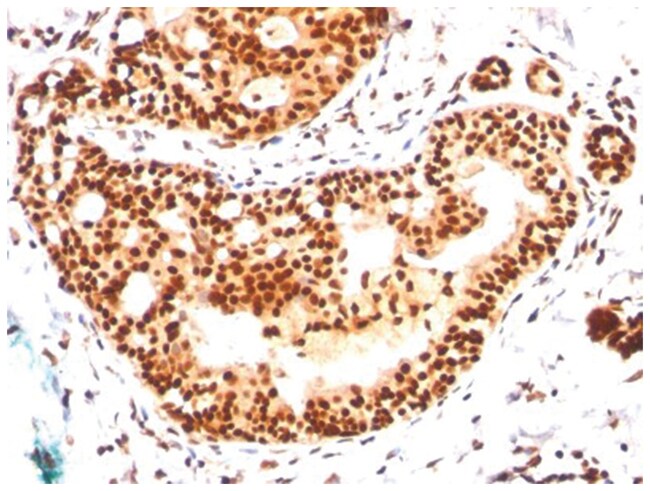
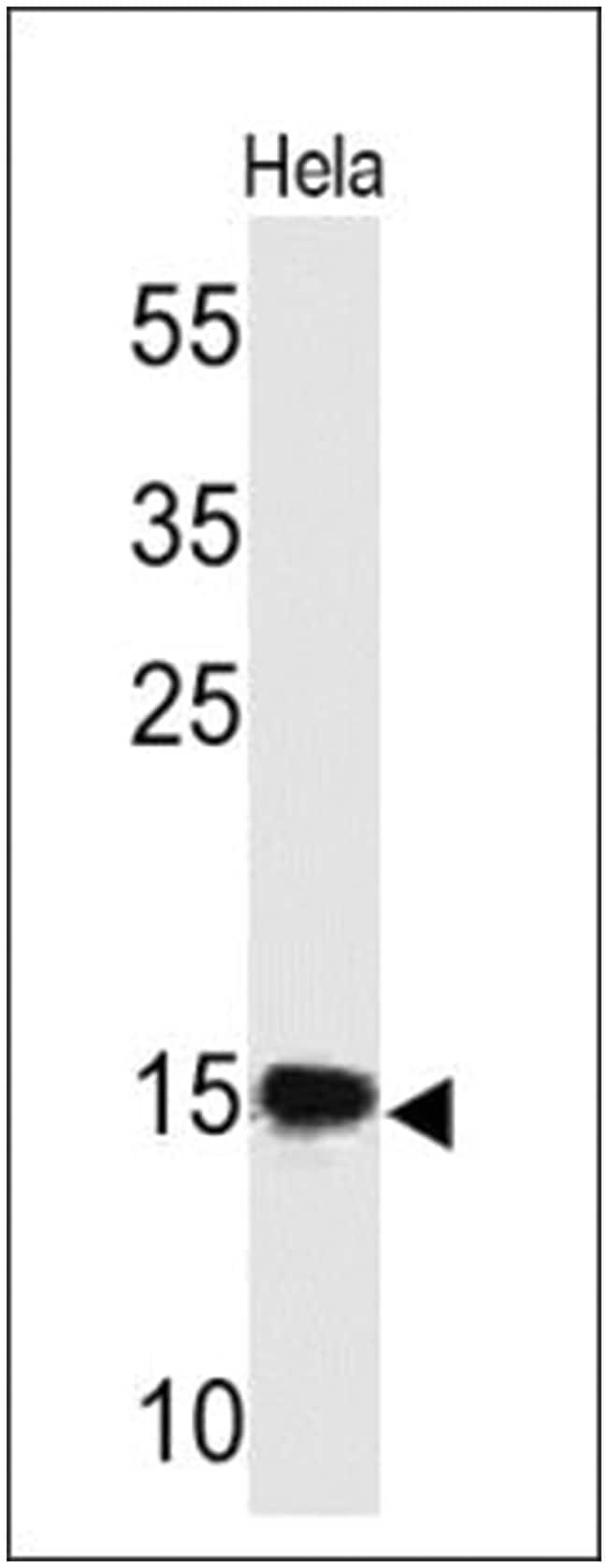
SUMO2/3 Monoclonal specifically detects SUMO2/3 in Human samples. It is validated for Western Blot, Flow Cytometry, Immunohistochemistry, Immunocytochemistry/Immunofluorescence, Immunohistochemistry-Paraffin, Flow (Intracellular).

Specifications

Antigen SUMO2/3
Applications Western Blot, Flow Cytometry, Immunocytochemistry, Immunofluorescence, Immunoprecipitation, Immunohistochemistry (Paraffin)
Classification Monoclonal
Clone SM23/496
Conjugate Unconjugated
Dilution Western Blot 0.5-1ug/ml, Flow Cytometry 0.5-1ug/million cells, Immunocytochemistry/Immunofluorescence 0.5-1ug/ml, Immunoprecipitation 0.5-1ug/500ug protein lysate, Immunohistochemistry-Paraffin 0.5-1ug/ml, Immunohistochemistry-Frozen 0.5-1ug/ml
Formulation PBS with 0.05% BSA. with 0.05% Sodium Azide
Gene Accession No. P61956
Gene Symbols SUMO2
Host Species Mouse
Immunogen Recombinant human SUMO2 protein
Purification Method Protein A purified
Quantity 0.02 mg
Regulatory Status RUO
Primary or Secondary Primary
Gene ID (Entrez) 6613
Test Specificity This MAb reacts with both SUMO-2 and SUMO-3. The small ubiquitin-related modifier (SUMO) proteins, which include SUMO-1, 2 and 3, belong to the ubiquitin-like protein family. Like ubiquitin, the SUMO proteins are synthesized as precursor proteins that undergo processing before conjugation to target proteins. Also, both utilize the E1, E2 and E3 cascade enzymes for conjugation. However, SUMO and ubiquitin differ with respect to targeting. Ubiquitination predominantly targets proteins for degradation, whereas sumoylation targets proteins to a variety of cellular processing, including nuclear transport, transcriptional regulation, apoptosis and protein stability. The unconjugated SUMO-1, 2 and 3 proteins localize to the nuclear membrane, nuclear bodies and cytoplasm, respectively. SUMO-1 utilizes Ubc9 for conjugation to several target proteins, which include MDM2, p53, PML and RanGap1. SUMO-2 and 3 contribute to a greater percentage of protein modification than does SUMO-1 and unlike SUMO-1, they can form polymeric chains. In addition, SUMO-3 regulates beta-Amyloid generation and may be critical in the onset or progression of Alzheimer's disease.
Target Species Human
Content And Storage Store at 4C.
Form Purified
Isotype IgG1 κ
Show More Show Less
Product Title
Select an issue

By clicking Submit, you acknowledge that you may be contacted by Fisher Scientific in regards to the feedback you have provided in this form. We will not share your information for any other purposes. All contact information provided shall also be maintained in accordance with our Privacy Policy.