Promotional price valid on web orders only. Your contract pricing may differ. Interested in signing up for a dedicated account number?
Learn More
Learn More
Description
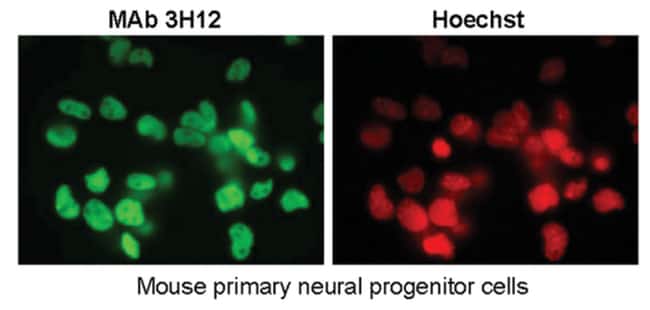
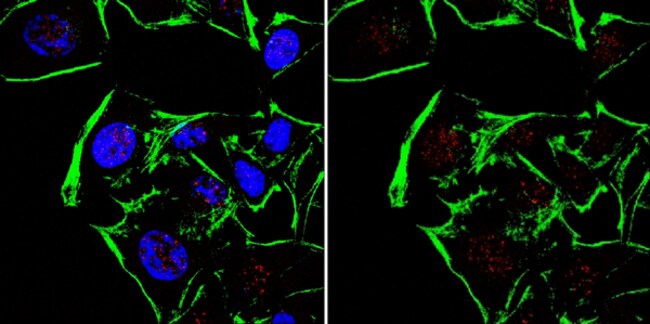
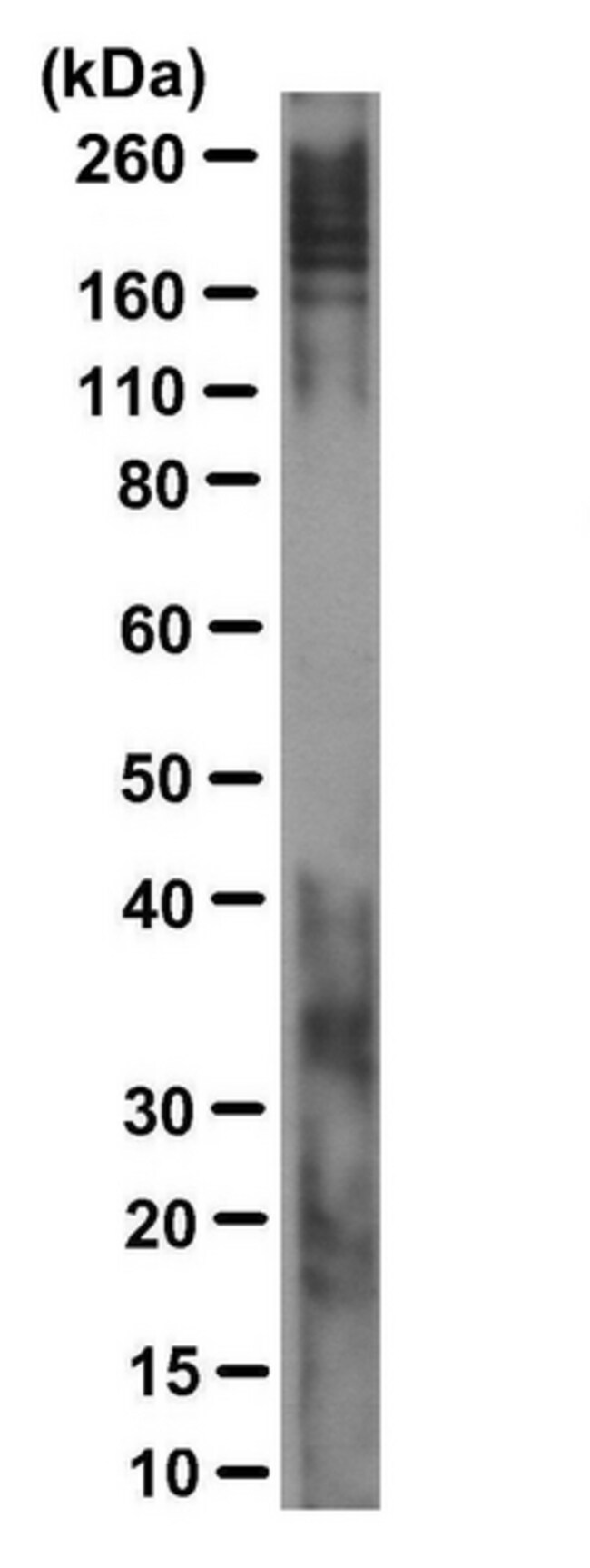
Small ubiquitin-related modifier 2 (UniProt P61956; a.k.a. HSMT3, Sentrin-2, SMT3 homolog 2, Smt3B, SUMO-2, Ubiquitin-like protein SMT3B) and 3 (UniProt P55854; a.k.a. SMT3 homolog 1, Smt3A, SUMO-3, Ubiquitin-like protein SMT3A) are encoded by the SUMO2 (a.k.a. SMT3B, SMT3H2; Gene ID 6613) and SUMO3 (a.k.a. SMT3A, SMT3H1; Gene ID 6612) genes in human. SUMOylation, protein posttranslation modification by small ubiquitin-like modifier (SUMO), is a signaling event in many cellular processes. SUMO proteins are translated as immature precursors and subsequently converted to their mature forms through the activity of sentrin/SUMO-specific proteases (SENPs). As is the case with ubiquitination, SUMOylation is a reversible process. SUMO E1 activating enzyme, E2 conjugating enzyme, and E3 ligase mediate SUMOylation of substrate proteins, while SENPs are responsible for the deSUMOylation. SUMOylation usually occurs at lysine residues in the consensus KxD/E motif, although not all such lysines become SUMOylated and SUMOylation can also occur on lysine residues outside of this motif. SUMO2 and 3 share 97% identity at the amino acid level, while SUMO1 shares approximately 50% and SUMO4 shares about 87% identity with SUMO2/3. SUMO4 is the only SUMO member whose ctivation and conjugation has not been demonstrated. In addition to difference in their target substrates, SUMO2/3 can be SUMOylated and form chains, whereas SUMO1 cannot and may serve as chain terminator.

Specifications
Specifications
| Antigen | SUMO2/3 |
| Applications | Western Blot |
| Classification | Monoclonal |
| Clone | 3H12 |
| Concentration | Please refer to lot specific datasheet. |
| Conjugate | Unconjugated |
| Formulation | Rat IgG2a hybridoma culture supernatant with 0.05% Sodium Azide. |
| Gene | SUMO2, SMT3B, SMT3H2, SUMO3, SMT3A, SMT3H1 |
| Gene Accession No. | P61956;P55854 |
| Host Species | Rat |
| Show More |
For Research Use Only. Not for use in diagnostic procedures.
Product Title
By clicking Submit, you acknowledge that you may be contacted by Fisher Scientific in regards to the feedback you have provided in this form. We will not share your information for any other purposes. All contact information provided shall also be maintained in accordance with our Privacy Policy.
Spot an opportunity for improvement?