Promotional price valid on web orders only. Your contract pricing may differ. Interested in signing up for a dedicated account number?
Learn More
Learn More
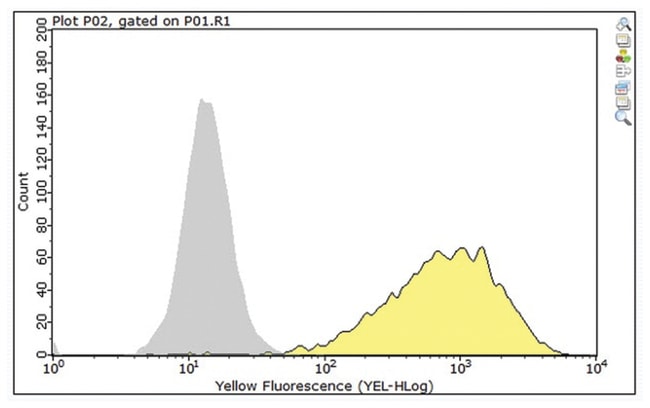
Description
Hepatitis A virus cellular receptor 1 homolog (UniProt Q5QNS5; also known as HAVcr-1, Kidney injury molecule 1, KIM-1, T cell immunoglobulin and mucin domain-containing protein 1, T-cell immunoglobulin mucin receptor 1, T cell membrane protein 1, TIM-1, TIMD-1) is encoded by the Havcr1 (also known as Kim1, Tim1, Timd1) gene (Gene ID 171283) in murine species. TIM‐1/KIM‐1 is a phosphatidylserine phagocytosis and scavenger receptor expressed on kidney proximal tubule epithelial cells and, at a much lower level, also among a subset of immune cells. Upon kidney injury, TIM‐1 is upregulated more than a thousand fold and assists tissue injury recovery through phagocytosis of apoptotic cells and cellular debris. KIM‐1‐mediated phagocytosis leads to pro‐tolerogenic antigen presentation, which suppresses CD4+ T‐cell proliferation and increases the percentage of regulatory T-cells in an autophagy gene‐dependent manner. Phagocytosis mediated by KIM‐1 in epithelial cells therefore limits inflammation by both removing dead cells and inducing anti‐inflammatory Treg signaling. Human HAVCR1 polymorphisms are linked to various immunological disorders including allergy, asthma, rheumatoid arthritis, atopic dermatitis, and lupus. TIM-1 is produced with a signal peptide (a.a. 1-21) sequence which is removed posttranslationally to yield the mature protein with a large extracellular region (a.a. 21-290 in human and 22-237 in mouse) composed of a V-type Ig-like domain (a.a. 21-121 in human and 22-122 in mouse) and a mucin domain (the rest of the extracellular region), followed by a transmembrane domain (a.a. 238-258), and a cytoplasmic tail (a.a. 312-359 in human and 259-305 in mouse) with tyrosine phosphorylation sites.

Specifications
Specifications
| Antigen | TIM-1 |
| Applications | Functional Assay |
| Classification | Monoclonal |
| Clone | 3B3 |
| Concentration | Please refer to lot specific datasheet. |
| Conjugate | Unconjugated |
| Formulation | Purified rat IgG2a in buffer containing PBS without preservatives. |
| Gene | Havcr1, Kim1, Tim1, Timd1 |
| Gene Accession No. | Q5QNS5 |
| Host Species | Rat |
| Show More |
For Research Use Only. Not for use in diagnostic procedures.
Product Title
By clicking Submit, you acknowledge that you may be contacted by Fisher Scientific in regards to the feedback you have provided in this form. We will not share your information for any other purposes. All contact information provided shall also be maintained in accordance with our Privacy Policy.
Spot an opportunity for improvement?