Promotional price valid on web orders only. Your contract pricing may differ. Interested in signing up for a dedicated account number?
Learn More
Learn More
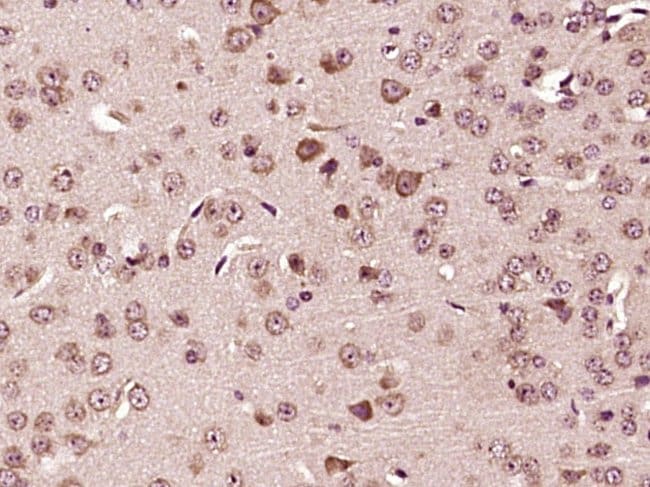
TPA Rabbit anti-Human, Polyclonal, Bioss


Description
TPA converts the abundant, but inactive, zymogen plasminogen to plasmin by hydrolyzing a single Arg-Val bond in plasminogen. By controlling plasmin-mediated proteolysis, it plays an important role in tissue remodeling and degradation, in cell migration and many other physio pathological events. It specifically cleaves the Arg- -Val bond in plasminogen to form plasmin, and is comprised of a heterodimer of chain A and chain B held by a disulfide bond. TPA binds to fibrin with high affinity. This interaction leads to an increase in the catalytic efficiency of the enzyme between 100-and 1000-fold, due to an increase in affinity for plasminogen. Similarly, binding to heparin increases the activation of plasminogen. Binding to laminin and fibronectin has also been demonstrated. TPA also binds to mannose receptor and the low-density lipoprotein receptor-related protein (LRP1). These proteins are involved in TPA clearance. TPA binds to annexin II and to cytokeratin 8. As yet unidentified interactions on endothelial cells and vascular smooth muscle cells (VSMC) lead to a 100-fold stimulation of plasminogen activation. In addition, binding to VSMC reduces TPA inhibition by PAI-1 by 30-fold.
Specifications
Specifications
| Antigen | TPA |
| Applications | Immunofluorescence, Immunohistochemistry (Paraffin) |
| Classification | Polyclonal |
| Concentration | 1 μg/mL |
| Conjugate | Unconjugated |
| Formulation | PBS with 1% BSA, 50% glycerol and 0.09% sodium azide; pH |
| Gene | PLAT |
| Gene Accession No. | P00750 |
| Gene Alias | 3.4.21.68; Alteplase; AU020998; AW212668; D8Ertd2e; PATISS; plasminogen activator, tissue; plasminogen activator, tissue type; plasminogen/activator kringle; Plat; Reteplase; t plasminogen activator; tissue plasminogen activator; Tissue-type plasminogen activator; Tissue-type plasminogen activator chain A; Tissue-type plasminogen activator chain B; TPA; t-PA; t-plasminogen activator |
| Gene Symbols | PLAT |
| Show More |
Product Title
By clicking Submit, you acknowledge that you may be contacted by Fisher Scientific in regards to the feedback you have provided in this form. We will not share your information for any other purposes. All contact information provided shall also be maintained in accordance with our Privacy Policy.
Spot an opportunity for improvement?