Promotional price valid on web orders only. Your contract pricing may differ. Interested in signing up for a dedicated account number?
Learn More
Learn More
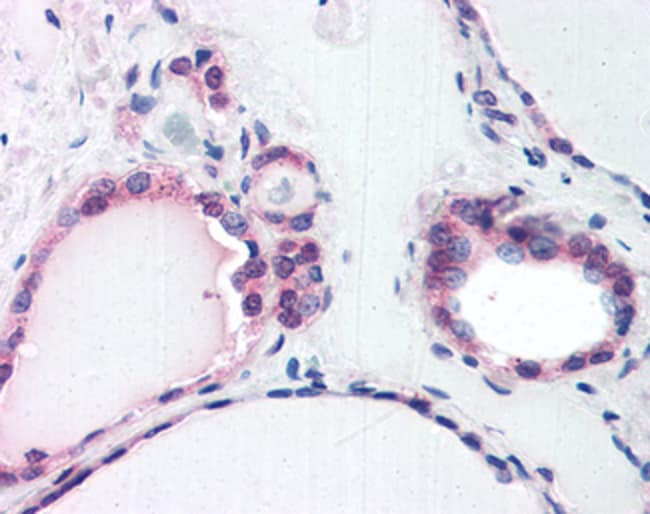
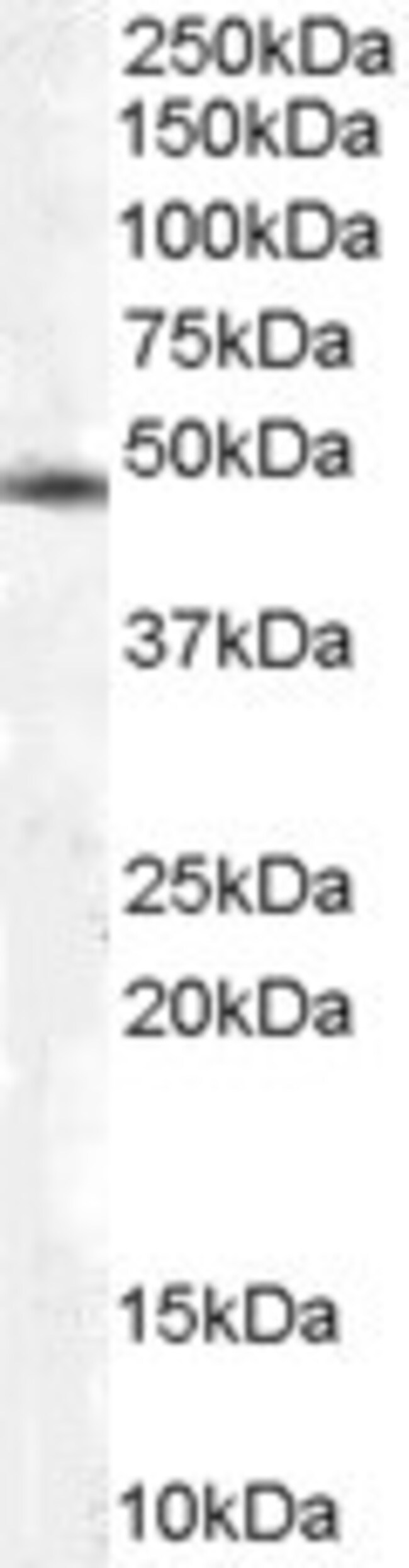
Invitrogen™ TRIP15 Polyclonal Antibody

Description
This antibody is predicted to react with bovine, canine and rat based on sequence homology. This antibody is tested in Peptide ELISA: antibody detection limit dilution 16,000.
Isocitrate dehydrogenases catalyze the oxidative decarboxylation of isocitrate to 2-oxoglutarate. These enzymes belong to two distinct subclasses, one of which utilizes NAD(+) as the electron acceptor and the other NADP(+). Five isocitrate dehydrogenases have been reported: three NAD(+)-dependent isocitrate dehydrogenases, which localize to the mitochondrial matrix, and two NADP(+)-dependent isocitrate dehydrogenases, one of which is mitochondrial and the other predominantly cytosolic. NAD(+)-dependent isocitrate dehydrogenases catalyze the allosterically regulated rate-limiting step of the tricarboxylic acid cycle. Each isozyme is a heterotetramer that is composed of two alpha subunits, one beta subunit, and one gamma subunit. The protein encoded by this gene is the beta subunit of one isozyme of NAD(+)-dependent isocitrate dehydrogenase. Three alternatively spliced transcript variants encoding different isoforms have been described for this gene.

Specifications
Specifications
| Antigen | TRIP15 |
| Applications | Immunohistochemistry (Paraffin), Western Blot |
| Classification | Polyclonal |
| Concentration | 0.5 mg/mL |
| Conjugate | Unconjugated |
| Formulation | TBS with 0.5% BSA and 0.02% sodium azide; pH 7.3 |
| Gene | COPS2 |
| Gene Accession No. | P61201, P61202 |
| Gene Alias | AI315723; ALIEN; alien homolog; Alien protein; alien-like; alien-PA; alien-PB; alien-PD; alien-PE; BcDNA:LD10463; beta-casein; C85265; CASB; casein beta; CG9556; CG9556-PA; CG9556-PB; CG9556-PD; CG9556-PE; CH2; COP9; COP9 (constitutive photomorphogenic) homolog, subunit 2; COP9 (constitutive photomorphogenic) homolog, subunit 2 (Arabidopsis thaliana); COP9 complex homolog subunit 2; COP9 constitutive photomorphogenic homolog subunit 2; COP9 signalosome complex subunit 2; COP9 signalosome subunit 2; COP9 signalosome subunit 2 CSN2; COPS2; Csn2; Csnb; d-Alien; DCH2; Dmel\CG9556; Dmel_CG9556; drosophila COP9 signalosome homolog 2; JAB1-containing signalosome subunit 2; SD08021p; SGN2; signalosome subunit 2; thyroid receptor interacting protein 15; thyroid receptor-interacting protein 15; TR-interacting protein 15; TRIP15; TRIP-15; tyroid receptor interacting protein 15 |
| Gene Symbols | COPS2 |
| Show More |
Product Title
By clicking Submit, you acknowledge that you may be contacted by Fisher Scientific in regards to the feedback you have provided in this form. We will not share your information for any other purposes. All contact information provided shall also be maintained in accordance with our Privacy Policy.
Spot an opportunity for improvement?