Learn More
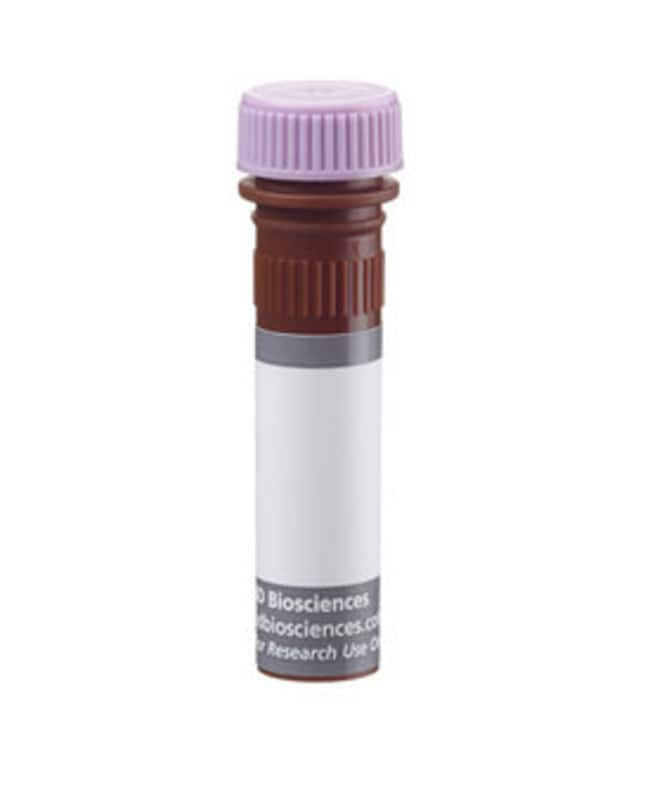
TSLP Receptor Mouse anti-Human, BUV395, Clone: 1F11/TSLPR (also known as 1F11 and AB81_85.1F11), BD Optibuild™
Shop All BD Biosciences ProductsDescription
The 1F11/TSLPR mAb specifically binds to Thymic Stromal Lymphopoietin Receptor (TSLPR). TSLPR is a member of the hematopoietin receptor superfamily and is also known as Cytokine Receptor-like Factor 2. The functional TSLPR complex consists of two subunits, TSLPR and the alpha subunit of the Interleukin-7 Receptor (IL-7Rα). Analysis of the TSLPR reveals sequence similarity with the common cytokine receptor gamma chain. Functional TSLPRs are expressed by epithelial cells and a variety of hematopoietic cell types, including thymocytes, T cells, B cells, natural killer T cells, monocytes, macrophages, basophils, and dendritic cells (DC). Recent studies indicate that TSLP can activate multiple STAT signaling proteins. TSLP enhances the maturation and viability of DC. It strongly induces DC expression of the CD40 and CD80 costimulatory molecules and chemokines, e.g., TARC (Thymus and activation-regulated chemokine; CCL17) that can attract Th2 effector cells. TSLP supports B cell development. TSLP costimulates the proliferation of naοve T cells in the presence of mature DC. TSLP is also able to increase the sensitivity of T cell receptor-activated CD4+ T cells to low doses of IL-2. In the presence of TSLP, the acute myeloid leukemia-derived cell line, MUTZ-3, shows induced growth and reduced apoptosis. CRLF2 deregulated gene expression is thought to be involved in lymphoid transformation in B-cell precursor acute lymphoblastic leukemia.

Specifications
Specifications
| Antigen | TSLP Receptor |
| Classification | Monoclonal |
| Clone | 1F11/TSLPR (also known as 1F11 and AB81_85.1F11) |
| Concentration | 0.2mg/mL |
| Conjugate | Brilliant Ultraviolet 395 |
| Formulation | Aqueous buffered solution containing ≤0.09% sodium azide. |
| Gene Alias | CRL2, CRLF2, CRLF2Y, Cytokine receptor-like factor 2, IL-XR, TSLPR |
| Host Species | Mouse |
| Immunogen | Human TSLP Receptor Transfected Cell Line |
| Purification Method | Affinity Purified |
| Show More |
Safety and Handling
By clicking Submit, you acknowledge that you may be contacted by Fisher Scientific in regards to the feedback you have provided in this form. We will not share your information for any other purposes. All contact information provided shall also be maintained in accordance with our Privacy Policy.