Learn More
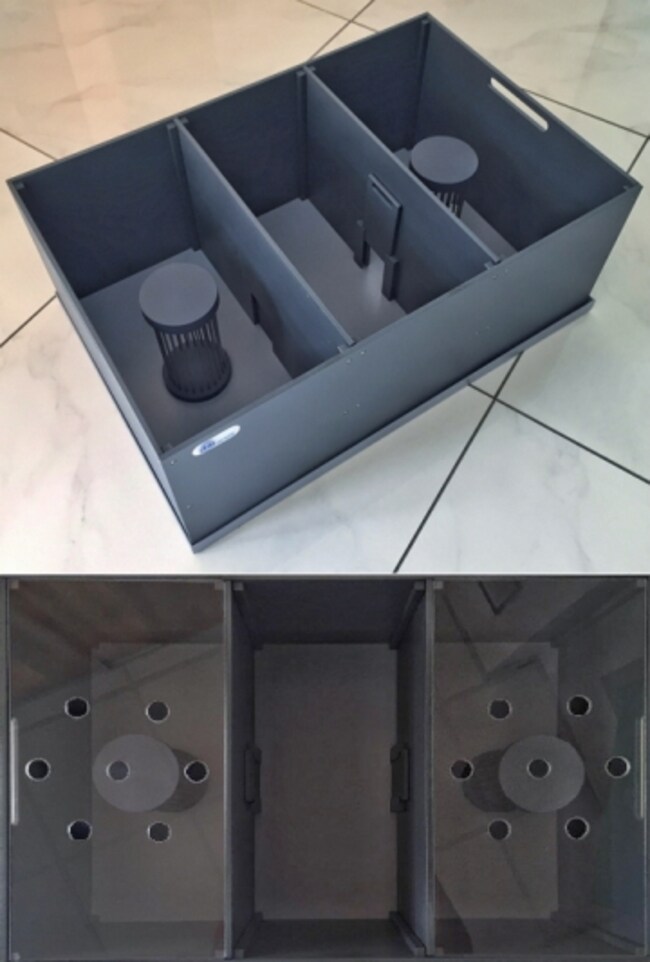


Description
Ideal for the investigation of autism-related behaviors:
- Social approach
- Resistance to reverse a learned pattern of behavior
Shortly after a period of habituation a mouse's sociability is determined by evaluating the amount of time the test mouse spends approaching a wire cage containing an unfamiliar stranger mouse.
In the second phase of testing a second unfamiliar mouse is introduced into the Sociability Apparatus. The preference for social novelty is then determined by measuring the amount of time the test mouse spends approaching the chamber containing a new, unfamiliar stranger mouse (also restricted to a small wire cage), as compared to time spent in the chamber containing the now-familiar mouse. Resistance to change is measured by two reversal learning tasks.
Testing in the Sociability Apparatus can be completely automated by the ANY-maze software system.
Specifications
Specifications
| For Use With (Application) | Neuroscience |
| Animal | Mouse |
| Model | Opaque with gray enclosures |
By clicking Submit, you acknowledge that you may be contacted by Fisher Scientific in regards to the feedback you have provided in this form. We will not share your information for any other purposes. All contact information provided shall also be maintained in accordance with our Privacy Policy.