Promotional price valid on web orders only. Your contract pricing may differ. Interested in signing up for a dedicated account number?
Learn More
Learn More
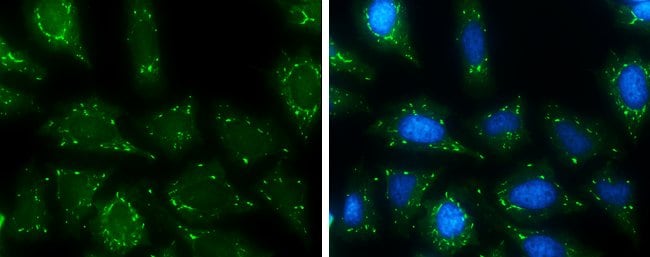
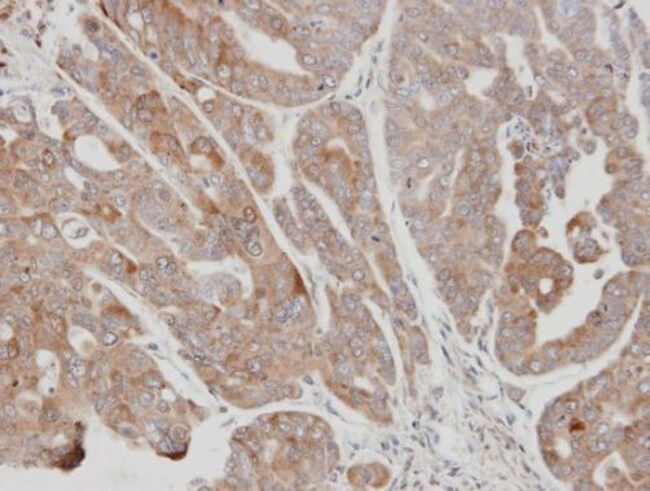
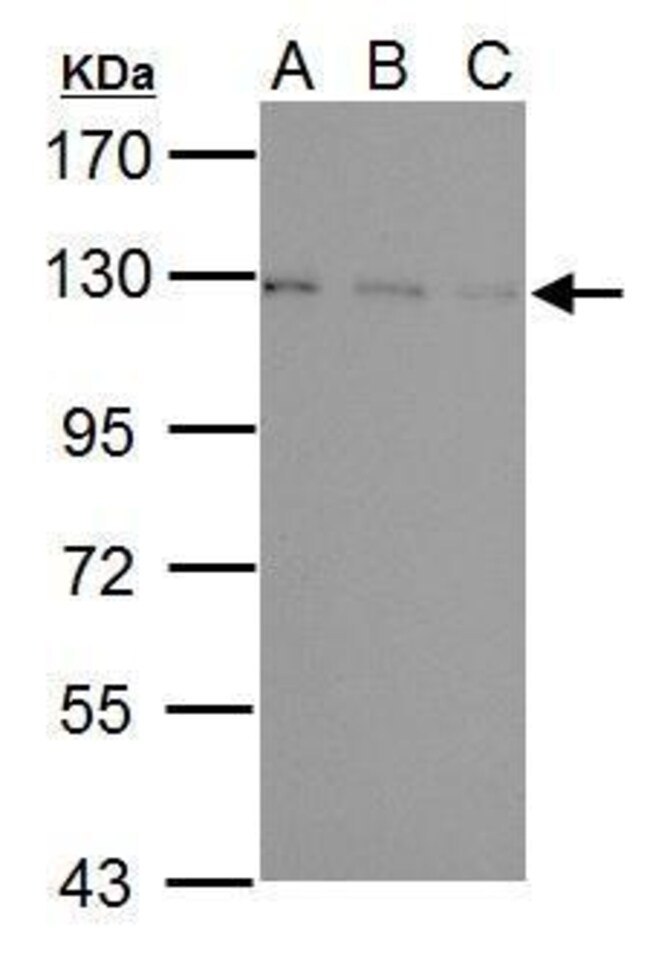
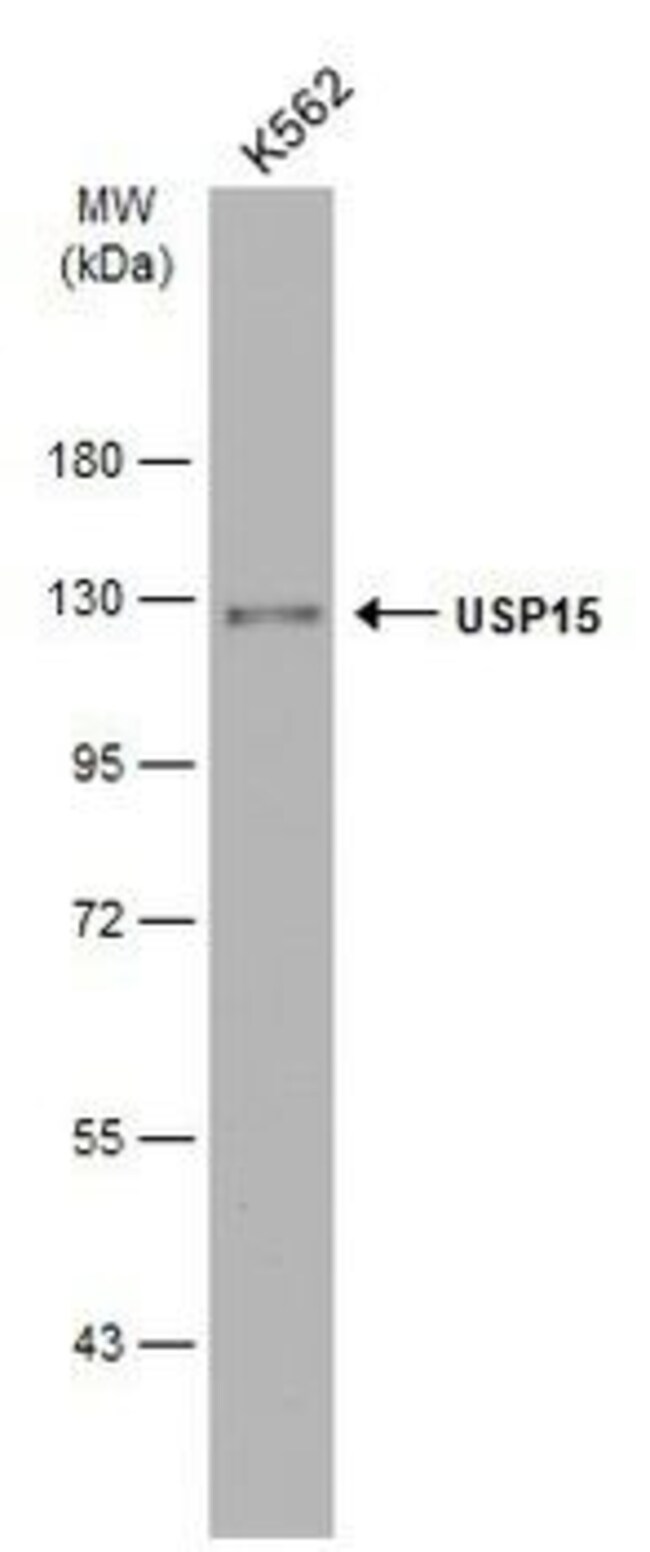
Invitrogen™ USP15 Polyclonal Antibody

Description
Recommended positive controls: K562, NIH-3T3, JC, BCL-1. Predicted reactivity: Chicken (100%), Rhesus Monkey (100%), Bovine (100%). Store product as a concentrated solution. Centrifuge briefly prior to opening the vial.
Modification of target proteins by ubiquitin participates in a wide array of biological functions. Proteins destined for degradation or processing via the 26 S proteasome are coupled to multiple copies of ubiquitin. However, attachment of ubiquitin or ubiquitin-related molecules may also result in changes in subcellular distribution or modification of protein activity. An additional level of ubiquitin regulation, deubiquitination, is catalyzed by proteases called deubiquitinating enzymes, which fall into four distinct families. Ubiquitin C-terminal hydrolases, ubiquitin-specific processing proteases (USPs),1 OTU-domain ubiquitin-aldehyde-binding proteins, and Jab1/Pad1/MPN-domain-containing metallo-enzymes. Among these four families, USPs represent the most widespread and represented deubiquitinating enzymes across evolution. USPs tend to release ubiquitin from a conjugated protein. They display similar catalytic domains containing conserved Cys and His boxes but divergent N-terminal and occasionally C-terminal extensions, which are thought to function in substrate recognition, subcellular localization, and protein-protein interactions.

Specifications
Specifications
| Antigen | USP15 |
| Applications | Immunohistochemistry (Paraffin), Western Blot, Immunocytochemistry |
| Classification | Polyclonal |
| Concentration | 0.3 mg/mL |
| Conjugate | Unconjugated |
| Formulation | PBS with 1% BSA, 20% glycerol and 0.025% ProClin 300; pH 7 |
| Gene | USP15 |
| Gene Accession No. | Q8R5H1, Q9Y4E8 |
| Gene Alias | 4921514G19Rik; AI327321; deubiquitinating enzyme 15; deubiquitinating enzyme Ubp109; E430033I05Rik; Gcap18; granule cell antiserum positive 18; Kiaa0529; MGC131982; MGC149838; MGC74854; Ubiquitin carboxyl-terminal hydrolase 15; ubiquitin carboxyl-terminal hydrolase of 109 kDa; ubiquitin specific peptidase 15; ubiquitin specific protease 15; ubiquitin thioesterase 15; ubiquitin thiolesterase 15; ubiquitin-specific-processing protease 15; ubp109; UNPH-2; Unph4; Usp15 |
| Gene Symbols | USP15 |
| Show More |
Product Title
By clicking Submit, you acknowledge that you may be contacted by Fisher Scientific in regards to the feedback you have provided in this form. We will not share your information for any other purposes. All contact information provided shall also be maintained in accordance with our Privacy Policy.
Spot an opportunity for improvement?