
Carbohydrates


Apexbio Technology LLC 5-Azacytidine 320-67-2 10mM (in 1mL DMSO)

5-Azacytidine is a cytidine analog compound that functions as an inhibitor of DNA methyltransferase (DNMT) Its mechanism involves incorporation into cellular DNA/RNA followed by covalent binding to DNMT through the formation of a bond between the C6 position of 5-Azacytidine and the thiol group of cysteine residues in DNMT enzymes leading to reduced DNMT activity and subsequent DNA demethylation In cellular studies involving multiple myeloma (MM) 5-Azacytidine exhibits cytotoxicity against MM-derived cell lines (MM 1S MM 1R RPMI-8266 RPMI-LR5 RPMI-Dox40) with reported IC50 values of approximately 1 5 mol/L 0 7 mol/L 1 1 mol/L 2 5 mol/L and 3 2 mol/L respectively as well as patient-derived MM cells (IC50 1 5 mol/L) This compound is widely used in cancer research to investigate epigenetic regulation mechanisms and DNA methylation pathways

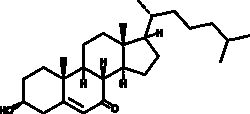
Cayman Chemical 7-keto Cholesterol 5mg
A bioactive oxysterol; a major oxysterol component of oxidized LDL; produced by oxidation of cholesterol via ethanol-mediated lipid peroxidation or photodamage as well as oxidation of 7-dehydro cholesterol by CYP7A1; inhibits CYP7A1 (IC50 = ~1 μM); induces activation and chemotaxis of retinal microglia as well as polarization to a pro-inflammatory state; increases ocular levels of VEGF, IL-1β, and GRO/KC, macrophage infiltration, and neovascularization in rat eye; levels are increased in lipid deposits in a variety of chronic diseases
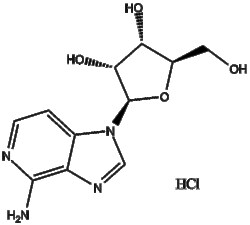
Apexbio Technology LLC 3-Deazaadenosine hydrochloride(Synonyms: 3-Deazaadenosine HCl, C3-Deazaadenosine hydrochloride, 3-Deaza-adenosine hydrochloride), 1mg, CAS: 86583-19-9.
3-Deazaadenosine hydrochloride (CAS 86583-19-9) is a selective inhibitor of S-adenosylhomocysteine hydrolase (SAHH) exhibiting inhibition with a Ki value around 3 9 M It disrupts SAHH-dependent methyl metabolism pathways thereby altering intracellular methyltransferase reactions Due to this biochemical activity it serves as a research agent for studying inflammation cell proliferation and HIV infection as well as investigations into enzyme-mediated methylation processes and related pathological mechanisms
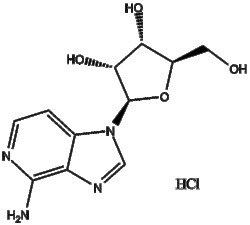
Apexbio Technology LLC 3-Deazaadenosine hydrochloride(Synonyms: 3-Deazaadenosine HCl, C3-Deazaadenosine hydrochloride, 3-Deaza-adenosine hydrochloride), 10mg, CAS: 86583-19-9.
3-Deazaadenosine hydrochloride (CAS 86583-19-9) is a selective inhibitor of S-adenosylhomocysteine hydrolase (SAHH) exhibiting inhibition with a Ki value around 3 9 M It disrupts SAHH-dependent methyl metabolism pathways thereby altering intracellular methyltransferase reactions Due to this biochemical activity it serves as a research agent for studying inflammation cell proliferation and HIV infection as well as investigations into enzyme-mediated methylation processes and related pathological mechanisms
![eMolecules 7693-46-1 | 4-Nitrophenyl chloroformate | Oakwood Chemical | MFCD00007321 | 201.560 | C7H4ClNO4 | 99.000 | [O-][N+](=O)c1ccc(OC(Cl)=O)cc1 | 1g | 553664115](https://assets.fishersci.com/TFS-Assets/CCG/product-images/5000471253.jpg-250.jpg)
eMolecules 7693-46-1 | 4-Nitrophenyl chloroformate | Oakwood Chemical | MFCD00007321 | 201.560 | C7H4ClNO4 | 99.000 | [O-][N+](=O)c1ccc(OC(Cl)=O)cc1 | 1g | 553664115
4-Nitrophenyl chloroformate | Oakwood Chemical | 7693-46-1 | MFCD00007321 | 201.560 | C7H4ClNO4 | 99.000 | [O-][N+](=O)c1ccc(OC(Cl)=O)cc1 | 1g | 553664115
![eMolecules 709-50-2 | Methyl ??-D-glucopyranoside | Ambeed | MFCD00006602 | 194.183 | C7H14O6 | 98.000 | CO[C@@H]1O[C@H](CO)[C@@H](O)[C@H](O)[C@H]1O | 100g | 633658512](https://assets.fishersci.com/TFS-Assets/CCG/product-images/5000491069.jpg-250.jpg)
eMolecules 709-50-2 | Methyl ??-D-glucopyranoside | Ambeed | MFCD00006602 | 194.183 | C7H14O6 | 98.000 | CO[C@@H]1O[C@H](CO)[C@@H](O)[C@H](O)[C@H]1O | 100g | 633658512
Methyl ??-D-glucopyranoside | Ambeed | 709-50-2 | MFCD00006602 | 194.183 | C7H14O6 | 98.000 | CO[C@@H]1O[C@H](CO)[C@@H](O)[C@H](O)[C@H]1O | 100g | 633658512

Medchemexpress LLC Latent TGF beta 1/TG 50ug | 50ug
Transforming growth factor beta-1 proprotein is the precursor of the Latency-associated peptide (LAP) and Transforming growth factor beta-1 (TGF-beta-1) chains TGF beta 1/TGFB1 Protein Mouse (HEK293 His) is a recombinant protein (L30-S390) produced by HEK293 cells with His tag[1][2]

Medchemexpress LLC IFN-beta Mouse HEK 500ug
IFN-beta is a secretory cytokine produced by cells under viral infection or nucleic acid stimulation IFN binds to cell surface heterodimeric receptors (IFNAR1/IFNAR2) activates the JAK-STAT signaling pathway and induces the expression of interferon-stimulated genes (ISGs) (such as PKR 2 5 -OAS) IFN-beta inhibits viral proliferation regulates immune responses (such as inhibiting Th1 cell polarization reducing pro-inflammatory cytokine secretion) inhibits the proliferation of vascular smooth muscle cells and tumor cells IFN-beta has anti-atherosclerotic and vascular remodeling effects Mouse (HEK293) is the recombinant mouse-derived IFN-beta protein expressed by HEK293 with tag free