
Benzodiazepines

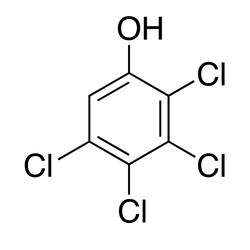
Cambridge Isotope Laboratories 2 3 4 5-Tetrachlorophenol (unlabeled) 0 1 g
2 3 4 5-Tetrachlorophenol (unlabeled) 0 1 g

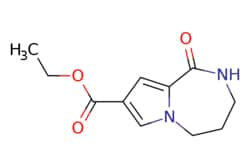
eMolecules 1338563-17-9 | ETHYL 1-OXO-2,3,4,5-TETRAHYDRO-1H-PYRROLO[1,2-A][1,4]DIAZEPINE-8-CARBOXYLATE | AstaTech | MFCD22543877 | 222.244 | C11H14N2O3 | 95.000 | CCOC(=O)c1cc2C(=O)NCCCn2c1 | 0.25g | 296372201
ETHYL 1-OXO-2,3,4,5-TETRAHYDRO-1H-PYRROLO[1,2-A][1,4]DIAZEPINE-8-CARBOXYLATE | AstaTech | 1338563-17-9 | MFCD22543877 | 222.244 | C11H14N2O3 | 95.000 | CCOC(=O)c1cc2C(=O)NCCCn2c1 | 0.25g | 296372201

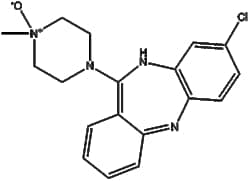
Apexbio Technology LLC Clozapine N-oxide (CNO) 34233-69-7 5mg
Clozapine N-oxide (CNO CAS 34233-69-7) is a metabolic derivative of the atypical antipsychotic drug clozapine primarily known for its applications as a chemogenetic actuator Biologically inert in typical mammalian systems CNO selectively activates engineered muscarinic receptors such as the M3-designer receptors exclusively activated by designer drugs (DREADDs) Additionally CNO influences receptor expression levels exposure in cortical neuron cultures reduces 5-HT2 receptor density significantly Due to its specificity CNO is extensively utilized in neuroscience research to modulate neuronal activity non-invasively through chemogenetic approaches


Medchemexpress LLC Coelenterazine | 55779-48-1 | 98.5% | 423.46 | 25 MG

Coelenterazine is a luminescent enzyme substrate for apoaequorin and Renilla luciferase. It has been utilized as a bioluminescence donor in bioluminescence resonance energy transfer (BRET) for detecting protein-protein interactions. It also serves as a superoxide anion-sensitive chemiluminescent probe and can be employed in the chemiluminescent detection of peroxynitrite.
- Functions as a luminescent enzyme substrate
- Used as a bioluminescence donor in BRET for protein-protein interaction detection
- Acts as a superoxide anion-sensitive chemiluminescent probe
- Can be used for chemiluminescent detection of peroxynitrite (Ex/Em = 429/466 nm)

Medchemexpress LLC Coelenteramine 400a | 70217-82-2 | MFCD04114093 | 99.7% | 391.46 | C26H21N3O | 10 MG
Coelenteramine 400a is a coelenterazine-derived luciferase substrate used for Renilla luciferase assays, bioluminescence detection, and BRET studies. Supplied as a solid for research use, it is high-purity and should be protected from light during storage and handling.
- Produces 395-400 nm emission with Renilla luciferase
- High purity suitable for sensitive assays
- Solid form that dissolves in common organic solvents
- Recommended storage: -20°C, protect from light; in solvent: -80°C for long-term
- Offered in research-scale quantities for assay development

Medchemexpress LLC Coelenterazine h (2-deoxycoelenterazine) | 50909-86-9 | 99.4% | 407.46 | C26H21N3O2 | 10 MG
Coelenterazine h (2-deoxycoelenterazine) is a yellow to orange solid luminescent substrate used in biochemical and cell-based assays. It functions as a substrate for Renilla luciferase, offers increased sensitivity to Ca2+ for detecting small calcium changes, and is supplied with high purity; the compound is unstable in solution and should be prepared fresh and stored protected from light at -20°C.
- Is a luminescent substrate for Renilla luciferase, enabling bioluminescent assays.
- Shows increased sensitivity to Ca2+, aiding detection of small calcium changes.
- Supplied as a yellow to orange solid with high purity (≈99.4%).
- Exhibits excitation/emission at 437/466 nm for assay matching.
- Is unstable in solution; prepare fresh solutions and store at -20°C protected from light.

Medchemexpress LLC Coelenterazine | 55779-48-1 | 98.59% | 423.46 | 500 MG
Coelenterazine is a luminescent enzyme substrate for apoaequorin and Renilla luciferase. It has been used as the bioluminescence donor in bioluminescence resonance energy transfer (BRET) to detect protein-protein interactions. This compound is also a superoxide anion-sensitive chemiluminescent probe and can be used in chemiluminescent detection of peroxynitrite (Ex/Em = 429/466 nm).
- Luminescent enzyme substrate for apoaequorin and Renilla luciferase.
- Used as a bioluminescence donor in BRET to detect protein-protein interactions.
- Superoxide anion-sensitive chemiluminescent probe.
- Can be used in chemiluminescent detection of peroxynitrite.

Medchemexpress LLC Coelenterazine h | 50909-86-9 | 98.8% | 10 MG
Coelenterazine h hydrochloride is a coelenterazine derivative used as a luminescent substrate for Renilla luciferase and related bioluminescent assays. It is suitable for sensitive luciferase detection and applications measuring Ca2+-dependent luminescence.
- Luminescent substrate for Renilla luciferase and related enzymes.
- High chemical purity (approximately 98.8%).
- Molecular weight 443.92 and molecular formula C26H22ClN3O2.
- Soluble in ethanol at ≥ 50 mg/mL.
- Store protected from light, under nitrogen, at -20°C; stock solutions stable at -80°C for up to 6 months.
- Supplied as a 10 MG vial for laboratory use.


Medchemexpress LLC Coelenterazine | 55779-48-1 | 98.45% | 423.46 | 100 MG
Coelenterazine is a luminescent enzyme substrate for apoaequorin and Renilla luciferase. It has been used as a bioluminescence donor in bioluminescence resonance energy transfer (BRET) to detect protein-protein interactions. It is also a superoxide anion-sensitive chemiluminescent probe that can be used in the chemiluminescent detection of peroxynitrite (Ex/Em = 429/466 nm).
- Luminescent enzyme substrate for apoaequorin and Renilla luciferase.
- Used in bioluminescence resonance energy transfer (BRET) to detect protein-protein interactions.
- Superoxide anion-sensitive chemiluminescent probe.
- Can be used in chemiluminescent detection of peroxynitrite (Ex/Em = 429/466 nm).
- For research use only.
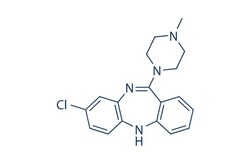
Selleck Chemical LLC Clozapine S2459-50mg
Clozapine (HF 1854 LX 100-129) is an atypical antipsychotic drug by acting as a 5-HT antagonist used in the treatment of schizophrenia