
Halogen Inorganic Salts


Molecular Probes™ Propidium Iodide
Propidium iodide (PI) is a popular red-fluorescent nuclear and chromosome counterstain. Since propidium iodide is not permeant to live cells, it is also commonly used to detect dead cells in a population.



Sigma Aldrich Fine Chemicals Biosciences Potassium chloride, powder, BioReagent, suitable for cell culture, suitable for insect cell culture|7447-40-7 | MFCD00011360 | 500g
Potassium chloride, powder, BioReagent, suitable for cell culture, suitable for insect cell culture | Purity: 99.0% | MW: 74.55 | 7447-40-7 | MFCD00011360 | 500g


Sigma Aldrich Fine Chemicals Biosciences Zinc chloride BioReagent, for molecular biology, suitable for cell culture, suitable for insect cell culture | 7646-85-7 | MFCD00011295 | 50G
Zinc chloride BioReagent, for molecular biology, suitable for cell culture, suitable for insect cell culture | Mol Wt: 136.3 | 7646-85-7 | MFCD00011295 | 50G

Sigma Aldrich Fine Chemicals Biosciences Zinc chloride BioReagent, for molecular biology, suitable for cell culture, suitable for insect cell culture | 7646-85-7 | MFCD00011295 | 100g
Zinc chloride BioReagent, for molecular biology, suitable for cell culture, suitable for insect cell culturePurity: | MW: 136.3 | 7646-85-7 | MFCD00011295 | 100g
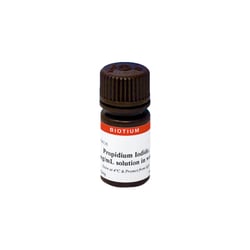
Biotium Propidium Iodide, 1 mg/mL solution in water
Propidium iodide (PI) is a cell impermeable nucleic acid intercalating dye. Because PI is excluded from viable cells it can be used in apoptotic studies to distinguish necrotic cells or cells in the late stages of apoptosis from viable cells or cells in early apoptosis where cell membranes are still intact. PI is also utilized as a counterstain in multicolor fluorescent imaging. After entering cells and binding to DNA and RNA, the fluorescence of PI is enhanced 20- to 30-fold. PI can be used in flow cytometry and fluorescence microscopy. 1 mg/mL solution in water Orange / red liquid Store at 4°C and protect from light &lamba;Ex/&lamba;Em (DNA-bound) = 535/617 nm &lamba;Ex/&lamba;Em (no DNA) = 493/636 nm C27H34I2N4 MW: 668.4 [25535-16-4]

Biotium Propidium Iodide
Propidium iodide (PI) is a cell impermeable nucleic acid intercalating dye. Because PI is excluded from viable cells, it can be used to distinguish necrotic or late apoptotic cells with damaged plasma membranes from viable cells or early apoptotic cells with intact cell membranes. After entering cells and binding to DNA and RNA, the fluorescence of PI is enhanced 20- to 30-fold. PI can be used in flow cytometry and fluorescence microscopy. PI is also utilized as a counterstain in multicolor fluorescent imaging, but nuclear-specific staining requires digestion of cellular RNA. The dye has an excitation/emission of 535/617 nm when bound to DNA. Properties: Orange red solid soluble in water or DMSO; Store dessicated at 4⁰C, protect from light; Ex/Em= 535/617 nm (with DNA); C27H34I2N4; MW: 668.4; [25535-16-4].

Sigma Aldrich Fine Chemicals Biosciences C28/I2 Human Chondrocyte C
The chondrocyte is the only specialized cell type present in articular cartilage. They produce secretions to support and repair the cartilage matrix. Human chondrocytes in mature articular cartilage are post-mitotic and terminally differentiated cells. Studies on human chondrocytes have been hampered by the difficulty in obtaining sufficient numbers of primary human chondrocytes from a single joint and by variabilities among donors due to factors such as age and medical conditions.C-28/I2 is a clonal line derived from the nonclonal T/C-28a4 cells which were immortalized via retroviral vector-mediated simian virus SV40 Large T antigen (Tag) expression.
Aat Bioquest Hexidium Iodide CAS 211566-66-4 (5 mg)

The nucleic acid stain hexidium iodide is permeant to mammalian cells and selectively stains almost all gram-positive bacteria in the presence of gram-negative bacteria. This catalog is for 5 mg.
Crescent Chemical Co Inc PROPIDIUM IODIDE RESEARCH GRDE
Propidium iodide research grade For selective labelling of DNA in dead cells; used in tumor diagnosis (flow cytometry) (1, 2). For the study of micronuclear morphology of protozoa (3). Size - 25MG Storage Conditions - +2 °C TO +8 °C Catalog Number -
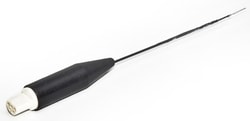
World Precision Instrument Flexible Hydrogen Sulfide Sensor
About Hydrogen Sulfide
Although hydrogen sulfide is generally thought of in terms of a poisonous gas, it is endogenously produced in many mammalian tissues. It has been detected in micromolar amounts in blood and brain tissue. Hydrogen sulfide is reported as having a broad range of biological functions and although its potential to participate in cell signaling is clear, this biological role is not well understood. Hydrogen sulfide is strongly anagolous to nitric oxide because they share several physical and metabolic properties.

Medchemexpress LLC Aeol-10150 pentachloride | 286475-30-7 | 98.0% | 1033.24 | 5 MG
AEOL-10150 pentachloride is a metalloporphyrin-catalyzed antioxidant and a superoxide dismutase mimetic. It scavenges reactive oxygen species (ROS) and reactive nitrogen species (RNS), and modulates the NF-κB signaling pathway.
- Potent antioxidant and anti-inflammatory activities.
- Mitigates tissue damage caused by radiation and chemical agents like CEES.
- Synergizes with radiotherapy for anticancer effects on prostate tumors.
- Reverses CEES-induced cell viability decline, DNA damage, and reduces ROS generation.
- Attenuates skin thickening, microvesication, and DNA oxidation in CEES-induced skin injury.
- Reduces pulmonary fibrosis, collagen deposition, and inflammation in radiation-induced lung injury.
- Improves lung injury in rats with CEES inhalation injury.
- Combined with radiotherapy, it inhibits tumor growth more significantly than radiotherapy alone.

Medchemexpress LLC Aeol-10150 pentachloride | 286475-30-7 | 98.0% | 1033.24 | 100 MG
AEOL-10150 pentachloride is a metalloporphyrin-catalyzed antioxidant and superoxide dismutase mimetic. It scavenges reactive oxygen species (ROS) and reactive nitrogen species (RNS), and modulates the NF-κB signaling pathway. Exhibiting potent antioxidant and anti-inflammatory activities, it mitigates tissue damage from radiation and chemical agents, and synergizes with radiotherapy against prostate tumors.
- Scavenges ROS and RNS.
- Modulates NF-κB signaling.
- Potent antioxidant and anti-inflammatory.
- Mitigates radiation and chemical damage.
- Synergizes with radiotherapy for anticancer effects.
- Reverses cell viability decline and DNA damage.
- Reduces cytoplasmic and mitochondrial ROS.
- Attenuates skin thickening and DNA oxidation.
- Reduces pulmonary fibrosis and inflammation.
- Improves lung injury.
- Inhibits tumor growth.