Carbonyl compounds


Medchemexpress LLC Propranolol (hydrochloride) | 318-98-9 | 99.9% | 1 ML

Propranolol hydrochloride is a nonselective and BBB-permeable β-adrenergic receptor (βAR) antagonist. It has high affinity for the β1AR and β2AR, with Ki values of 1.8 nM and 0.8 nM, respectively. It inhibits [3H]-DHA binding to rat brain membrane preparation with an IC50 of 12 nM. Propranolol hydrochloride is used for the study of hypertension, pheochromocytoma, myocardial infarction, cardiac arrhythmias, angina pectoris, and hypertrophic cardiomyopathy.
- Nonselective and BBB-permeable β-adrenergic receptor (βAR) antagonist.
- High affinity for β1AR and β2AR.
- Increases total ERK1/2 levels in a dose-dependent manner and ERK1/2 activation at specific concentrations in HemSCs (in vitro).
- Decreases cell proliferation in HemSCs (in vitro).
- Induces HemSC apoptosis (in vitro).
- Reduces vessel diameter and increases phosphorylated ERK1/2 in a xenograft mouse model of IH (in vivo).

Sigma Aldrich Fine Chemicals Biosciences Propionaldehyde >=97%, FG | 123-38-6 | MFCD00007020 | 1KG
Propionaldehyde >=97%, FG | Purity: >=97% | Mol Wt: 58.08 | 123-38-6 | MFCD00007020 | 1KG

Sigma Aldrich Fine Chemicals Biosciences Propionaldehyde >=97%, FG | 123-38-6 | MFCD00007020 |
Propionaldehyde >=97%, FG | Purity: >=97% | Mol Wt: 58.08 | 123-38-6 | MFCD00007020 |

Selleck Chemical LLC HO-3867
HO-3867 an analog of curcumin is a selective STAT3 inhibitor that inhibits its phosphorylation transcription and DNA binding without affecting the expression of other active STATs HO-3867 induces apoptosis

Medchemexpress LLC Sulfaguanidine-13C6 | 99.0% | 1 MG
Sulfaguanidine-13C6 is the 13C6 labeled Sulfaguanidine. Sulfaguanidine is an orally active antimicrobial agent/antibiotic of sulfonamide class. Sulfaguanidine can be used for the research of enteric infections such as bacillary dysentery. For research use only.
- This compound can be used as a tracer.
- This compound can be used as an internal standard for quantitative analysis by NMR, GC-MS, or LC-MS.
Medchemexpress LLC Metalaxyl-13C6 | 1356199-69-3 | 98.4% | 5 MG
Metalaxyl-13C6 is the 13C-labeled Metalaxyl, a fungicide known for inhibiting protein synthesis in fungi. It has been shown to inhibit the growth of potato blight (P. infestans) fungal isolates from Serbian potato fields. This compound is intended for research use only and is not for patient application.
- 13C-labeled Metalaxyl
- Inhibits protein synthesis in fungi
- Inhibits potato blight (P. infestans)
- Can be used as a tracer for quantitative analysis
- Can be used as an internal standard for quantitative analysis

Medchemexpress LLC cis-11-Hexadecenal 100mg
cis-11-Hexadecenal has a fatty waxy odor and is commonly used as a flavoring agent in the food and beverage industry In addition it can be used as an intermediate in the synthesis of various organic compounds including fragrances pharmaceuticals and agrochemicals Its unique chemical properties make it an important ingredient in a variety of industrial processes notably in the production of perfumes and air fresheners
AdipoGen Propranolol HCl
Chemical. CAS 318-98-9. Formula C16H21NO2 . HCl. Molecular Weight 295.8. ±-Propranolol hydrochloride is a beta-adrenergic receptor beta-AR antagonist Kds = 6.91, 0.832, and 117.49 nM for human beta1-, beta2- and beta3-ARs, respectively. It also acts as a non-specific 5-HT1/5-HT2 serotonin receptor antagonist, reducing tranylcypromine/L-tryptophan-induced hyperactivity in rats. ±-Propranolol hydrochloride is useful as an antihypertensive drug, cardiac depressant and also in the treatment of angina pectoris. It decreases the effect of stress and exercise on heart by reducing the rate of contraction and conduction of impulse. It is known to competitively block the action of catecholamines.

Sigma Aldrich Fine Chemicals Biosciences Glutaraldehyde solution Grade I, 25% in H2O, specially purified for use as an electron microscopy fixative | 111-30-8 | MFCD00007025 | 50ML
Glutaraldehyde solution Grade I, 25% in H2O, specially purified for use as an electron microscopy fixative | Mol Wt: 100.12 | 111-30-8 | MFCD00007025 | 50ML
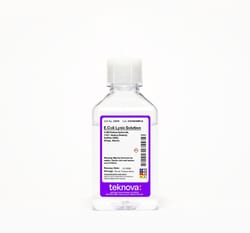

Medchemexpress LLC Rhodamine 123 | 62669-70-9 | 99.5% | 25 MG
Rhodamine dyes are membrane-permeable cationic fluorescent probes that specifically recognize mitochondrial membrane potentials, thereby attaching to mitochondria and producing bright fluorescence. At certain concentrations, rhodamine dyes have low toxicity to cells, making them commonly used to detect mitochondria in animal cells, plant cells, and microorganisms.
- Fluorescent dye
- Specifically recognizes mitochondrial membrane potentials
- Attaches to mitochondria and produces bright fluorescence
- Low toxicity to cells at certain concentrations
- Used to detect mitochondria in animal cells, plant cells, and microorganisms
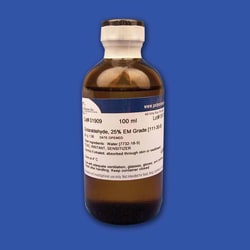
Polysciences, Inc. Glutaraldehyde Em Gr 25% 100ml. 111-30-8
Glutaraldehyde Em Gr 25% 100ml. 111-30-8
TARGETMOL CHEMICALS INC Rhodamine 123 50MG
Also available in 5 mg, 10 mg, 25 mg, 100 mg and bulk. Please contact Fisher for quotes. Rhodamine 123 is a fluorescent dye (λex=503 nm, λem=527 nm). Purity 99.23%