
Primary Antibody Matched Pairs


Biotium CD79b (B-Cell Marker)(IGB/1843), CF594 conjugate, 0.1mg/mL
CD79 (also designated Ig chains, designated CD79B or B29. The B cell antigen receptor complex (BCR) is formed by the association of CD79 with a membrane immunoglobulin, such as IgM or IgD. The membrane immunoglobulins IgM and IgD achieve surface expression and antigen presentation function in response to CD79 association. The cytoplasmic tails of both CD79A and CD79B contain an ITAM (immuno-receptor tyrosine-based activation) motif, which acts to initiate the BCR signaling reactions by binding to and activating tyrosine kinases. Primary antibodies are available purified, or with a selection of fluorescent CF Dyes and other labels. CF Dyes offer exceptional brightness and photostability. Note: Conjugates of blue fluorescent dyes like CF405S and CF405M are not recommended for detecting low abundance targets, because blue dyes have lower fluorescence and can give higher non-specific background than other dye colors.

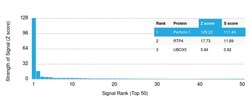
Biotium Perforin-1 (Pore Forming Protein) (Apoptosis Marker)(PRF1/2467), CF488A conjugate, 0.1mg/mL
Perforin is a pore-forming protein that leads to osmotic lysis of the target cells and subsequently enables granzymes to enter the target cells and activate apoptosis. Perforin has structural and functional similarities to complement component 9 (C9). Like C9, this protein creates transmembrane tubules and is capable of lysing non-specifically a variety of target cells. It is one of the main cytolytic proteins of cytolytic granules, and is known to be a key effector molecule for T-cell- and natural killer-cell-mediated cytolysis. Defects in this gene cause familial hemophagocytic lymphohistiocytosis type 2 (HPLH2), a rare and lethal autosomal recessive disorder of early childhood. The expression of perforin is reportedly upregulated in activated CD8 T-cells, natural killer cells and some CD4 T-cells. Primary antibodies are available purified, or with a selection of fluorescent CF Dyes and other labels. CF Dyes offer exceptional brightness and photostability. Note: Conjug
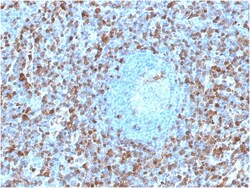
Biotium Annexin A1 / (Hairy Cell Leukemia Marker)(ANXA1/1671), CF568 conjugate, 0.1mg/mL
Annexin A1 belongs to the annexin family. It plays a role in glucocorticoid-mediated down-regulation of the early phase of the inflammatory response. In resting conditions Annexin A1 is localized to the cytoplasm. Upon activation it is mobilized to the membrane and secreted. Annexin A1 and contains 4 annexin repeats. A pair of annexin repeats may form one binding site for calcium and a phospholipid. Expression of the ANXA1 gene is upregulated in hairy cell leukemia (HCL). Detection of ANXA1 provides a simple, highly sensitive and specific assay for diagnosing HCL. Annexin A1 has also been found to be protective against DNA damage induced by heat in breast cancer cells, suggesting it is involved in tumor suppressive and protective activities, and also is associated with treatment resistance. Primary antibodies are available purified, or with a selection of fluorescent CF Dyes and other labels. CF Dyes offer exceptional brightness and photostability. Note: Conjugates of blue
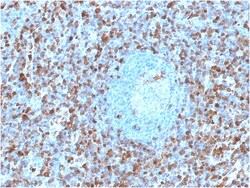
Biotium Annexin A1 / (Hairy Cell Leukemia Marker)(ANXA1/1671), CF594 conjugate, 0.1mg/mL
Annexin A1 belongs to the annexin family. It plays a role in glucocorticoid-mediated down-regulation of the early phase of the inflammatory response. In resting conditions Annexin A1 is localized to the cytoplasm. Upon activation it is mobilized to the membrane and secreted. Annexin A1 and contains 4 annexin repeats. A pair of annexin repeats may form one binding site for calcium and a phospholipid. Expression of the ANXA1 gene is upregulated in hairy cell leukemia (HCL). Detection of ANXA1 provides a simple, highly sensitive and specific assay for diagnosing HCL. Annexin A1 has also been found to be protective against DNA damage induced by heat in breast cancer cells, suggesting it is involved in tumor suppressive and protective activities, and also is associated with treatment resistance. Primary antibodies are available purified, or with a selection of fluorescent CF Dyes and other labels. CF Dyes offer exceptional brightness and photostability. Note: Conjugates of blue
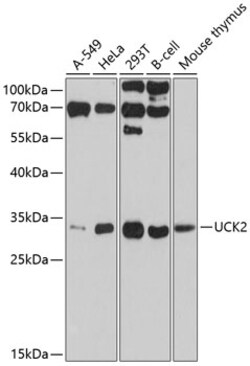
ABclonal Technology UCK2 Rabbit pAb

This gene encodes a pyrimidine ribonucleoside kinase. The encoded protein (EC 2.7.1.48) catalyzes phosphorylation of uridine and cytidine to uridine monophosphate (UMP) and cytidine monophosphate (CMP), respectively.
American Research Products Inc Mouse IL13 In Vivo Ab
Mouse IL-13 In Vivo Low Endotoxin Antibody [38213] is a in vivo antibody with rat reactivity Available in 100 ug size with 7 - 14 business days lead time Ships via gel pack Functional grade preclinical antibodies may be stored sterile as received at 2-8 C for up to one month For longer term storage aseptically aliquot in working volumes without diluting and store at -80 C Avoid Repeated Freeze Thaw Cycles


Sino Biological Recombinant Human RIOK2 Protein (Full length, GST Tag), Active 500 µg
Recombinant full-length human RIOK2 was expressed by baculovirus in Sf9 insect cells using an N-terminal GST tag.
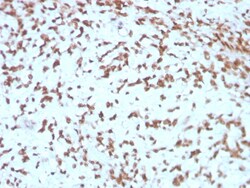
Biotium Cathepsin D (Tumor Marker)(CTSD/3275), 1mg/mL
Cathepsin D is a ubiquitously expressed lysosomal aspartyl protease involved in the normal degradation of proteins. It is synthesized as an inactive 43 kDa preprocathepsin D that is cleaved and glycosylated to form a 46 kDa procathepsin D and then further cleaved to produce 28 kDa and 15 kDa subunits (heavy and light chains, respectively). Cathepsin D exhibits pepsin-like activity and plays a role in protein turnover and in the proteolytic activation of hormones and growth factors. Mutations in this gene play a causal role in neuronal ceroid lipofuscinosis-10 and may be involved in the pathogenesis of several other diseases, including breast cancer and possibly Alzheimer's disease. Primary antibodies are available purified, or with a selection of fluorescent CF Dyes and other labels. CF Dyes offer exceptional brightness and photostability. Note: Conjugates of blue fluorescent dyes like CF405S and CF405M are not recommended for detecting low abundance targets, because blu
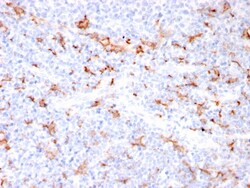
Biotium S100A9 + Calprotectin (S100A8/A9 Complex)(MAC3157R), Biotin conjugate, 0.1mg/mL
Recognizes the L1 or Calprotectin molecule, an intra-cytoplasmic antigen comprising of a 12 kDa alpha chain and a 14 kDa beta chain expressed by granulocytes, monocytes and by tissue macrophages. Macrophages usually arise from hematopoietic stem cells in the bone marrow. Under migration into tissues, the monocytes undergo further differentiation to become multifunctional tissue macrophages. They are classified into normal and inflammatory macrophages. Normal macrophages include macrophages in connective tissue (histiocytes), liver (Kupffer's cells), lung (alveolar macrophages), lymph nodes (free and fixed macrophages), spleen (free and fixed macrophages), bone marrow (fixed macrophages), serous fluids (pleural and peritoneal macrophages), skin (histiocytes, Langerhans's cell) and in other tissues. Inflammatory macrophages are present in various exudates. Macrophages are part of the innate immune system, recognizing, engulfing and destroying many potential pathogens including
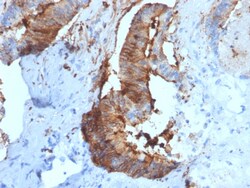
Biotium Cathepsin D (Tumor Marker)(CTSD/2781), CF488A conjugate, 0.1mg/mL
Cathepsin D is a ubiquitously expressed lysosomal aspartyl protease involved in the normal degradation of proteins. It is synthesized as an inactive 43 kDa preprocathepsin D that is cleaved and glycosylated to form a 46 kDa procathepsin D and then further cleaved to produce 28 kDa and 15 kDa subunits (heavy and light chains, respectively). Cathepsin D exhibits pepsin-like activity and plays a role in protein turnover and in the proteolytic activation of hormones and growth factors. Mutations in this gene play a causal role in neuronal ceroid lipofuscinosis-10 and may be involved in the pathogenesis of several other diseases, including breast cancer and possibly Alzheimer's disease. Primary antibodies are available purified, or with a selection of fluorescent CF Dyes and other labels. CF Dyes offer exceptional brightness and photostability. Note: Conjugates of blue fluorescent dyes like CF405S and CF405M are not recommended for detecting low abundance targets, because blu
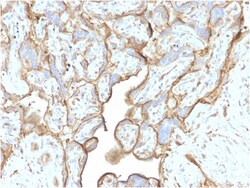
Biotium Annexin A1 / (Hairy Cell Leukemia Marker)(CPTC-ANXA1-1), 0.2mg/mL
Annexin A1 belongs to the annexin family. It plays a role in glucocorticoid-mediated down-regulation of the early phase of the inflammatory response. In resting conditions Annexin A1 is localized to the cytoplasm. Upon activation it is mobilized to the membrane and secreted. Annexin A1 and contains 4 annexin repeats. A pair of annexin repeats may form one binding site for calcium and a phospholipid. Expression of the ANXA1 gene is upregulated in hairy cell leukemia (HCL). Detection of ANXA1 provides a simple, highly sensitive and specific assay for diagnosing HCL. Annexin A1 has also been found to be protective against DNA damage induced by heat in breast cancer cells, suggesting it is involved in tumor suppressive and protective activities, and also is associated with treatment resistance. Primary antibodies are available purified, or with a selection of fluorescent CF Dyes and other labels. CF Dyes offer exceptional brightness and photostability. Note: Conjugates of blue fluo
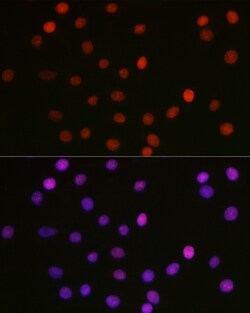
ABclonal Technology Acetyl-HMGB1-K29 Rabbit pAb
This gene encodes a protein that belongs to the High Mobility Group-box superfamily. The encoded non-histone, nuclear DNA-binding protein regulates transcription, and is involved in organization of DNA. This protein plays a role in several cellular processes, including inflammation, cell differentiation and tumor cell migration. Multiple pseudogenes of this gene have been identified. Alternative splicing results in multiple transcript variants that encode the same protein.
ABclonal Technology Phospho-AKT2 specific-S474 Rabbit pAb
This gene is a putative oncogene encoding a protein belonging to a subfamily of serine/threonine kinases containing SH2-like (Src homology 2-like) domains, which is involved in signaling pathways. The gene serves as an oncogene in the tumorigenesis of cancer cells For example, its overexpression contributes to the malignant phenotype of a subset of human ductal pancreatic cancers. The encoded protein is a general protein kinase capable of phophorylating several known proteins, and has also been implicated in insulin signaling.
Biotium Carboxypeptidase A1 / CPA1 (Pancreatic Cancer Marker)(CPA1/2711), CF405S conjugate, 0.1mg/mL
Carboxypeptidase A1 (CPA1) is a secreted zinc metalloprotease that is highly expressed in pancreatic tissue. It catalyzes the release of C-terminal amino acids from a variety of proteins, thereby playing a key role in protein digestion and degradation. Human pancreatic procarboxypeptidase A exists as three different active forms, two of which are carboxypeptidase A1 (CPA1) and carboxypeptidase A2 (CPA2). Abnormal levels of CPA1 are associated with pancreatic cancer, suggesting a possible role in either tumor progression or tumor suppression events. Primary antibodies are available purified, or with a selection of fluorescent CF Dyes and other labels. CF Dyes offer exceptional brightness and photostability. Note: Conjugates of blue fluorescent dyes like CF405S and CF405M are not recommended for detecting low abundance targets, because blue dyes have lower fluorescence and can give higher non-specific background than other dye colors.