
Hamster Secondary Antibodies

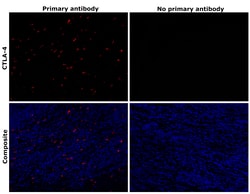
Invitrogen™ CTLA-4 Recombinant Rabbit Monoclonal Antibody (R3P1-E11)
Rabbit Recombinant Monoclonal Antibody


ICOS (CD278) Armenian Hamster anti-Human, Mouse, Alexa Fluor™ 488, Clone: C398.4A, BD Phrmingen™
Armenian Hamster Monoclonal Antibody
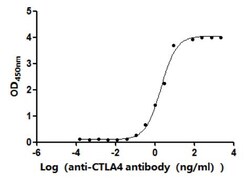
Invitrogen™ CTLA-4 Recombinant Human Monoclonal Antibody (12E8)

Human Recombinant Monoclonal Antibody

ABclonal Technology ABflo 594 Rabbit anti- CD28

Enables protein kinase binding activity Acts upstream of or within several processes including positive regulation of immune response positive regulation of intracellular signal transduction and regulation of lymphocyte activation Located in external side of plasma membrane and immunological synapse Human ortholog(s) of this gene implicated in multiple sclerosis and type 1 diabetes mellitus Orthologous to human CD28 (CD28 molecule)

Biotium CD28(C28/77), CF740 conjugate, 0.1mg/mL
Recognizes a glycoprotein of 44-88 kDa, which is identified as CD28. It is the critical T-cell co-stimulatory receptor which provides to the cell the important second activation signal by binding CD80 and CD86 that are expressed by antigen presenting cells. Besides its co-stimulation role, CD28 functions in preventing T-cells from anergic hyporesponsive state or from undergoing premature apoptotic cell death. CD28 is also expressed on human fetal NK cells and some NK cell lines, whereas on murine NK cells the CD28 expression is much broader.Primary antibodies are available purified, or with a selection of fluorescent CF Dyes and other labels. CF Dyes offer exceptional brightness and photostability. Note: Conjugates of blue fluorescent dyes like CF405S and CF405M are not recommended for detecting low abundance targets, because blue dyes have lower fluorescence and can give higher non-specific background than other dye colors.
American Research Products Inc AntiMouse CD28 In Vivo Ab
Anti-Mouse CD28 In Vivo Antibody - Low Endotoxin is a in vivo antibody with mouse reactivity produced in syrian hamster Available in 100 mg size with 7 - 14 business days lead time Ships via gel pack Functional grade preclinical antibodies may be stored sterile as received at 2-8 C for up to one month For longer term storage aseptically aliquot in working volumes without diluting and store at -80 C Avoid Repeated Freeze Thaw Cycles

American Research Products Inc AntiMouse CD28 In Vivo Ab
Anti-Mouse CD28 In Vivo Antibody - Ultra Low Endotoxin is a in vivo antibody with mouse reactivity produced in syrian hamster Available in 100 mg size with 7 - 14 business days lead time Ships via gel pack Functional grade preclinical antibodies may be stored sterile as received at 2-8 C for up to one month For longer term storage aseptically aliquot in working volumes without diluting and store at -80 C Avoid Repeated Freeze Thaw Cycles
ABclonal Technology PE anti-Human CD152/CTLA-4
This gene is a member of the immunoglobulin superfamily and encodes a protein which transmits an inhibitory signal to T cells The protein contains a V domain a transmembrane domain and a cytoplasmic tail Alternate transcriptional splice variants encoding different isoforms have been characterized The membrane-bound isoform functions as a homodimer interconnected by a disulfide bond while the soluble isoform functions as a monomer Mutations in this gene have been associated with insulin-dependent diabetes mellitus Graves disease Hashimoto thyroiditis celiac disease systemic lupus erythematosus thyroid-associated orbitopathy and other autoimmune diseases

Biotium CD28(C28/76), CF740 conjugate, 0.1mg/mL
Recognizes a glycoprotein of 44-88 kDa, which is identified as CD28. It is the critical T-cell co-stimulatory receptor which provides to the cell the important second activation signal by binding CD80 and CD86 that are expressed by antigen presenting cells. Besides its co-stimulation role, CD28 functions in preventing T-cells from anergic hyporesponsive state or from undergoing premature apoptotic cell death. CD28 is also expressed on human fetal NK cells and some NK cell lines, whereas on murine NK cells the CD28 expression is much broader. Primary antibodies are available purified, or with a selection of fluorescent CF Dyes and other labels. CF Dyes offer exceptional brightness and photostability. Note: Conjugates of blue fluorescent dyes like CF405S and CF405M are not recommended for detecting low abundance targets, because blue dyes have lower fluorescence and can give higher non-specific background than other dye colors.
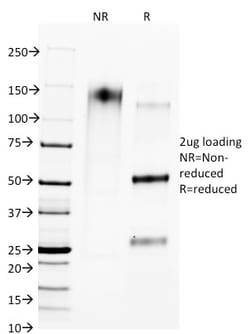
Biotium CTLA4 / CD152 (Negative Regulator of T-Cells)(L4P2F5.F10), CF488A conjugate, 0.1mg/mL
CTLA4 (CD152) is a cell surface receptor that behaves as a negative regulator of the proliferation and the effector function of T cells. It contains a V domain, a transmembrane domain, and a cytoplasmic tail. Alternate transcriptional splice variants, encoding different isoforms, have been characterized. The membrane-bound isoform functions as a homodimer interconnected by a disulfide bond, while the soluble isoform functions as a monomer. Mutations in this gene have been associated with insulin-dependent diabetes mellitus, Graves disease, Hashimoto thyroiditis, celiac disease, systemic lupus erythematosus, thyroid-associated orbitopathy, and other autoimmune diseases. The novel finding that CTLA-4 molecule is expressed and functional on human tumor cells opens up the possibility of antitumor therapeutic intervention based on targeting this molecule. Primary antibodies are available purified, or with a selection of fluorescent CF Dyes and other labels. CF Dyes offer excepti

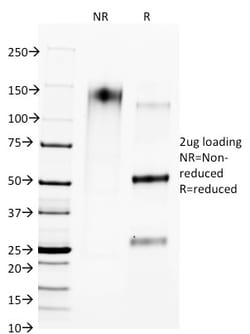
Biotium CTLA4 / CD152 (Negative Regulator of T-Cells)(L4P2F5.F10), CF740 conjugate, 0.1mg/mL
CTLA4 (CD152) is a cell surface receptor that behaves as a negative regulator of the proliferation and the effector function of T cells. It contains a V domain, a transmembrane domain, and a cytoplasmic tail. Alternate transcriptional splice variants, encoding different isoforms, have been characterized. The membrane-bound isoform functions as a homodimer interconnected by a disulfide bond, while the soluble isoform functions as a monomer. Mutations in this gene have been associated with insulin-dependent diabetes mellitus, Graves disease, Hashimoto thyroiditis, celiac disease, systemic lupus erythematosus, thyroid-associated orbitopathy, and other autoimmune diseases. The novel finding that CTLA-4 molecule is expressed and functional on human tumor cells opens up the possibility of antitumor therapeutic intervention based on targeting this molecule. Primary antibodies are available purified, or with a selection of fluorescent CF Dyes and other labels. CF Dyes offer excepti
American Research Products Inc AntiMouse CD28 In Vivo Ab
Anti-Mouse CD28 In Vivo Antibody - Low Endotoxin is a in vivo antibody with mouse reactivity produced in syrian hamster Available in 100 mg size with 7 - 14 business days lead time Ships via gel pack Functional grade preclinical antibodies may be stored sterile as received at 2-8 C for up to one month For longer term storage aseptically aliquot in working volumes without diluting and store at -80 C Avoid Repeated Freeze Thaw Cycles
Biotium CD28 (C28/1636), CF568 conjugate, 0.1mg/mL
This antibody recognizes a glycoprotein of 44-88 kDa, which is identified as CD28. It is the critical T-cell co-stimulatory receptor which provides to the cell the important second activation signal by binding CD80 and CD86 that are expressed by antigen presenting cells. Besides its co-stimulation role, CD28 functions in preventing T-cells from anergic hyporesponsive state or from undergoing premature apoptotic cell death. CD28 is also expressed on human fetal NK cells and some NK cell lines, whereas on murine NK cells the CD28 expression is much broader.Primary antibodies are available purified, or with a selection of fluorescent CF Dyes and other labels. CF Dyes offer exceptional brightness and photostability. Note: Conjugates of blue fluorescent dyes like CF405S and CF405M are not recommended for detecting low abundance targets, because blue dyes have lower fluorescence and can give higher non-specific background than other dye colors.