Promotional price valid on web orders only. Your contract pricing may differ. Interested in signing up for a dedicated account number?
Learn More

Invitrogen™ Ankyrin 1 Polyclonal Antibody
GREENER_CHOICE

Catalog No. PIPA5143887
Change view
Click to view available options
Quantity:
100 μg
1 product options available for selection
Product selection table with 1 available options. Use arrow keys to navigate and Enter or Space to select.
Catalog No. Quantity
PIPA5143887 100 μg
Use arrow keys to navigate between rows. Press Enter or Space to select a product option. 1 options available.
1 options
Catalog No. PIPA5143887 Supplier Invitrogen™ Supplier No. PA5143887
Only null left
Add to Cart
Add to Cart

Rabbit Polyclonal Antibody

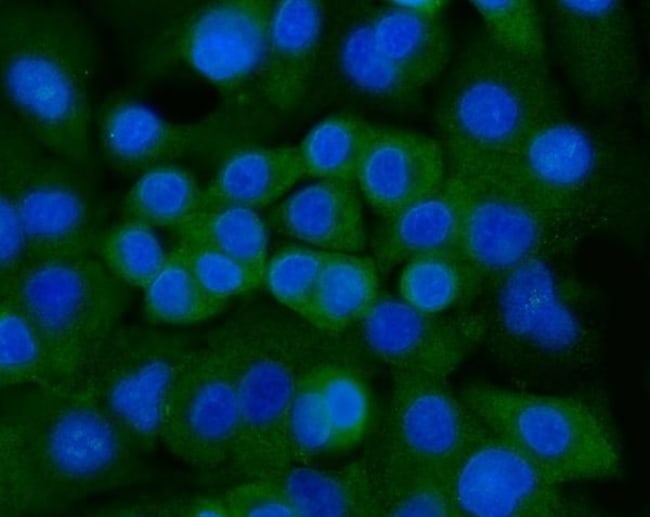
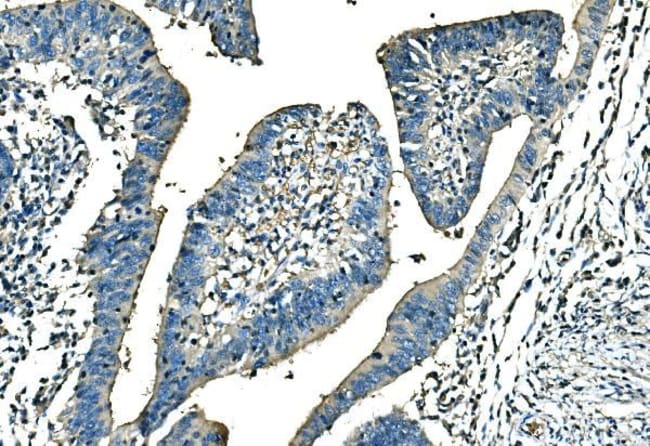
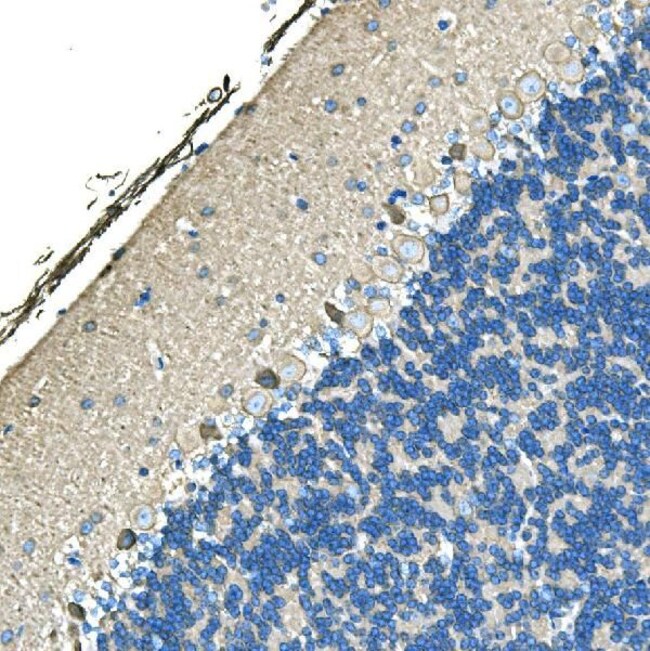
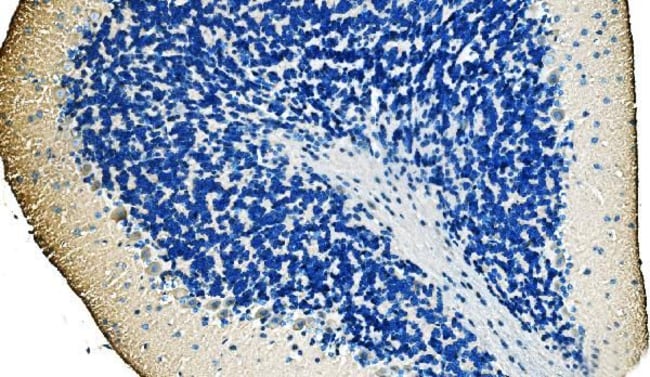
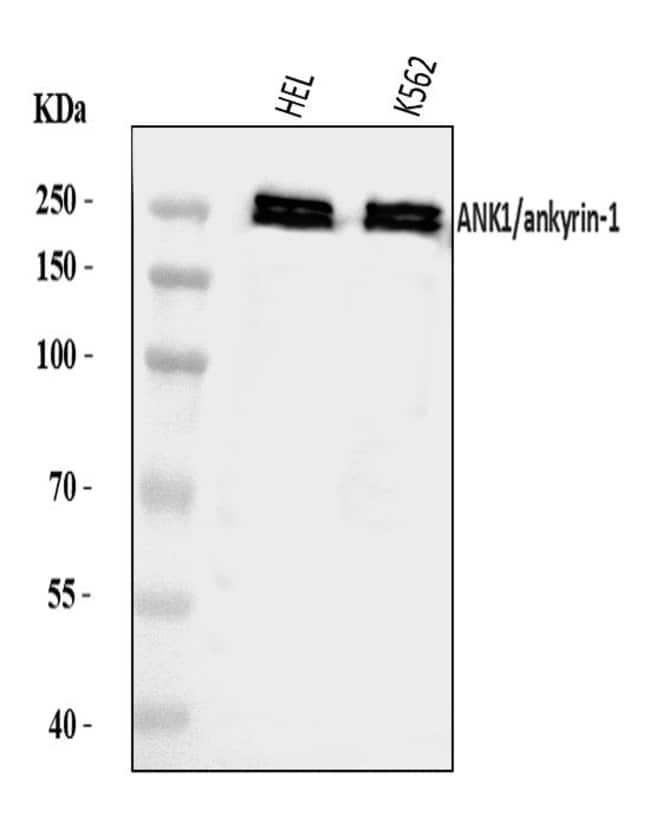
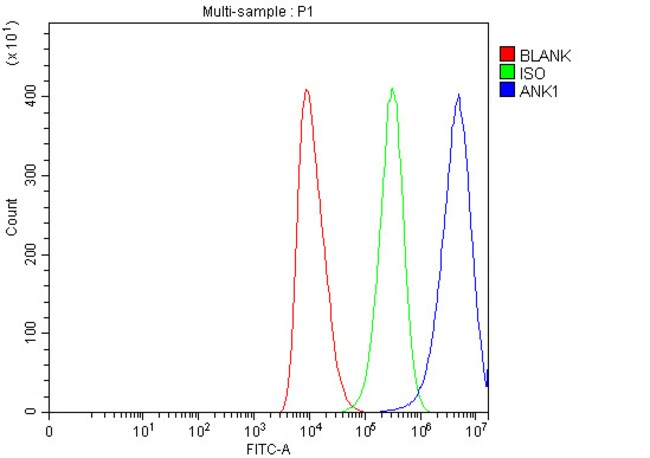
Adding 0.2 mL of distilled water will yield a concentration of 500 μg/mL. Positive Control - WB: human HEL whole cell, human K562 whole cell. IHC: human colon cancer tissue, mouse cerebellum tissue, rat cerebellum tissue. ICC/IF: A549 cell. Flow: HEL cell. Store at -20°C for one year from date of receipt. After reconstitution, at 4°C for one month. It can also be aliquotted and stored frozen at -20°C for six months. Avoid repeated freeze-thaw cycles.

Ankyrins are a family of proteins that link the integral membrane proteins to the underlying spectrin-actin cytoskeleton and play key roles in activities such as cell motility, activation, proliferation, contact and the maintenance of specialized membrane domains. Multiple isoforms of ankyrin with different affinities for various target proteins are expressed in a tissue-specific, developmentally regulated manner. Most ankyrins are typically composed of three structural domains: an amino-terminal domain containing multiple ankyrin repeats; a central region with a highly conserved spectrin binding domain; and a carboxy-terminal regulatory domain which is the least conserved and subject to variation. Ankyrin 1, the prototype of this family, was first discovered in the erythrocytes, but since has also been found in brain and muscles. Mutations in erythrocytic ankyrin 1 have been associated in approximately half of all patients with hereditary spherocytosis. Complex patterns of alternative splicing in the regulatory domain, giving rise to different isoforms of ankyrin 1 have been described. Truncated muscle-specific isoforms of ankyrin 1 resulting from usage of an alternate promoter have also been identified.
TRUSTED_SUSTAINABILITY

Specifications

Antigen Ankyrin 1
Applications ELISA, Flow Cytometry, Immunohistochemistry (Paraffin), Western Blot, Immunocytochemistry
Classification Polyclonal
Concentration 500 μg/mL
Conjugate Unconjugated
Formulation PBS with 4mg trehalose and no preservative
Gene ANK1
Gene Accession No. P16157, Q02357
Gene Alias ANK; ANK1; ANK-1; ANK-1; erythrocyte skeletal protein; ankyrin 1; ankyrin 1, erythrocytic; ankyrin 1, erythroid; ankyrin-1; Ankyrin-R; erythrocyte ankyrin; nb; normoblastic anemia; pale; rCG_43073; SPH1; SPH2
Gene Symbols ANK1
Host Species Rabbit
Immunogen E.coli-derived human Ankyrin erythroid/ANK/ANK1 recombinant protein (Position: N1300-Q1844).
Purification Method Antigen affinity chromatography
Quantity 100 μg
Regulatory Status RUO
Primary or Secondary Primary
Gene ID (Entrez) 11733, 286, 306570
Target Species Human, Mouse, Rat
Content And Storage -20°C
Product Type Antibody
Form Lyophilized
Isotype IgG
Show More Show Less
Product Title
Select an issue

By clicking Submit, you acknowledge that you may be contacted by Fisher Scientific in regards to the feedback you have provided in this form. We will not share your information for any other purposes. All contact information provided shall also be maintained in accordance with our Privacy Policy.