

Promotional price valid on web orders only. Your contract pricing may differ. Interested in signing up for a dedicated account number?
Learn More
Learn More
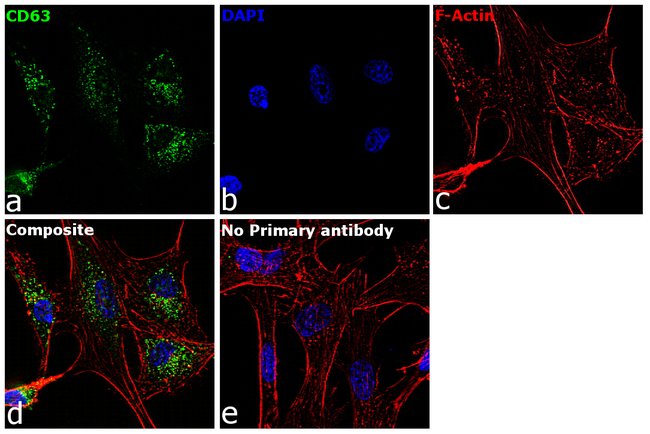
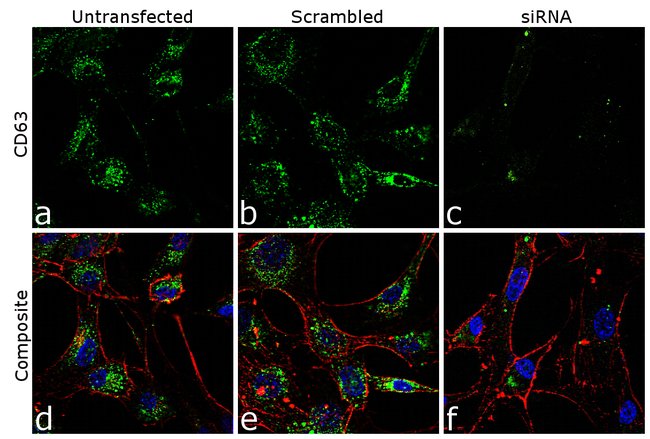
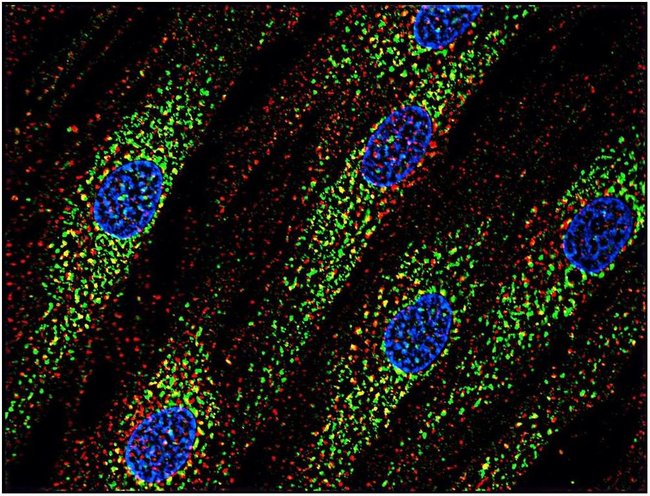
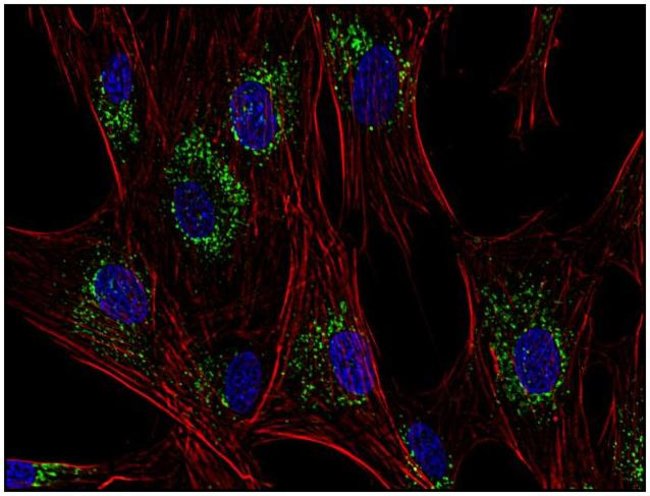
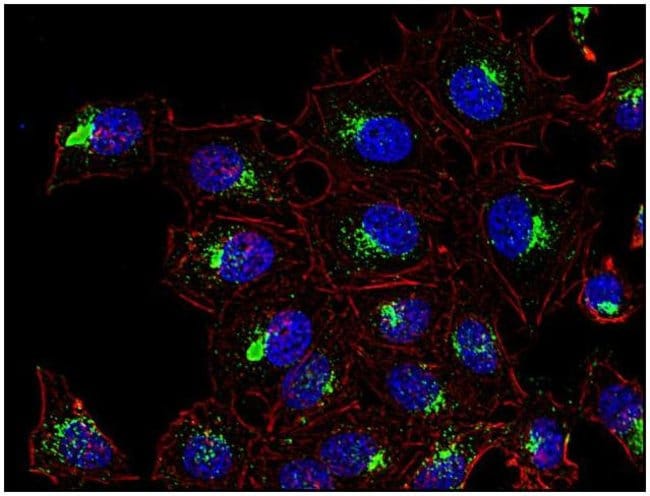
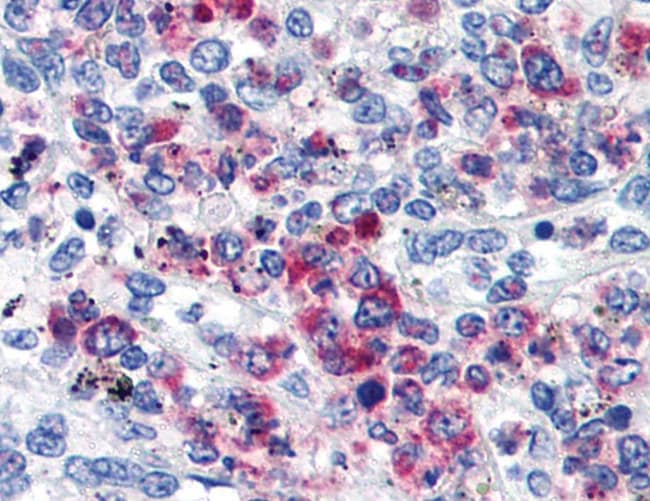
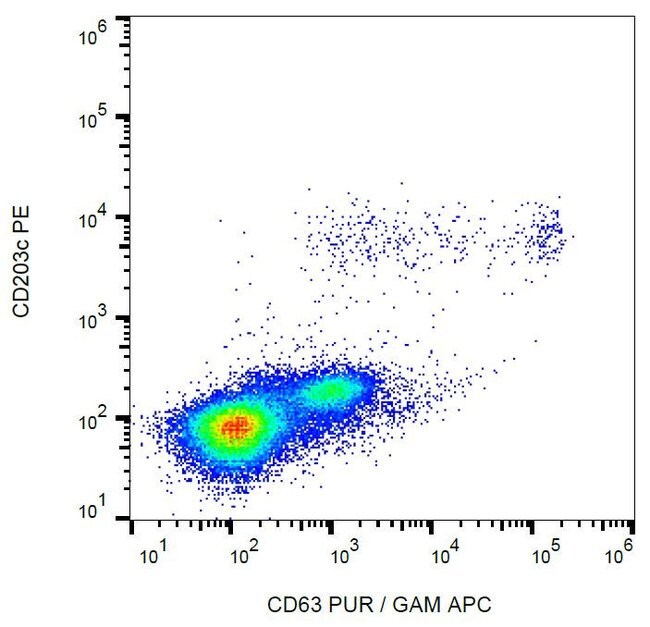
Invitrogen™ CD63 Monoclonal Antibody (MEM-259)

Description
This antibody reacts with an extracellular/luminal epitope of CD63 (LAMP-3), a 40-60 kDa tetraspan glycoprotein expressed by granulocytes, platelets, T cells, monocytes/macrophages and endothelial cells. Cell surface exposition of CD63 is usually activation-dependent.
CD63, also known as LAMP-3, is a glycoprotein belonging to the tetraspanin family, primarily located in late endosomes, lysosomes, and secretory vesicles across various cell types. It is expressed intracellularly in resting platelets and basophils, but upon activation, CD63 translocates to the plasma membrane, making it a widely used marker for basophil activation. Unlike basophils, mast cells can expose CD63 without activation. CD63 is expressed on activated platelets, monocytes, macrophages, and granulocytes, as well as endothelial cells, fibroblasts, and smooth muscle cells. It interacts with integrins (such as VLA-3 and VLA-6) and TIMP-1, playing roles in mediating allergic responses, phagocytosis, and cell migration. Additionally, CD63 is involved in the regulation of H/K-ATPase trafficking and ROMK1 channels, and serves as a T-cell costimulation molecule. CD63 expression can be used to predict prognosis in early-stage carcinomas and is identical to the melanoma-associated antigen ME491 and the platelet antigen PTLGP40. Diseases associated with CD63 dysfunction include melanoma and Hermansky-Pudlak Syndrome, highlighting its significance in both immune responses and disease processes.

Specifications
Specifications
| Antigen | CD63 |
| Applications | Flow Cytometry, Immunohistochemistry (Paraffin), Immunoprecipitation, Immunocytochemistry |
| Classification | Monoclonal |
| Clone | MEM-259 |
| Concentration | 1 mg/mL |
| Conjugate | Unconjugated |
| Formulation | PBS with 15mM sodium azide; pH 7.4 |
| Gene | CD63 |
| Gene Accession No. | P08962 |
| Gene Alias | C75951; CD 63; Cd63; CD63 antigen; CD63 antigen (melanoma 1 antigen); Cd63 molecule; CD63 protein; granulophysin; LAMP-3; Lysosomal-associated membrane protein 3; lysosome-associated membrane glycoprotein 3; mast cell antigen AD1; ME491; melanoma 1 antigen; melanoma-associated antigen ME491; melanoma-associated antigen MLA1; MLA1; Ocular melanoma-associated antigen; OMA81H; Tetraspanin-30; TSPAN30; tspan-30 |
| Show More |
Product Title
By clicking Submit, you acknowledge that you may be contacted by Fisher Scientific in regards to the feedback you have provided in this form. We will not share your information for any other purposes. All contact information provided shall also be maintained in accordance with our Privacy Policy.
Spot an opportunity for improvement?