

Promotional price valid on web orders only. Your contract pricing may differ. Interested in signing up for a dedicated account number?
Learn More
Learn More
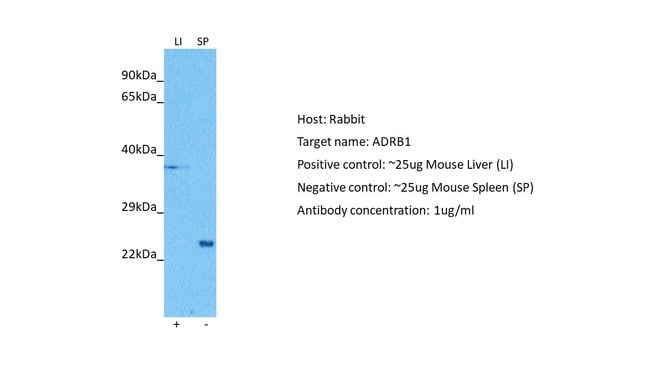
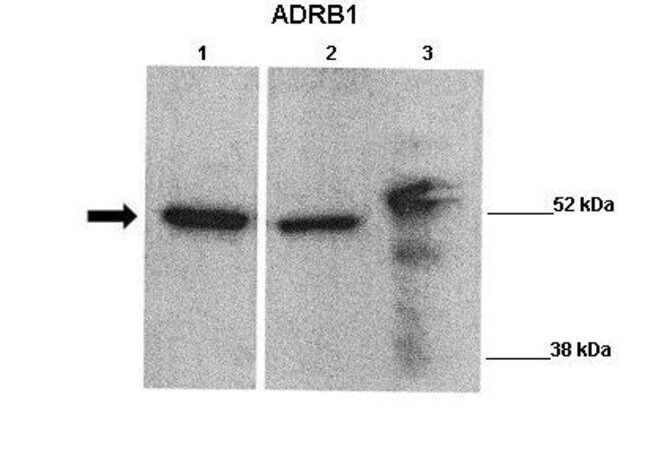
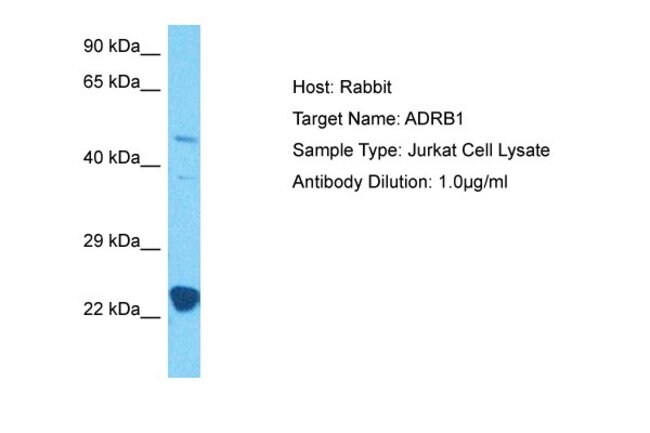
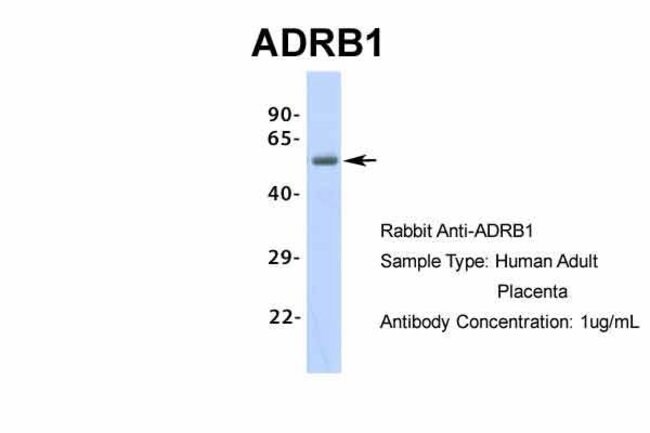
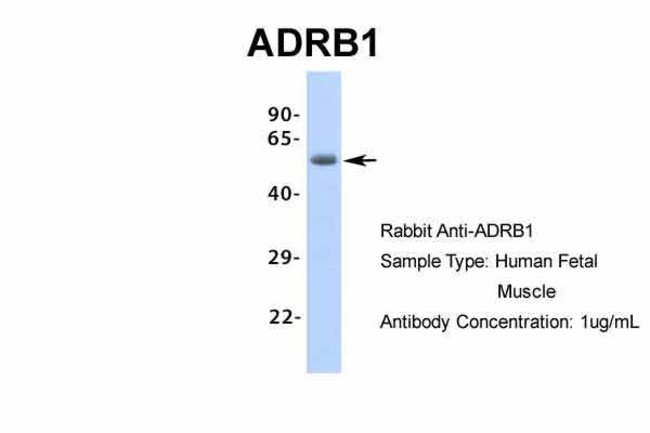
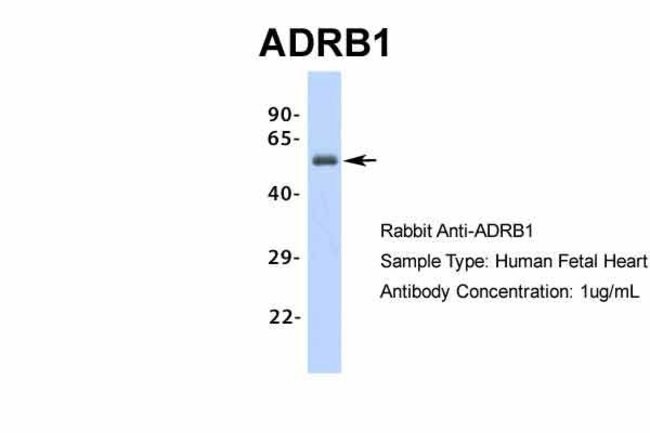
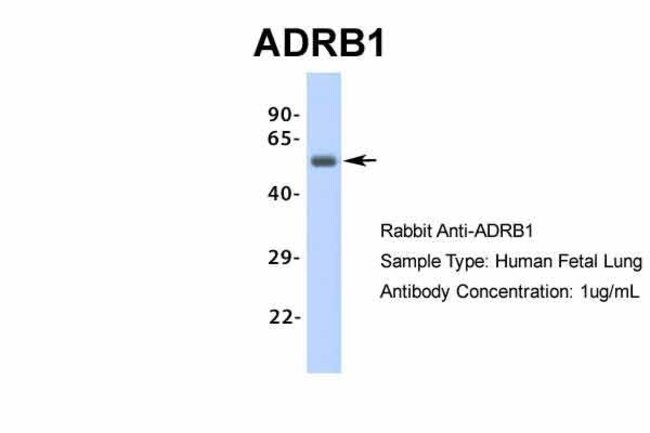
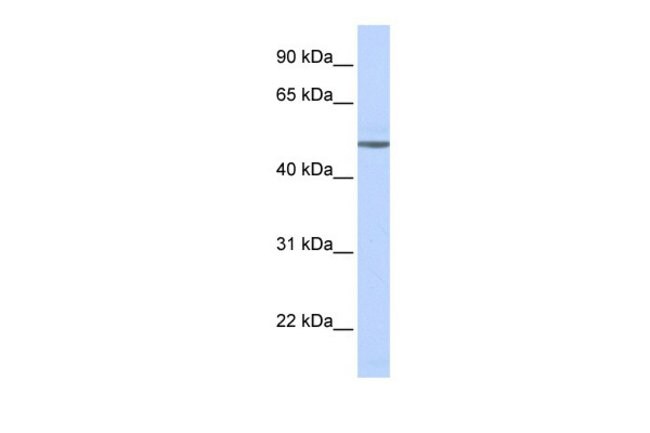
Invitrogen™ beta-1 Adrenergic Receptor Polyclonal Antibody

Description
Immunogen sequence: CTVWAISALV SFLPILMHWW RAESDEARRC YNDPKCCDFV TNRAYAIASS For short term use, store at 2-8°C up to 1 week. For long term storage, store at -20°C in small aliquots to prevent freeze-thaw cycles. Predicted homology: Dog: 87%; Guinea Pig: 93%; Human: 100%; Mouse: 100%; Pig: 100%; Rabbit: 93%; Rat: 100%.
Adrenergic receptors (ARs) are members of the 7-transmembrane domain G-protein-coupled receptor superfamily that bind the endogenous catecholamines epinephrine and norepinephrine. Pharmacological, structural, and molecular cloning data indicate significant heterogeneity within this receptor family. Nine receptor subtypes have been identified thus far including three alpha-1 AR subtypes (1A/D, 1B, and 1C), three alpha-2 ARs (2A, 2B, and 2C), and three beta AR subtypes (1, 2, and 3). ARs participate in either the onset or maintenance of several disease states including hypertension, cardiac dysfunction (congestive heart failure, ischemia, arrhythmias), diabetes, glaucoma, depression, and impotence. BARs participate in diverse processes including development, behavior, cardiac function, smooth muscle tone, and metabolism. In gene-knockout experiments, the majority of mice that lack the B1AR gene die prenatally and those that do survive until adulthood display abnormal cardiac function. Other studies have shown that the direct regulation of cardiac B1AR density by thyroid hormones occurs at the transcriptional level and is modulated by the catecholamine sensitive-adenylyl cyclase system. Evidence for the effects of cAMP on B1AR regulation has come from a study of members of the cAMP response element (CRE) modulator (CREM) family of transcription factors in transformed cell lines.

Specifications
Specifications
| Antigen | beta-1 Adrenergic Receptor |
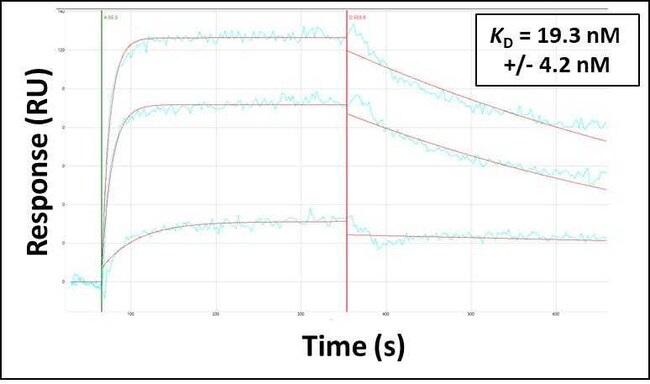
| Applications | Western Blot, Surface Plasmon Resonance |
| Classification | Polyclonal |
| Concentration | 0.5 mg/mL |
| Conjugate | Unconjugated |
| Formulation | PBS with 2% sucrose and 0.09% sodium azide |
| Gene | ADRB1 |
| Gene Accession No. | P08588 |
| Gene Alias | Adrb1; Adrb-1; ADRB1R; adrenergic receptor, beta 1; adrenergic, beta-1-, receptor; adrenoceptor beta 1; B1AR; beta 1-adrenergic receptor beta 1-AR; beta 1-AR; beta-1 adrenergic receptor; Beta-1 adrenoceptor; beta-1 adrenoreceptor; BETA1AR; beta-AR; cardiac beta adrenergic receptor; RATB1AR; RHR |
| Gene Symbols | ADRB1 |
| Show More |
Product Title
By clicking Submit, you acknowledge that you may be contacted by Fisher Scientific in regards to the feedback you have provided in this form. We will not share your information for any other purposes. All contact information provided shall also be maintained in accordance with our Privacy Policy.
Spot an opportunity for improvement?