

Learn More
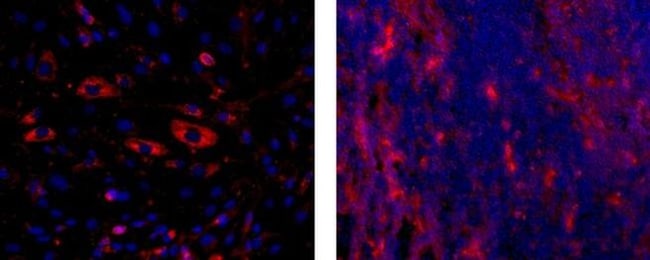
Invitrogen™ CD141 Monoclonal Antibody (LS17-9), eBioscience™, Invitrogen™

Description
The MAb LS17-9 recognizes mouse CD141 (Thrombomodulin, BDCA-3), a type I cell surface glycoprotein that binds to and allosterically activates thrombin. This complex cleaves protein C and the Thrombin Activatable Fibrinolysis Inhibitor (TAFI), initiating an important anticoagulant and antifibrinolytic pathway. Although expressed across many tissues and cell types, its highest expression has been reported on the lumenal surface of vascular endothelial cell. In the immune system the highest expression can be observed on monocytes and macrophages. Soluble CD141 is constitutively present in the serum at a very low level, and can be upregulated during inflammation. The anti-inflammatory activity of CD141 results from its ability to block the highly pro-inflammatory activity of thrombin. CD141 prevents chemotaxis and binding of granulocytes to activated endothelium, and inhibits activation of eosinophils and mast cells thereby reducing inflammation. Although human CD141 is commonly used as a marker of cross-presenting dendritic cells, mouse CD141 does not exhibit the same expression pattern.

Specifications
Specifications
| Antigen | CD141 |
| Applications | Immunohistochemistry (Frozen), Immunocytochemistry |
| Classification | Monoclonal |
| Clone | LS17-9 |
| Concentration | 0.5 mg/mL |
| Conjugate | Unconjugated |
| Formulation | PBS with 0.09% sodium azide; pH 7.2 |
| Gene | THBD |
| Gene Accession No. | P15306 |
| Gene Alias | AHUS6; AI385582; BDCA3; BDCA-3; CD141; CD141 antigen; DC141; fetomodulin; sCD141; snoRNA MBII-339; soluble CD141; THBD; THPH12; THRM; thrombomdulin; thrombomodulin; thrombomodulin precursor; TM |
| Show More |
By clicking Submit, you acknowledge that you may be contacted by Fisher Scientific in regards to the feedback you have provided in this form. We will not share your information for any other purposes. All contact information provided shall also be maintained in accordance with our Privacy Policy.