

Learn More
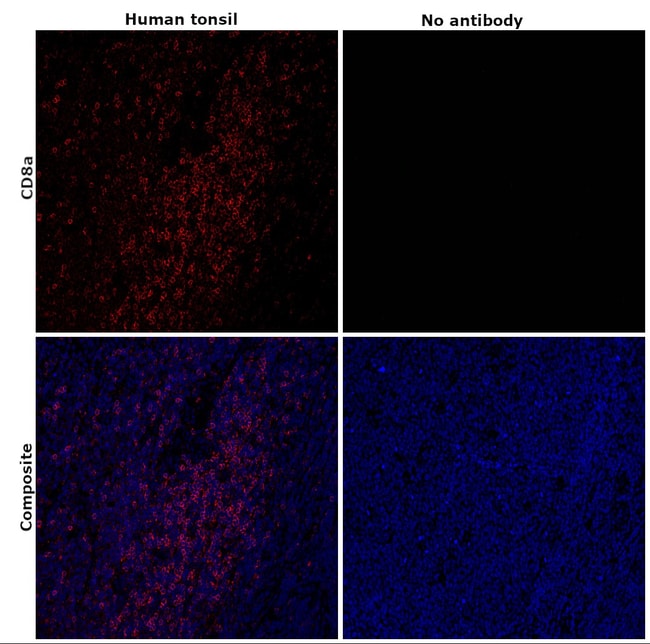
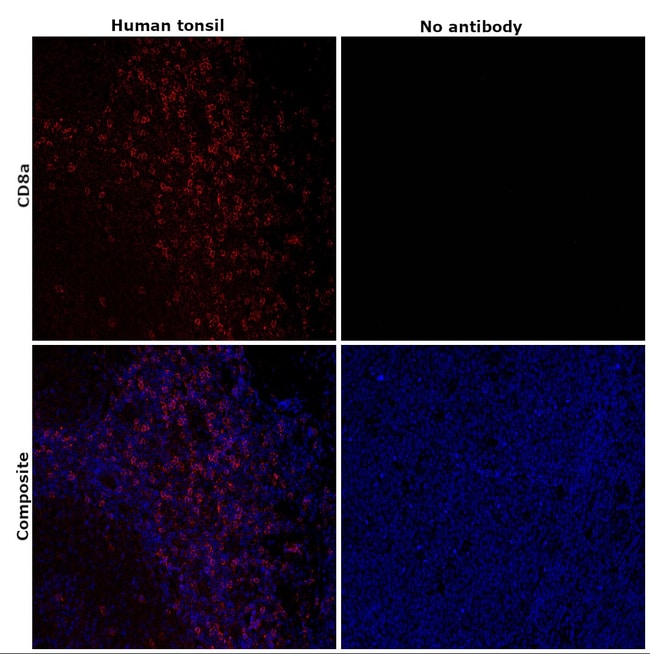
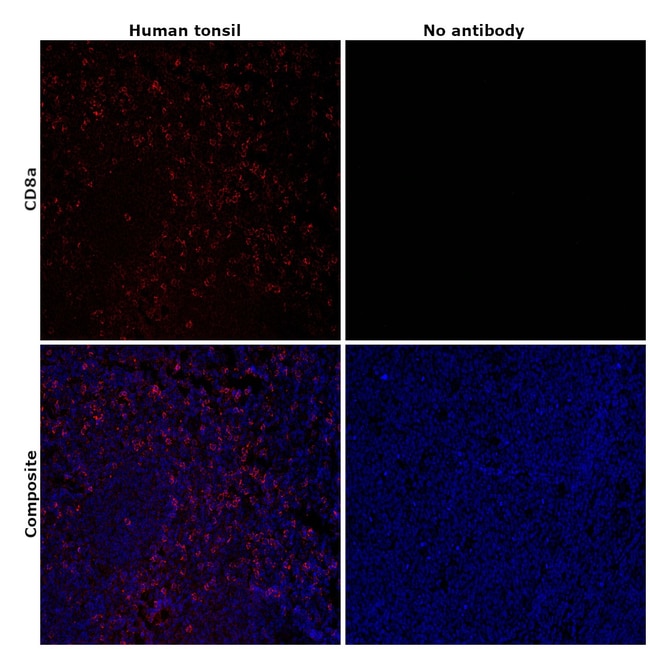
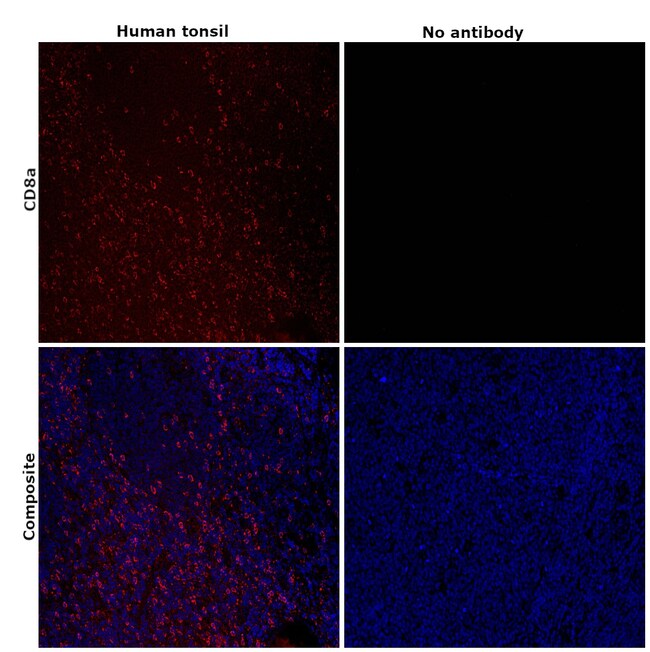
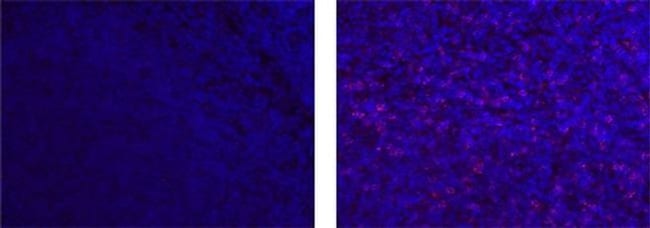
Invitrogen™ CD8a Monoclonal Antibody (AMC908), eFluor™ 660, eBioscience™, Invitrogen™


Description
Description: This AMC908 monoclonal antibody reacts with the human CD8a molecule, an approximately 32-34 kDa cell surface receptor expressed either as a heterodimer with the CD8 beta chain (CD8 alpha beta) or as a homodimer (CD8 alphaalpha). A majority of thymocytes and a subpopulation of mature T cells and NK cells express CD8a. CD8 binds to MHC class I and through its association with protein tyrosine kinase p56lck plays a role in T-cell development and activation of mature T cells. Applications Reported: This AMC908 antibody has been reported for use in immunohistochemical staining of formalin-fixed paraffin embedded tissue sections, and microscopy. Applications Tested: This AMC908 antibody has been tested by immunohistochemistry on formalin-fixed paraffin embedded human tissue using high pH antigen retrieval and can be used at less than or equal to 5 μg/mL. It is recommended that the antibody be carefully titrated for optimal performance in the assay of interest. eFluor™ 660 is a replacement for Alexa Fluor™ 647. eFluor™ 660 emits at 659 nm and is excited with the red laser (633 nm). Please make sure that your instrument is capable of detecting this fluorochome. Excitation: 633-647 nm; Emission: 668 nm; Laser: Red Laser. Filtration: 0.2 μm post-manufacturing filtered.

Specifications
Specifications
| Antigen | CD8a |
| Applications | Immunohistochemistry (Paraffin), Immunocytochemistry |
| Classification | Monoclonal |
| Clone | AMC908 |
| Concentration | 0.2 mg/mL |
| Conjugate | eFluor 660 |
| Formulation | PBS with 0.09% sodium azide; pH 7.2 |
| Gene | Cd8a |
| Gene Accession No. | P01732, P10966 |
| Gene Alias | BB154331; CD8; CD8 alpha; CD8 alpha chain; CD8 alpha chain precursor; CD8 antigen; CD8 antigen 32 kDa chain; CD8 antigen 37 kDa chain; CD8 antigen alpha polypeptide; CD8 antigen alpha protein; CD8 antigen alpha protein precursor; CD8 antigen alpha-chain; CD8 antigen beta polypeptide; CD8 antigen beta polypeptide precursor; CD8 antigen beta-chain; CD8 antigen, alpha chain; CD8 antigen, alpha polypeptide; CD8 antigen, alpha polypeptide (p32); CD8 antigen, alpha-chain; CD8 antigen, beta chain; CD8 antigen, beta chain 1; CD8 antigen, beta polypeptide; CD8 antigen, beta polypeptide 1 (p37); CD8 antigen, beta-chain; CD8 beta; CD8 beta chain; CD8 beta-2; CD8a; CD8A antigen alpha; CD8a molecule; CD8A; T-cell surface glycoprotein; CD8alpha; CD8B; CD8b antigen; CD8b molecule; CD8b molecule pseudogene; Cd8b1; CD8beta; CD8BP; fCD8; LEU2; Leu-2; Leu2 T-lymphocyte antigen; leu-2a; Ly-2; LY3; Ly-3; Ly-35; Ly-B; Ly-C; Lymphocyte antigen 3; Lyt2; Lyt-2; Lyt-2.1 lymphocyte differentiation antigen (AA at 100); Lyt3; Lyt-3; MAL; membrane glycoprotein; membrane protein; OKT8 T-cell antigen; OX-8 membrane antigen; p32; P37; RHACD8-4; T cell co-receptor; T lymphocyte surface glycoprotein beta chain; T8 T-cell antigen; T-cell antigen Leu2; T-cell membrane glycoprotein Ly-3; T-cell surface glycoprotein; T-cell surface glycoprotein CD8 alpha chain; T-cell surface glycoprotein CD8 beta chain; T-cell surface glycoprotein Lyt-2; T-cell surface glycoprotein Lyt-3; T-cell surface molecule; T-lymphocyte differentiation antigen T8/Leu-2; type I transmembrane glycoprotein |
| Show More |
For Research Use Only.
By clicking Submit, you acknowledge that you may be contacted by Fisher Scientific in regards to the feedback you have provided in this form. We will not share your information for any other purposes. All contact information provided shall also be maintained in accordance with our Privacy Policy.