Promotional price valid on web orders only. Your contract pricing may differ. Interested in signing up for a dedicated account number?
Learn More
Learn More


Description
- The Hall Effect is the generation of a side-to-side voltage in a conductor or semiconductor carrying a current when it is placed in a magnetic field.
- The effect is widely used in magnetic field sensors and is associated with several well-known systematic errors, some of which can be eliminated by measurement techniques.
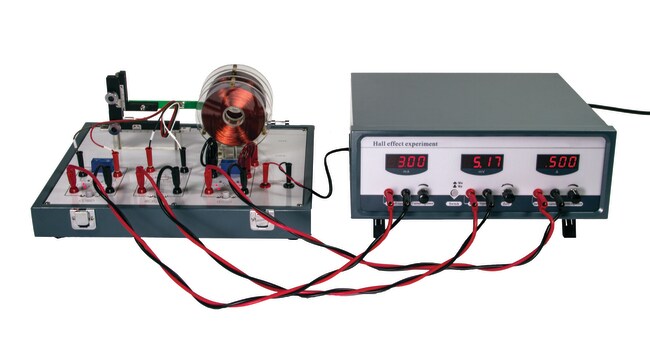
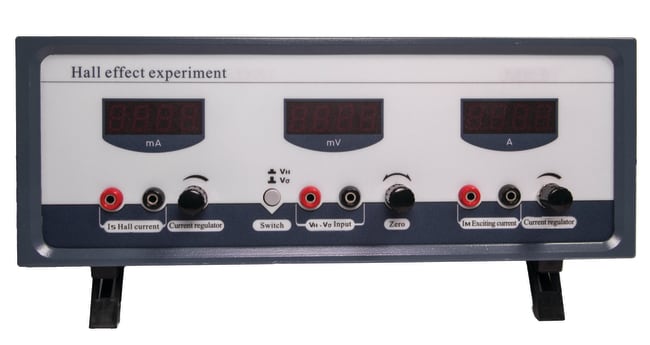
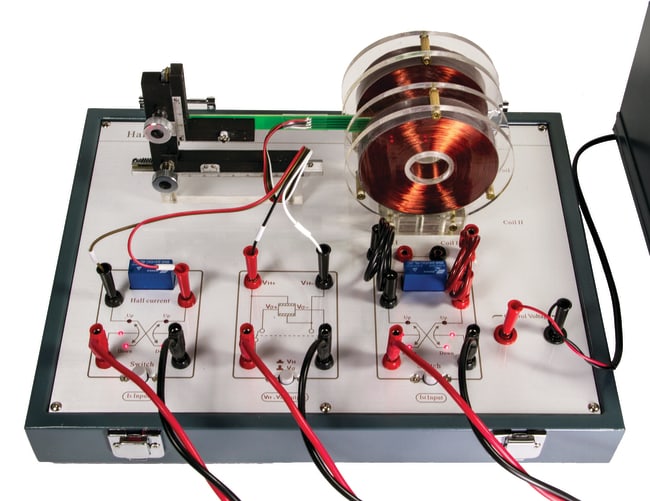
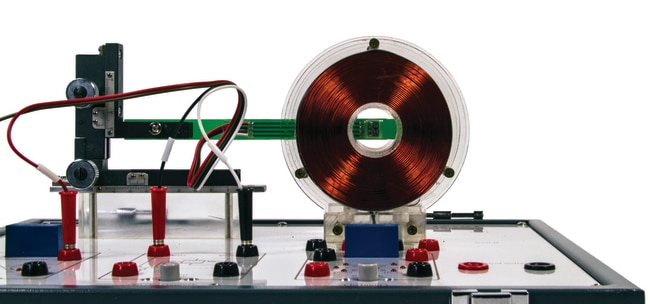
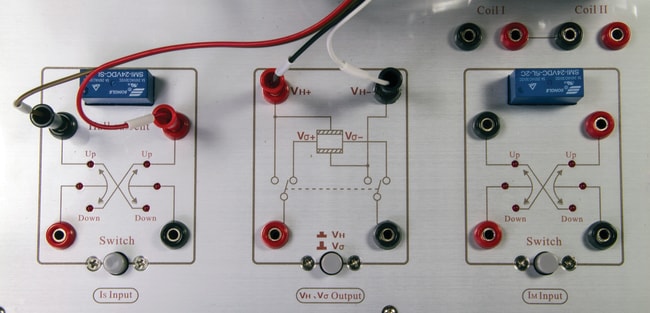
- This Hall Effect apparatus consists of a mounted n-type semiconductor chip on a traverse mechanism, a pair of coils, relay-controlled reversing switches, and a control unit with connecting cords.
- Explores the Hall Effect in a GaAs semiconductor.
- Explores systematic errors and their elimination. Determines the conductivity of the semiconductor.
- Uses the semiconductor to plot the coils' magnetic field. n-type GaAs Hall sensor chip.
- Helmholtz coil pair 75 mm effective diameter, 11.25 mT central magnetic induction at 0.5 A.
- Two-axis mechanical traverse for field plotting.
- Constant current sources for magnet (0-0.5 A) and Hall driving current (0—3 mA).
- Reversing switch for exploring the elimination of systematic error.
- 3-1/2 digit current and voltage meters.
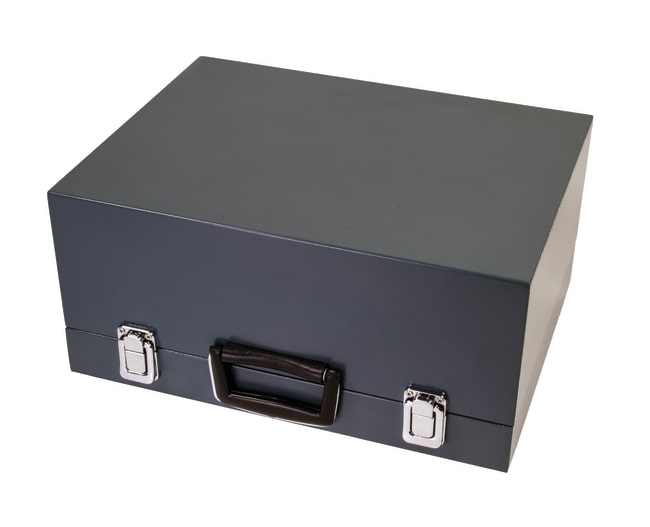
- Metal storage case for the Hall Effect board.
Specifications
Specifications
| Grade | 12 to 15 |
| Format | Kit |
| Product Type | Hall Effect |
| Languages | English |
| Subject | Advanced Physics |
Product Title
By clicking Submit, you acknowledge that you may be contacted by Fisher Scientific in regards to the feedback you have provided in this form. We will not share your information for any other purposes. All contact information provided shall also be maintained in accordance with our Privacy Policy.
Spot an opportunity for improvement?