Promotional price valid on web orders only. Your contract pricing may differ. Interested in signing up for a dedicated account number?
Learn More

Rabbit anti-beta-Catenin, Polyclonal, Novus Biologicals™
SDP

Catalog No. NBP22947602 Shop All R&D Systems Products
Change view
Click to view available options
Quantity:
0.2 mg
1 product options available for selection
Product selection table with 1 available options. Use arrow keys to navigate and Enter or Space to select.
Catalog No. Quantity
NBP22947602 0.2 mg
Use arrow keys to navigate between rows. Press Enter or Space to select a product option. 1 options available.
1 options
Catalog No. NBP22947602 Supplier Novus Biologicals Supplier No. NBP2294760.2MG

Specifications

Antigen beta-Catenin
Applications Western Blot, Flow Cytometry, Immunohistochemistry, Immunocytochemistry, Immunofluorescence, Immunoprecipitation
Classification Polyclonal
Concentration 0.2mg/mL
Conjugate Unconjugated
Dilution Western Blot 0.5-1ug/ml, Flow Cytometry 0.5-1ug/million cells, Immunohistochemistry 1-2ug/ml, Immunocytochemistry/Immunofluorescence 1-2ug/ml, Immunoprecipitation 1-2ug/500ug protein lysate, Immunohistochemistry-Paraffin 1-2ug/ml
Formulation PBS with 0.05% BSA. with 0.05% Sodium Azide
Gene Accession No. P35222
Gene Alias beta 1 (88kD), beta-catenin, catenin (cadherin-associated protein), beta 1, 88kDa, catenin beta-1, CTNNB, DKFZp686D02253, FLJ25606, FLJ37923
Gene Symbols CTNNB1
Host Species Rabbit
Immunogen A synthetic peptide from the middle of beta-Catenin protein
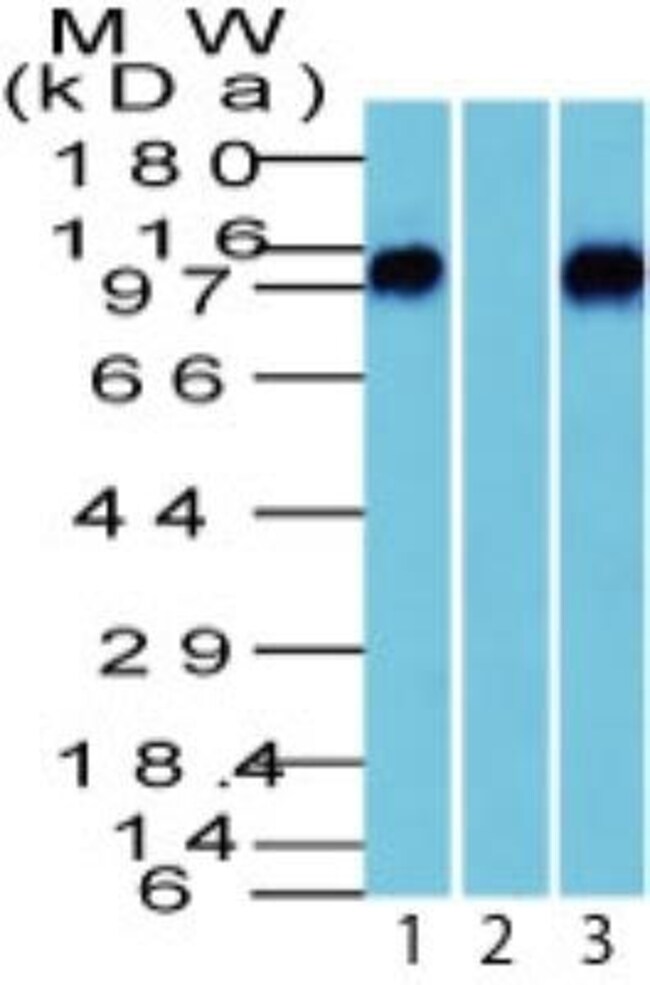
Molecular Weight of Antigen 92 kDa
Purification Method Protein A purified
Quantity 0.2 mg
Regulatory Status RUO
Research Discipline Cancer, Cellular Markers, Extracellular Matrix, Neuroscience, Phospho Specific, Stem Cell Signaling Pathway, Wnt Signaling Pathway
Primary or Secondary Primary
Gene ID (Entrez) 1499
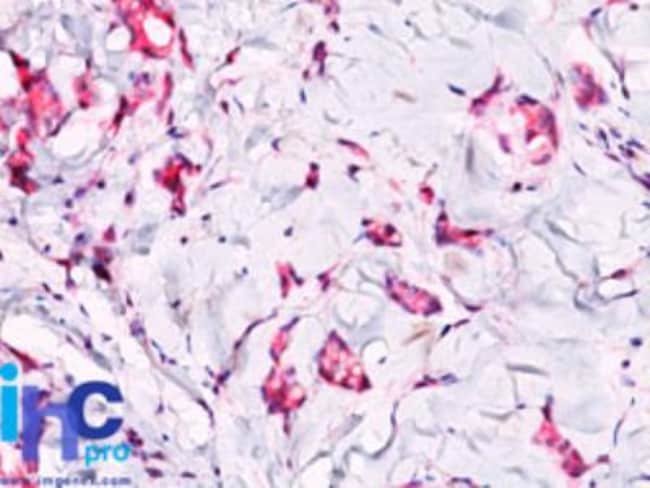
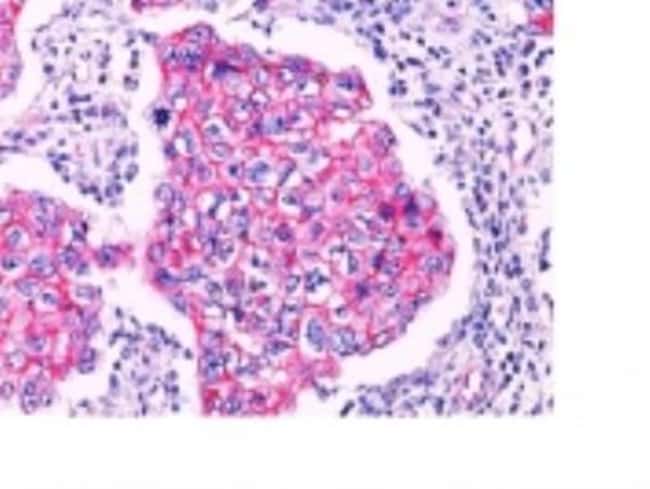
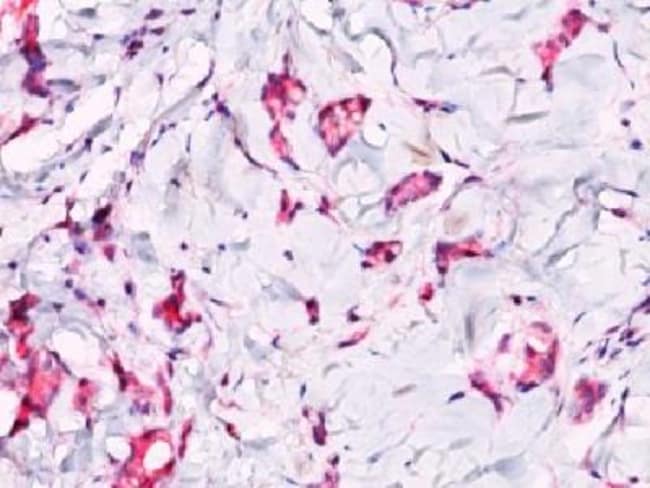
Test Specificity Beta-catenin associates with the cytoplasmic portion of E-cadherin, which is necessary for the function of E-cadherin as an adhesion molecule. In normal tissues, beta-catenin is localized to the membrane of epithelial cells, consistent with its role in the cell adhesion complex. In breast ductal neoplasia, beta-catenin is usually localized in cellular membranes. However, in lobular neoplasia, a marked redistribution of beta-catenin throughout the cytoplasm results in a diffuse cytoplasmic pattern. Immuno-staining of beta-catenin and E-cadherin is helps in the accurate identification of ductal and lobular neoplasms, including a distinction between low-grade ductal carcinoma in situ (DCIS) and lobular carcinoma. Additionally, some rectal and gastric adenocarcinomas demonstrate diffuse cytoplasmic beta-catenin staining and a lack of membranous staining, mimicking the staining pattern observed with lobular breast carcinomas.
Target Species Human, Mouse
Content And Storage Store at 4C.
Form Purified
Isotype IgG
Show More Show Less
Product Title
Select an issue

By clicking Submit, you acknowledge that you may be contacted by Fisher Scientific in regards to the feedback you have provided in this form. We will not share your information for any other purposes. All contact information provided shall also be maintained in accordance with our Privacy Policy.