
Staining Reagents


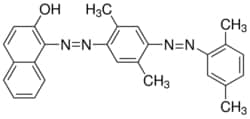
Sigma Aldrich Fine Chemicals Biosciences Oil Red O solution | 1320-06-5 | MFCD00003898 | 250 mL
Oil Red O solution | Mol Wt: 408.49 | 1320-06-5 | MFCD00003898 | 250 mL


Lumiprobe Cyanine5 NHS ester, 1263093-76-0, 1mg
Molecular formula: C36H42N3BF4O4, Molecular weight: 667.54, Appearance: dark blue solid, Solubility: very poorly soluble in water (0.19 mM = 127 mg/L), good in polar (DMSO, DMF) and chlorinated (DCM, chloroform) organic solvents; Amine-reactive red emitting fluorescent dye for the labeling of proteins/peptides and amino-oligonucleotides. For the labeling of sensitive proteins, use water-soluble sulfo-Cyanine5 NHS ester.


Volu Sol Lactophenol Cotton Blue, 4 oz / 120 mL, Volu-Sol™
Used for mounting medium and a staining agent used in the preparation of slides for microscopic examination of fungi. Fungal elements are stained intensely blue
Sigma Aldrich Fine Chemicals Biosciences Hematoxylin Solution, Gill No. 3, MFCD00283324, 500 mL
Gill formulation No. 3 may be used for cytology and/or histology as a progressive or regressive stain depending on length of staining time.. Used with hematoxylin and eosin staining.

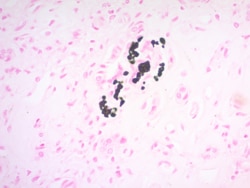
Scytek Laboratories Calcium Stain Kit (Modified Von Kossa): Large
The Calcium Stain Kit (Modified Von Kossa) is intended for use in the histological visualization of calcium deposits in paraffin sections.Calcium in mass deposits: BlackCalcium in dispersed deposits: GrayNuclei: RedCytoplasm: Light PinkKit contents: SNV125, Silver Nitrate Solution (5%), 125 ml.STB125, Sodium Thiosulfate Solution (5%), 125 ml.NFS125, Nuclear Fast Red Solution, 125 ml.

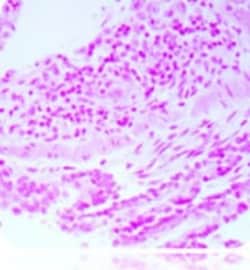
Abcam Nuclear Fast Red Solution, 125ML
Nuclear fast red stain solution (pH 2 - 4) is a stain for histological applications. - Stains nuclei red and cytoplasm pale pink - Contains 80% water, 5% aluminium sulfate, 0.2% nuclear fast red - Enhanced stability - Prevents precipitation over time
The product is subject to the following: Abcam Restricted Use Statement
Electron Microscopy Sciences Modified Mayer's Hematoxylin | 500ml
Modified Mayer's Hematoxylin stock solution is a prepared, ready-to-use, high quality staining solution that saves time and effort and produces consistent uniform results. It contains Hematoxylin 0.4%, Ammonium Aluminum Sulfate 0.5%, Sodium Iodate 0.03%, Citric Acid 0.1%, and Chloral Hydrate 5%.

Biolegend Brilliant Violet 421™ anti-TCF1 (TCF7) Antibody, 25 Tests
Brilliant Violet 421™ anti-TCF1 (TCF7) Antibody, 25 Tests

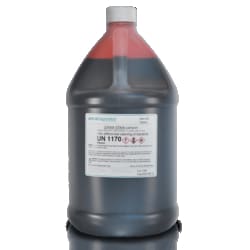
Ethos Biosciences Gram Stain, Safranin, 1gal, Ethos
Safranin is a staining solution suitable for microbiology, cytology, histology, and general laboratory applications. Commonly used as a counterstain in Gram staining procedures, it provides clear coloration of gram-negative organisms for reliable microscopic evaluation. The formulation delivers consistent color intensity, supporting accurate differentiation of cellular components. It is also suitable for general staining and research applications. Supplied in chemically compatible containers, Safranin is appropriate for clinical, research, and educational laboratory environments.