
Aminosaccharides

Medchemexpress LLC 4-(2-Azidoethyl)phenol | 74447-34-0 | 99.9% | 163.18 | 50 MG

4-(2-Azidoethyl)phenol (Ph_N3) is a clickable APEX2 probe. It exhibits reliable labeling ability and enabled two biotinylation routes for downstream analysis. For research use only.
- Clickable APEX2 probe
- Reliable labeling ability
- Enabled two biotinylation routes for downstream analysis



Sigma Aldrich Fine Chemicals Biosciences 4-Methylumbelliferyl N-Acetyl-Beta-D-Glucosaminide | 37067-30-4 | MFCD00065481 | 1g
4-Methylumbelliferyl N-Acetyl-Beta-D-Glucosaminide | Mol Wt: 379.36 | 37067-30-4 | MFCD00065481 | 1g

Medchemexpress LLC Azidoethyl-SS-PEG2-Boc | 2144777-83-1 | 351.49 | 1 G
Azidoethyl-SS-PEG2-Boc is a PEG-based PROTAC linker utilized in the synthesis of PROTACs. It functions as a click chemistry reagent, featuring an Azide group. This allows it to participate in copper-catalyzed azide-alkyne cycloaddition reactions (CuAAc) with molecules containing Alkyne groups, as well as strain-promoted alkyne-azide cycloaddition (SPAAC) reactions with molecules possessing DBCO or BCN groups.
- Peg-based PROTAC linker
- Click chemistry reagent
- Contains an Azide group for CuAAc and SPAAC reactions
- For research use only
Medchemexpress LLC Azidoethyl-SS-PEG2-Boc | 2144777-83-1 | 351.49 | 250 MG
Azidoethyl-SS-PEG2-Boc is a PEG-based PROTAC linker utilized in the synthesis of PROTACs. It functions as a click chemistry reagent due to its Azide group, allowing it to undergo copper-catalyzed azide-alkyne cycloaddition (CuAAc) reactions with molecules containing Alkyne groups. Additionally, it can participate in strain-promoted alkyne-azide cycloaddition (SPAAC) reactions with molecules possessing DBCO or BCN groups.
- Utilized in the synthesis of PROTACs
- Functions as a click chemistry reagent
- Contains an azide group
- Undergoes copper-catalyzed azide-alkyne cycloaddition (CuAAc) reactions with alkyne-containing molecules
- Participates in strain-promoted alkyne-azide cycloaddition (SPAAC) reactions with DBCO or BCN groups
- PROTACs leverage the intracellular ubiquitin-proteasome system to selectively degrade target proteins

BIOHIPPO O-GlcNAc rAb W-R7
U-Blot Pan-O-GlcNAc Rabbit mAb (Recombinant Monoclonal Clone W-R7) is a Rabbit-derived recombinant monoclonal antibody (clone W-R7) that specifically recognizes O-GlcNAc a o-glcnacylation modification at Ser(S)/Thr(T) It shows reactivity with Human Mouse Rat Validated applications include WB IHC IF ELISA Recommended dilutions WB 1200-11000 IF 1200-11000 ELISA 15000-120000 Purified by recombinant antibody expressed in animal component-free (acf) media purified via protein a affinity chromatography O-GlcNAc (short for O-linked -N-acetylglucosamine) is a reversible enzymatic post-translational modification found on serine and threonine residues of nucleocytoplasmic proteins The modification is characterized by a -glycosidic bond between the hydroxyl group of serine or threonine side chains and N-acetylglucosamine (GlcNAc) Supplied as 100 uL
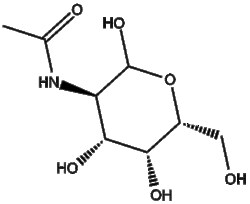
Apexbio Technology LLC N-acetyl D-galactosamine 1811-31-0 100mg
N-acetyl D-galactosamine (CAS 1811-31-0) is an endogenous amino sugar that serves as a structural component in glycoproteins and glycolipids It functions as a fundamental building block in the biosynthesis of O-linked glycoproteins participating in post-translational modification and influencing cell signaling adhesion and molecular recognition processes Due to its role in the formation of brain heteropolysaccharides N-acetyl D-galactosamine is frequently utilized in studies investigating glycosylation neural development and carbohydrate-mediated cellular interactions within biomedical research
Medchemexpress LLC D-Galactosamine pent 25g | 76375-60-5 | C16H23NO10 | 25 G
D-Galactosamine pentaacetate is an acetyl-protected derivative of D-galactosamine (CAS 76375-60-5) used as a biochemical reagent and synthetic intermediate in life-science research. The solid compound has formula C16H23NO10 and molecular weight 389.35 g·mol-1.
- Used as a biochemical reagent and synthetic intermediate.
- Acetyl-protected amino sugar for selective transformations.
- Molecular weight 389.35 g·mol-1, formula C16H23NO10.
- Provided as a 25 G pack for laboratory use.
- Intended for research use only and not for human or diagnostic use.
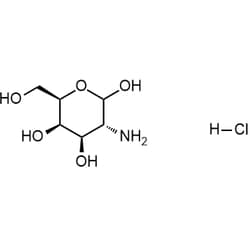
Medchemexpress LLC D(+)-Galactosamine hydrochloride | 1772-03-8 | 99.9% | 215.63 | 100 MG
D(+)-Galactosamine hydrochloride | 1772-03-8 | 99.9% | 215.63 | 100 MG
Medchemexpress LLC D(+)-Galactosamine hydrochloride | 1772-03-8 | 99.9% | 215.63 | 25 MG
D(+)-Galactosamine hydrochloride is an established experimental toxin that primarily causes liver injury through the generation of free radicals and depletion of UTP nucleotides. Intoxication with D(+)-Galactosamine hydrochloride also induces renal dysfunction, with renal failure often associated with the end-stage of liver damage. The combination of Lipopolysaccharide/D(+)-Galactosamine is a known animal model for inducing acute liver injury, leading to fulminant hepatic failure.
- Causes liver injury through generation of free radicals.
- Leads to depletion of UTP nucleotides.
- Induces renal dysfunction.
- Useful in animal models for acute liver injury.
Medchemexpress LLC β-D-Galactosamine pentaacetate | 3006-60-8 | 389.35 | 1 G
β-D-Galactosamine pentaacetate is an intermediate in the synthesis of triantennary N-Acetylgalactosamine ligands. It can be studied in liver-targeted delivery of siRNA research.
- Intermediate in the synthesis of triantennary N-acetylgalactosamine ligands
- Can be studied in liver-targeted delivery of siRNA research
Medchemexpress LLC O-Linked GlcNAc transferase substrate | 954381-93-2 | 98.25% | 1783.08 | 10 MG
O-Linked GlcNAc transferase substrate is a biologically active peptide that functions as a substrate for O-linked GlcNAc transferase (OGT), a eukaryotic glycosyltransferase that utilizes UDP-GlcNAc as a glycosyl donor.
- Biological active peptide
- Substrate of O-linked GlcNAc transferase (OGT)
- White to off-white solid appearance
- High purity of 98.25%
- Soluble in DMSO and H2O at 100 mg/mL
- Sequence: Lys-Lys-Lys-Tyr-Pro-Gly-Gly-Ser-Thr-Pro-Val-Ser-Ser-Ala-Asn-Met-Met

Sigma Aldrich Fine Chemicals Biosciences Hyaluronic acid sodium salt from Streptococcus equi mol wt 2,000,000-2,400,000 | 9067-32-7 | MFCD01773053 | 50MG
Hyaluronic acid sodium salt from Streptococcus equi mol wt 2,000,000-2,400,000 | 9067-32-7 | MFCD01773053 | 50MG