
Quinolines and derivatives


Medchemexpress LLC Pomalidomide-amido-C1-Br | 2351106-38-0 | MFCD32903493 | >98.0% | C15H12BrN3O5 | 10MG

Pomalidomide-amido-C1-Br is an E3 ligase ligand-linker conjugate that incorporates a pomalidomide-based cereblon ligand for use in targeted protein degradation and PROTAC research. The compound is supplied as a high-purity research reagent (CAS 2351106-38-0) with molecular formula C15H12BrN3O5 and molecular weight 394.18 g·mol⁻¹. It is typically provided in milligram-scale quantities for screening and synthetic applications.
- High purity suitable for biochemical research.
- Contains a pomalidomide-based cereblon ligand for PROTAC design.
- Provided in small milligram-scale pack sizes for screening and synthesis.
- Characterized by molecular formula and molecular weight for identity confirmation.
- Supports design and development of E3 ligase recruiting degraders.


Medchemexpress LLC m-PEG7-amine | 170572-38-0 | MFCD13184965 | 339.43 g/mol | C15H33NO7 | 250 MG
m-PEG7-amine is a monofunctional polyethylene glycol (PEG) linker bearing a terminal amine. It is used as a hydrophilic spacer in conjugation chemistry, including PROTAC and antibody-drug conjugate (ADC) synthesis, to improve solubility and provide a reactive handle for bioconjugation.
- Used as a PEG linker in PROTAC and ADC synthesis.
- Contains a terminal primary amine for conjugation to activated esters and carbonyls.
- Molecular weight approximately 339.43, formula C15H33NO7.
- Soluble in DMSO (100 mg/mL; ultrasonic assistance may be required).
- Compatible with common in vivo co-solvent formulations at ≥2.5 mg/mL.
- Store protected from light at 4°C; in solvent store at -80°C (6 months) or -20°C (1 month).

Medchemexpress LLC m-PEG7-amine | 170572-38-0 | MFCD13184965 | 98.0% | 339.43 g/mol | C15H33NO7 | 5 G
m-PEG7-Amine is a methoxy-terminated polyethylene glycol (PEG) linker bearing a terminal primary amine. It is used as a PROTAC linker and as a cleavable ADC linker for antibody-drug conjugation and other bioconjugation applications. The reagent provides a flexible, hydrophilic spacer suitable for linker chemistry in targeted degraders and conjugates.
- Methoxy-terminated PEG with seven ethylene glycol units.
- Terminal primary amine for facile coupling to carboxylates and activated esters.
- Molecular weight 339.43 g/mol and CAS 170572-38-0.
- Suitable for use as a PROTAC linker and a cleavable ADC linker.
- Hydrophilic spacer that improves solubility and reduces aggregation in conjugates.

eMolecules TargetMol Gibbs reagent 200mg 761052535 T7852 0 000 101-38-2 MFCD00001611 210 440 C6H2Cl3NO
TargetMol Gibbs reagent 200mg 761052535 T7852 0 000 101-38-2 MFCD00001611 210 440 C6H2Cl3NO
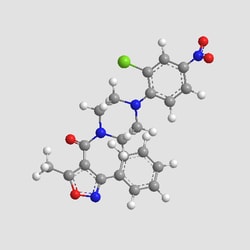
Apexbio Technology LLC Nucleozin 341001-38-5 200mg
Nucleozin (CAS 341001-38-5) is a small-molecule inhibitor targeting influenza A virus nucleoprotein (NP) It is designed to block NP nuclear accumulation thereby inhibiting a critical step in the viral replication cycle Nucleozin exerts its biological activity primarily through inducing NP aggregation and preventing its nuclear localization In in vitro studies using MDCK cells infected with influenza A variants Nucleozin demonstrates antiviral inhibition with EC50 values of 0 069 M for A/WSN/33 (H1N1) 0 16 M for H3N2 and 0 33 M for Vietnam/1194/04 (H5N1) Based on these pharmacological properties Nucleozin holds research potential in influenza antiviral development
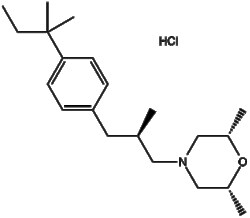
Apexbio Technology LLC Amorolfine HCl 78613-38-4 200mg
Amorolfine hydrochloride (78613-38-4) is a small-molecule inhibitor targeting 14-reductase and 7 8-isomerase enzymes essential for fungal ergosterol synthesis It is designed to disrupt fungal sterol biosynthesis thereby impairing membrane stability and fungal cell viability Amorolfine hydrochloride exerts its biological activity primarily through inhibition of 14-reductase and 7 8-isomerase In in vitro studies Amorolfine hydrochloride demonstrates antifungal activity with IC50 values ranging from approximately 0 02 to 0 5 g/mL depending on fungal species and experimental conditions Based on these pharmacological properties Amorolfine hydrochloride holds research potential in investigating antifungal activity against fungal pathogens including models of human nail infection
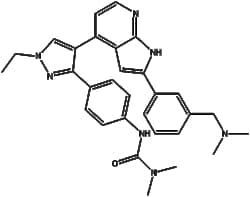
Apexbio Technology LLC GSK1070916 942918-07-2 200mg
GSK1070916 (CAS 942918-07-2) is a selective ATP-competitive inhibitor targeting Aurora kinase B and C displaying Ki values of 0 38 nM and 1 5 nM respectively The compound demonstrates marked selectivity over Aurora kinase A with IC50 values of approximately 5 nM (Aurora B) versus 1259 nM (Aurora A) In vitro studies show that GSK1070916 inhibits proliferation of human lung cancer cells (A549) with an EC50 of roughly 7 nM Additionally the compound effectively reduces phosphorylation of histone H3 an Aurora B substrate and exhibits tumor growth inhibition in HL-60 xenograft mouse models GSK1070916 is utilized in tumor biology research investigating Aurora kinase signaling pathways
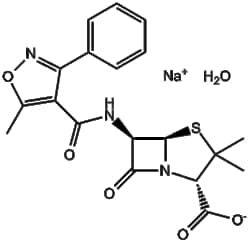
Apexbio Technology LLC Oxacillin sodium monohydrate 7240-38-2 200mg
Oxacillin sodium monohydrate (CAS 7240-38-2) is a small-molecule inhibitor within the penicillin class It is designed to inhibit bacterial cell wall biosynthesis thereby disrupting peptidoglycan cross-linking and compromising cellular integrity Oxacillin sodium monohydrate exerts its biological activity primarily through interference with peptidoglycan cross-linking resulting in bacterial lysis In in vitro studies Oxacillin sodium monohydrate demonstrates antimicrobial inhibition with minimum inhibitory concentration (IC50) values typically ranging from approximately 0 1 to several g/mL depending on bacterial strain and assay conditions Based on these pharmacological properties Oxacillin sodium monohydrate holds research potential in antimicrobial susceptibility testing resistance phenotyping and investigations of bacterial resistance mechanisms particularly in gram-positive -lactamase-producing bacteria such as methicillin-resistant staphylococci (MRSA)