
Incubator Accessories

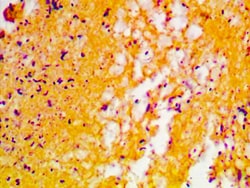
Diagnostic Biosystems GRAM STAIN KIT Gram Stain Kit
The Gram Stain Kit is intended for the demonstration and differentiation of Grampositive and Gram-negative bacteria.

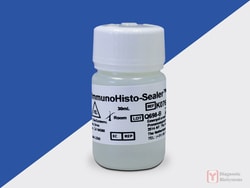
Diagnostic Biosystems IMMUNOHISTO-SEALER ImmunoHisto-Sealer™
ImmunoHisto-Sealer™ is a preservation solution that acts as a sealant to improve tissue morphology and stain over an extended period of time. When applied to the stained section, specimens can be permanently mounted without chromogens fading. Additional benefits of the ImmunoHisto-Sealer™ include: saves hands on time when mounting slides, avoids the use of toxic chemicals such as xylene and eliminates accumulation of hazardous waste.\n\nThis product is designed for tissue specimens stained with peroxidase, alkaline phosphatase-based systems and various chromogens. After treating with ImmunoHisto-Sealer, water solution chromogens can be mounted in Permanent Mounting Media.
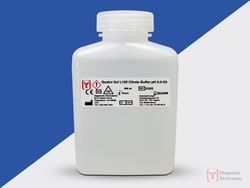
Diagnostic Biosystems QUATRO SOL I QuatroSol I 10X Citrate Buffer For Heat Induced Epitope Recovery, pH 6.0 kit/200 Runs
QuatroSol I 10X Citrate Buffer For Heat Induced Epitope Recovery, pH 6.0 kit is designed for use during the heat induced epitope retrieval (HIER) step prior to immunohistochemistry on formalin-fixed paraffin embedded tissue sections. The use of this buffer in combination with heat (often by microwave, water bath, or pressure cooker) has been shown to restore the antigenicity of proteins modified during the formalin fixation of tissue. This buffer is supplied as a 10X stock solution.\n\n
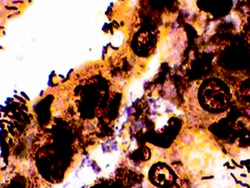
Diagnostic Biosystems WARTHIN-STARRY Warthin-Starry
The Warthin-Starry Stain Kit is intended for use in the visualization of Spirochetes, Helicobacter pylori, Legionella pneumophila, and Cat Scratch Fever bacteria. This kit may be used on formalin-fixed, paraffin-embedded sections.
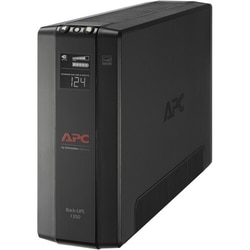
Enterprise Technology Solutions APC Battery Back-UPS Pro BX1350M
Designed for electronics in your home or office, such as computers and related equipment, network devices (modem/router), POS devices, CCTV circuits, televisions, video game consoles, and more, the Battery Back-UPS Pro BX1350M from APC helps protect against surges, spikes, lightning, and outages. In the case of a power outage, it can provide up to 2.5 minutes of runtime at max load, 10.1 minutes at half load, and 287 minutes at 10W. It also provides an output capacity of 1350 VA / 810W, ten total NEMA5-15R outlets (five battery backup & surge and five surge-only), an input voltage of 120 VAC at 60 Hz ± 3 Hz using its 6' cord with a NEMA 5-15 plug, a surge energy rating of 789 joules, and 1Gb of dataline protection. Its sealed, lead-acid, battery is maintenance-free and can be replaced using an APCRBC123 replacement battery. The BX1350M outputs 98 to 139 VAC at 60 Hz ± 1 Hz (on utility) and 115 VAC ± 8% at 60 Hz ± 1 Hz (on battery).
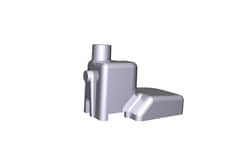

New Jersey Fluid Systems LLC Swagelok HC-200-7-4 Female Connector, Alloy C-276, Leak-Tight Connection, 1/8 in Tube OD to 1/4 in Female NPT
Introducing the Swagelok HC-200-7-4 Female Connector, designed for unmatched reliability in demanding environments. Crafted from Alloy C-276, this connector provides superior corrosion resistance and ensures a secure, leak-tight connection between 1/8 in tube OD and 1/4 in female NPT. Its innovative two-ferrule design simplifies installation while maintaining integrity under pressure, making it ideal for critical fluid systems. Enjoy confidence in performance and longevity with this robust solution.

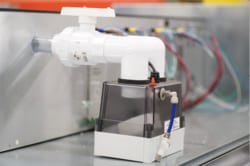
Darwin Chambers Company ULTRASONIC HUMIDIFICATION SYS
Option to add Microprocessor-control of ultrasonic humidification system, ambient to 90%, not to exceed a 40°C dew-point. Provides control of ±0.2% at sensor and display resolution of ±0.1%. Our exclusive solid state controlled ultrasonic humidification method generates a cool mist that once introduced into the chamber, eliminates hot spots normally associated with steam-based humidification systems. It greatly reduces required operational and maintenance costs as compared to traditional humidification systems.

Chemglass Life Sciences Chemglass Bottle Assembly, 500 mL, 2-Port, Single-Use (24 in tubing, 30 mm 0.22 μm vent filter) - Pack of 5

The Chemglass 500 mL bottle assembly is a single-use PETG media transfer and feed bottle configured with a two-port closure, vent filter, and welded tubing for sterile fluid handling. It is assembled and packaged for immediate use in laboratory and bioprocess workflows.
- 500 mL capacity
- PETG bottle material
- Two-port closure assembly
- 30 mm 0.22 μm vent filter
- 24 in of 1/4 in OD weldable tubing with plugged end
- 1/4 in pinch clamp included
- V-notched dip tube extends to bottom of bottle
- Polypropylene cap included
- Pack of 5, double poly-bagged and gamma irradiated (25-35 kGy)
- Manufactured and packaged in a Class 7 cleanroom