
Universal Pipette Tips
Disposable pipette tips designed to fit single and multichannel pipettes from most manufacturers; offer acceptable performance compared to pipette specific tips and can be used with a variety of pipette models.
Single-use universal pipette tips are designed for compatibility with most mechanical and electronic single and multichannel pipettors.
Universal pipette tips are available in a range of types, sizes, colors, styles, and packaging configurations and may be designed for specific purposes or tasks.
- Capacity or volume based on the pipettor size
- Filters to reduce contamination and cross-contamination
- Color
- Sterility or autoclavability
- Tip style: beveled, tapered, wide bore, round, flat, or gel-loading
- Length: short or extended
- Purity: metal-free or DNase-, RNase-, ATP-, Bioburden-, PCR inhibitor-, endotoxin-, or pyrogen-free for genomic and biologic applications
- Surface treatments to reduce retention
- Packaging options to help facilitate re-stocking or eliminate waste


ABclonal Technology PSMC1 Rabbit pAb

The 26S proteasome is a multicatalytic proteinase complex consisting of a 20S core and a 19S regulator. The 20S core has 4 rings of 28 subunits, while the 19S regulator contains ATPase and non-ATPase subunits. Proteasomes cleave peptides in an ATP/ubiquitin-dependent process, important for class I MHC peptide processing. This gene encodes an ATPase subunit of the triple-A ATPase family with chaperone-like activity. It interacts with the hepatitis B virus X protein, critical for viral replication, and the adenovirus E1A protein, modifying proteasome activity. The subunit also interacts with ataxin-7, indicating a role in spinocerebellar ataxia type 7, a neurodegenerative disorder.

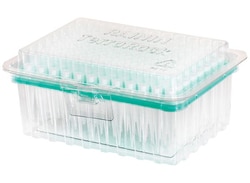
Rainin 3P Pipette Tips TR UNV 200µL F 960A/10
Pipette Tips TR UNV 200µL F 960A/10

ABclonal Technology Haptoglobin (HP) Rabbit pAb
This gene encodes a preproprotein that is processed into alpha and beta chains, which combine to form haptoglobin. Haptoglobin binds free plasma hemoglobin, preventing iron loss through the kidneys and protecting them from hemoglobin-induced damage. Mutations in this gene or its regulatory regions cause ahaptoglobinemia or hypohaptoglobinemia. The gene has been linked to diabetic nephropathy, coronary artery disease in type 1 diabetes, Crohns disease, inflammatory disease behavior, primary sclerosing cholangitis, Parkinsons disease susceptibility, and reduced incidence of malaria. The protein also has antimicrobial activity against bacteria. A duplicated gene similar to this one is located nearby on chromosome 16. Multiple transcript variants encoding different isoforms have been identified.

ABclonal Technology SLC26A2 Rabbit pAb
The diastrophic dysplasia sulfate transporter is a transmembrane glycoprotein implicated in the pathogenesis of several human chondrodysplasias. It apparently is critical in cartilage for sulfation of proteoglycans and matrix organization.

ABclonal Technology PLOD3 Rabbit pAb
The protein encoded by this gene is a membrane-bound homodimeric enzyme that is localized to the cisternae of the rough endoplasmic reticulum. The enzyme (cofactors iron and ascorbate) catalyzes the hydroxylation of lysyl residues in collagen-like peptides. The resultant hydroxylysyl groups are attachment sites for carbohydrates in collagen and thus are critical for the stability of intermolecular crosslinks. Some patients with Ehlers-Danlos syndrome type VIB have deficiencies in lysyl hydroxylase activity.

ABclonal Technology RBM5 Rabbit pAb
This gene is a candidate tumor suppressor gene which encodes a nuclear RNA binding protein that is a component of the spliceosome A complex. The encoded protein plays a role in the induction of cell cycle arrest and apoptosis through pre-mRNA splicing of multiple target genes including the tumor suppressor protein p53. This gene is located within the tumor suppressor region 3p21.3, and may play a role in the inhibition of tumor transformation and progression of several malignancies including lung cancer.

ABclonal Technology ZNF766 Rabbit pAb
Predicted to enable DNA binding activity and metal ion binding activity. Predicted to be involved in regulation of transcription, DNA-templated. Located in nucleus.

ABclonal Technology ITSN2 Rabbit pAb
This gene encodes a cytoplasmic protein which contains SH3 domains. This protein is a member of a family of proteins involved in clathrin-mediated endocytosis. Intersectin 2 is thought to regulate the formation of clathrin-coated vesicles and also may function in the induction of T cell antigen receptor (TCR) endocytosis.

Hach Company ULR Free Chlorine Fluorescence Test Kit 2-100 ug/L (ppb) 100 Tests
Free Chlorine Test Kit for use with the DR1300 FL Fluorometer.


ABclonal Technology TIAM1 Rabbit pAb
This gene encodes a RAC1-specific guanine nucleotide exchange factor (GEF), which promotes the exchange of GDP for GTP on RAC1, activating it to bind downstream effectors. This activation regulates RAC1 signaling pathways involved in cell shape, migration, adhesion, growth, survival, polarity, cytoskeletal dynamics, endocytosis, and membrane trafficking, playing key roles in invasion, metastasis, and cancer. The encoded protein also activates other Rho-like GTPases including CDC42, RAC2, RAC3, and RHOA. Multiple isoforms exist, differing in domain composition. All have C-terminal Dbl homology (DH) and pleckstrin homology (PH) domains, while only longer isoforms have an N-terminal myristoylation site, additional PH and ras-binding domains, and a PDZ domain. These isoforms interact with various proteins and lipids, undergoing complex regulation.

ABclonal Technology KCNMB2 Rabbit pAb
MaxiK channels are large conductance, voltage and calcium-sensitive potassium channels which are fundamental to the control of smooth muscle tone and neuronal excitability. MaxiK channels can be formed by 2 subunits the pore-forming alpha subunit and the modulatory beta subunit. The protein encoded by this gene is an auxiliary beta subunit which decreases the activation time of MaxiK alpha subunit currents. Alternative splicing results in multiple transcript variants of this gene. Additional variants are discussed in the literature, but their full length nature has not been described.

ABclonal Technology COX15 Rabbit pAb
Cytochrome c oxidase (COX), the terminal component of the mitochondrial respiratory chain, catalyzes the electron transfer from reduced cytochrome c to oxygen. This component is a heteromeric complex consisting of 3 catalytic subunits encoded by mitochondrial genes and multiple structural subunits encoded by nuclear genes. The mitochondrially-encoded subunits function in electron transfer, and the nuclear-encoded subunits may function in the regulation and assembly of the complex. This nuclear gene encodes a protein which is not a structural subunit, but may be essential for the biogenesis of COX formation and may function in the hydroxylation of heme O, according to the yeast mutant studies. This protein is predicted to contain 5 transmembrane domains localized in the mitochondrial inner membrane. Alternative splicing of this gene generates two transcript variants diverging in the 3 region.

ABclonal Technology KLRC4 Rabbit pAb
Natural killer (NK) cells are lymphocytes that can mediate lysis of certain tumor cells and virus-infected cells without previous activation. They can also regulate specific humoral and cell-mediated immunity. NK cells preferentially express several calcium-dependent (C-type) lectins, which have been implicated in the regulation of NK cell function. This gene is a member of the NKG2 group of genes that are expressed primarily in natural killer (NK) cells. These family members encode transmembrane proteins that are characterized by a type II membrane orientation (have an extracellular C-terminus) and the presence of a C-type lectin domain. This family member is located within the NK complex, a region that contains several C-type lectin genes preferentially expressed in NK cells. Read-through transcription exists between this gene and the downstream KLRK1 (killer cell lectin-like receptor subfamily K, member 1) family member.

ABclonal Technology TRAM1 Rabbit pAb
This gene encodes a multi-pass membrane protein that is part of the mammalian endoplasmic reticulum. The encoded protein influences glycosylation and facilitates the translocation of secretory proteins across the endoplasmic reticulum membrane by regulating which domains of the nascent polypeptide chain are visible to the cytosol during a translocational pause.

ABclonal Technology PSMD1 Rabbit pAb
The 26S proteasome is a multicatalytic proteinase complex composed of a 20S core and a 19S regulator. The 20S core has 4 rings made of 28 subunits, including 7 alpha and 7 beta subunits in each ring. The 19S regulator consists of a base with 6 ATPase subunits and 2 non-ATPase subunits, and a lid with up to 10 non-ATPase subunits. Proteasomes, found throughout eukaryotic cells, cleave peptides in an ATP/ubiquitin-dependent process in a non-lysosomal pathway. A modified form, the immunoproteasome, processes class I MHC peptides. This gene encodes the largest non-ATPase subunit of the 19S regulator lid, responsible for substrate recognition and binding. Evidence suggests interactions with viral proteins, including coronaviruses. Alternative splicing produces multiple transcript variants.