
Universal Pipette Tips
Disposable pipette tips designed to fit single and multichannel pipettes from most manufacturers; offer acceptable performance compared to pipette specific tips and can be used with a variety of pipette models.
Single-use universal pipette tips are designed for compatibility with most mechanical and electronic single and multichannel pipettors.
Universal pipette tips are available in a range of types, sizes, colors, styles, and packaging configurations and may be designed for specific purposes or tasks.
- Capacity or volume based on the pipettor size
- Filters to reduce contamination and cross-contamination
- Color
- Sterility or autoclavability
- Tip style: beveled, tapered, wide bore, round, flat, or gel-loading
- Length: short or extended
- Purity: metal-free or DNase-, RNase-, ATP-, Bioburden-, PCR inhibitor-, endotoxin-, or pyrogen-free for genomic and biologic applications
- Surface treatments to reduce retention
- Packaging options to help facilitate re-stocking or eliminate waste

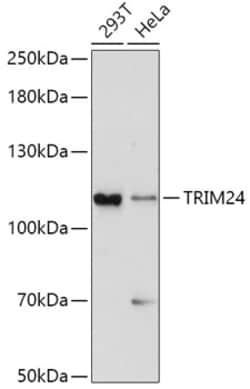
ABclonal Technology TRIM24 Rabbit pAb

The protein encoded by this gene mediates transcriptional control by interaction with the activation function 2 (AF2) region of several nuclear receptors, including the estrogen, retinoic acid, and vitamin D3 receptors. The protein localizes to nuclear bodies and is thought to associate with chromatin and heterochromatin-associated factors. The protein is a member of the tripartite motif (TRIM) family. The TRIM motif includes three zinc-binding domains - a RING, a B-box type 1 and a B-box type 2 - and a coiled-coil region. Two alternatively spliced transcript variants encoding different isoforms have been described for this gene.

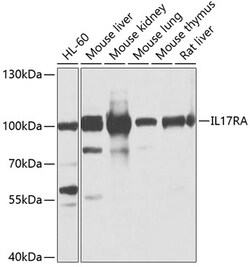
ABclonal Technology IL17RA Rabbit pAb
Interleukin 17A (IL17A) is a proinflammatory cytokine secreted by activated T-lymphocytes. It is a potent inducer of the maturation of CD34-positive hematopoietic precursors into neutrophils. The transmembrane protein encoded by this gene (interleukin 17A receptor, IL17RA) is a ubiquitous type I membrane glycoprotein that binds with low affinity to interleukin 17A. Interleukin 17A and its receptor play a pathogenic role in many inflammatory and autoimmune diseases such as rheumatoid arthritis. Like other cytokine receptors, this receptor likely has a multimeric structure. Alternative splicing results in multiple transcript variants encoding different isoforms.
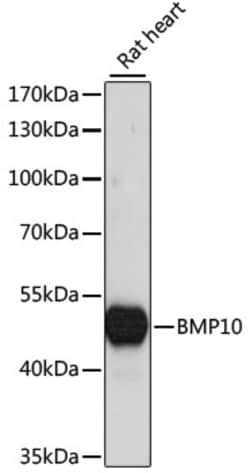
ABclonal Technology BMP10 Rabbit pAb
This gene encodes a secreted ligand of the TGF-beta (transforming growth factor-beta) superfamily of proteins. Ligands of this family bind various TGF-beta receptors leading to recruitment and activation of SMAD family transcription factors that regulate gene expression. The encoded preproprotein is proteolytically processed to generate the mature protein, which binds to the activin receptor-like kinase 1 (ALK1) and plays important roles in cardiovascular development including cardiomyocyte proliferation and regulation of heart size, closure of the ductus arteriosus, angiogenesis and ventricular trabeculation.
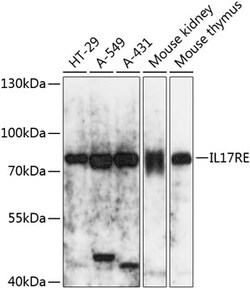
ABclonal Technology IL17RE Rabbit pAb
This gene encodes a transmembrane protein that functions as the receptor for interleukin-17C. The encoded protein signals to downstream components of the mitogen activated protein kinase (MAPK) pathway. Activity of this protein is important in the immune response to bacterial pathogens. Alternatively spliced transcript variants have been described for this gene.
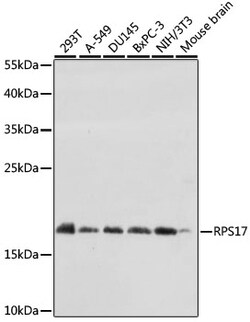
ABclonal Technology RPS17 Rabbit pAb
Ribosomes, the organelles that catalyze protein synthesis, consist of a small 40S subunit and a large 60S subunit. Together these subunits are composed of four RNA species and approximately 80 structurally distinct proteins. This gene encodes a ribosomal protein that is a component of the 40S subunit. The protein belongs to the S17E family of ribosomal proteins and is located in the cytoplasm. Mutations in this gene cause Diamond-Blackfan anemia 4. Alternative splicing of this gene results in multiple transcript variants. As is typical for genes encoding ribosomal proteins, there are multiple processed pseudogenes of this gene dispersed through the genome.
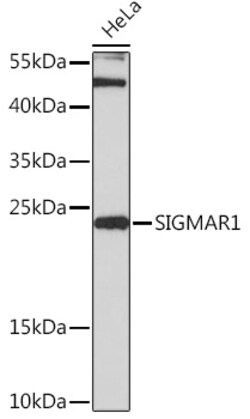
ABclonal Technology SIGMAR1 Rabbit pAb
This gene encodes a receptor protein that interacts with a variety of psychotomimetic drugs, including cocaine and amphetamines. The receptor is believed to play an important role in the cellular functions of various tissues associated with the endocrine, immune, and nervous systems. As indicated by its previous name, opioid receptor sigma 1 (OPRS1), the product of this gene was erroneously thought to function as an opioid receptor, it is now thought to be a non-opioid receptor. Mutations in this gene has been associated with juvenile amyotrophic lateral sclerosis 16. Alternative splicing of this gene results in transcript variants encoding distinct isoforms.
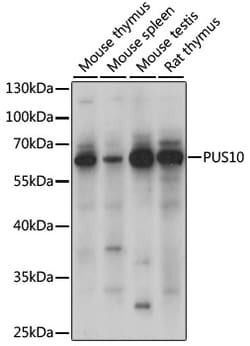
ABclonal Technology PUS10 Rabbit pAb
Pseudouridination, the isomerization of uridine to pseudouridine, is the most common posttranscriptional nucleotide modification found in RNA and is essential for biologic functions such as spliceosome biogenesis. Pseudouridylate synthases, such as PUS10, catalyze pseudouridination of structural RNAs, including transfer, ribosomal, and splicing RNAs. These enzymes also act as RNA chaperones, facilitating the correct folding and assembly of tRNAs (McCleverty et al., 2007 [PubMed 17900615]).
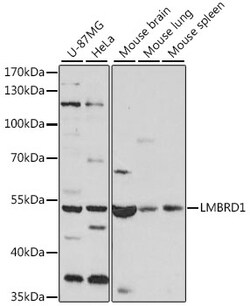
ABclonal Technology LMBRD1 Rabbit pAb
This gene encodes a lysosomal membrane protein that may be involved in the transport and metabolism of cobalamin. This protein also interacts with the large form of the hepatitis delta antigen and may be required for the nucleocytoplasmic shuttling of the hepatitis delta virus. Mutations in this gene are associated with the vitamin B12 metabolism disorder termed, homocystinuria-megaloblastic anemia complementation type F.

ABclonal Technology NGLY1 Rabbit pAb
This gene encodes an enzyme that catalyzes hydrolysis of an N(4)-(acetyl-beta-D-glucosaminyl) asparagine residue to N-acetyl-beta-D-glucosaminylamine and a peptide containing an aspartate residue. The encoded enzyme may play a role in the proteasome-mediated degradation of misfolded glycoproteins. Multiple transcript variants encoding different isoforms have been found for this gene.
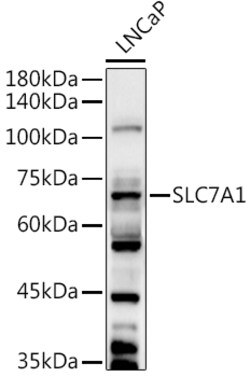
ABclonal Technology SLC7A1 Rabbit pAb
Enables L-arginine transmembrane transporter activity and L-histidine transmembrane transporter activity. Involved in amino acid transport. Located in membrane. Part of apical plasma membrane, basolateral plasma membrane, and protein-containing complex.
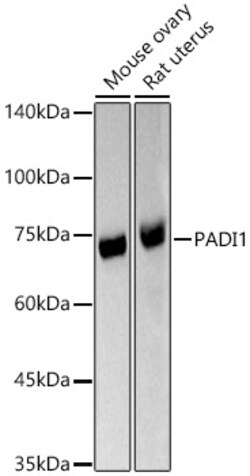
ABclonal Technology PADI1 Rabbit pAb
This gene encodes a member of the peptidyl arginine deiminase family of enzymes, which catalyze the post-translational deimination of proteins by converting arginine residues into citrullines in the presence of calcium ions. The family members have distinct substrate specificities and tissue-specific expression patterns. The type I enzyme is involved in the late stages of epidermal differentiation, where it deiminates filaggrin and keratin K1, which maintains hydration of the stratum corneum, and hence the cutaneous barrier function. This enzyme may also play a role in hair follicle formation. This gene exists in a cluster with four other paralogous genes.
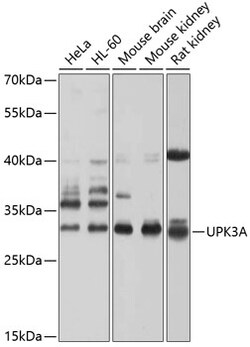
ABclonal Technology UPK3A Rabbit pAb
This gene encodes a member of the uroplakin family, a group of transmembrane proteins that form complexes on the apical surface of the bladder epithelium. Mutations in this gene may be associated with renal adysplasia. Alternatively spliced transcript variants have been described.
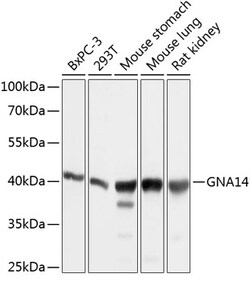
ABclonal Technology GNA14 Rabbit pAb
This gene encodes a member of the guanine nucleotide-binding, or G protein family. G proteins are heterotrimers consisting of alpha, beta and gamma subunits. The encoded protein is a member of the alpha family of G proteins, more specifically the alpha q subfamily of G proteins. The encoded protein may play a role in pertussis-toxin resistant activation of phospholipase C-beta and its downstream effectors.
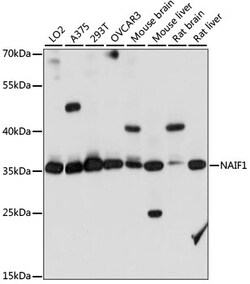
ABclonal Technology NAIF1 Rabbit pAb
Involved in negative regulation of cell growth and regulation of mitochondrial membrane permeability involved in apoptotic process. Located in cytosol, nucleoplasm, and plasma membrane.
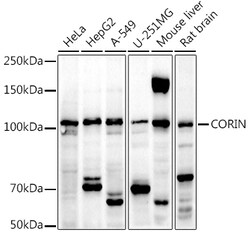
ABclonal Technology CORIN Rabbit pAb
This gene encodes a member of the type II transmembrane serine protease class of the trypsin superfamily. Members of this family are composed of multiple structurally distinct domains. The encoded protein converts pro-atrial natriuretic peptide to biologically active atrial natriuretic peptide, a cardiac hormone that regulates blood volume and pressure. This protein may also function as a pro-brain-type natriuretic peptide convertase. Multiple alternatively spliced transcript variants encoding different isoforms have been found for this gene.