
ELISA Substrates and Reagents

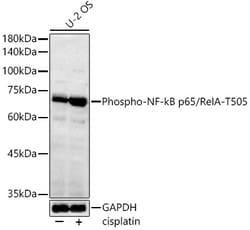
ABclonal Technology Phospho-NF-kB p65/RelA-T505 Rabbit pAb

NF-kappa-B is a ubiquitous transcription factor involved in several biological processes. It is held in the cytoplasm in an inactive state by specific inhibitors. Upon degradation of the inhibitor, NF-kappa-B moves to the nucleus and activates transcription of specific genes. NF-kappa-B is composed of NFKB1 or NFKB2 bound to either REL, RELA, or RELB. The most abundant form of NF-kappa-B is NFKB1 complexed with the product of this gene, RELA. Four transcript variants encoding different isoforms have been found for this gene.

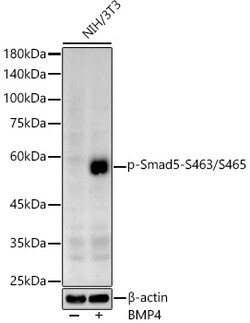
ABclonal Technology Phospho-Smad5-S463/S465 Rabbit pAb
The protein encoded by this gene is involved in the transforming growth factor beta signaling pathway that results in an inhibition of the proliferation of hematopoietic progenitor cells. The encoded protein is activated by bone morphogenetic proteins type 1 receptor kinase, and may be involved in cancer. Alternative splicing results in multiple transcript variants.
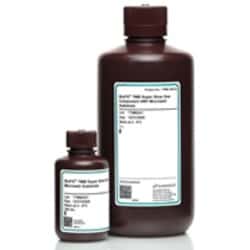
Surmodics Inc TMB Super Slow One Component HRP Microwell Substrate, 1L
The BioFX™ one component 3,3’,5,5’-tetramethylbenzidine (TMB) substrate is supplied in a ready-to-use solution. Peroxidase reacts with the TMB substrate solution to produce a soluble blue reaction product that can be read at 370 nm or 620-650 nm for ELISA applications. Stop solutions can be added to prevent further color development and reading the absorbance values at the desired wavelengths.
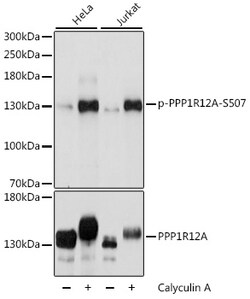
ABclonal Technology Phospho-PPP1R12A-S507 Rabbit pAb
Myosin phosphatase target subunit 1 (MBS) is a key component of myosin phosphatase, which regulates actin-myosin interactions downstream of the Rho GTPase. RhoA, when active in its GTP-bound form, interacts with MBS to control myosin light chain (MLC) phosphorylation, influencing smooth muscle contraction and nonmuscle cell movement. Rho-kinase, activated by GTP-bound RhoA, phosphorylates and inactivates MBS, reducing myosin phosphatase activity. Overexpression of RhoA or activated RhoA increases MLC phosphorylation. Several transcript variants encoding different isoforms of this gene have been identified.
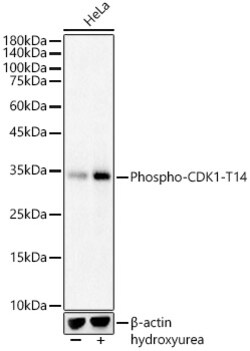
ABclonal Technology Phospho-CDK1-T14 Rabbit pAb
The protein encoded by this gene is a member of the Ser/Thr protein kinase family. This protein is a catalytic subunit of the highly conserved protein kinase complex known as M-phase promoting factor (MPF), which is essential for G1/S and G2/M phase transitions of eukaryotic cell cycle. Mitotic cyclins stably associate with this protein and function as regulatory subunits. The kinase activity of this protein is controlled by cyclin accumulation and destruction through the cell cycle. The phosphorylation and dephosphorylation of this protein also play important regulatory roles in cell cycle control. Alternatively spliced transcript variants encoding different isoforms have been found for this gene.
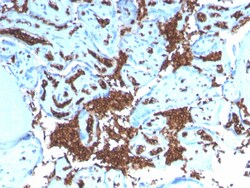
Biotium Glycophorin A / CD235a (Erythrocyte Marker)(GYPA/3219R), CF568 conjugate, 0.1mg/mL
Recognizes a sialoglycoprotein of 39 kDa, identified as glycophorin A (GPA). It is present on red blood cells (RBC) and erythroid precursor cells. It has been shown that glycophorin acts as the receptor for Sandei virus and parvovirus. Glycophorins A (GPA) and B (GPB), which are single, trans-membrane sialoglycoproteins. GPA is the carrier of blood group M and N specificities, while GPB accounts for S and U specificities. GPA and GPB provide the cells with a large mucin like surface and it has been suggested this provides a barrier to cell fusion, so minimizing aggregation between red blood cells in the circulation. Primary antibodies are available purified, or with a selection of fluorescent CF Dyes and other labels. CF Dyes offer exceptional brightness and photostability. Note: Conjugates of blue fluorescent dyes like CF405S and CF405M are not recommended for detecting low abundance targets, because blue dyes have lower fluorescence and can give higher non-specific bac

Biotium Laminin(A5), CF740 conjugate, 0.1mg/mL
Laminins are large hetero-trimeric, non-collagenous glycoproteins composed of α, β, and γ chains. This MAb reacts with laminin B2/1 chain of ~210 kDa and does not cross-react with other basement membrane components or fibronectin. Its specificity was established by immunoprecipitation and immunofluorescence of human skeletal muscle and kidney with laminin chain-specific MAbs. Epithelial sheets in vivo are separated from the mesenchymal elements of the stroma by a thin layer of a specialized type of extracellular matrix termed the basement membrane (BM). This structure consists of individual components, some of which are ubiquitous in BMs and some are not. The ubiquitous ones comprise laminin (LN), entactin/nidogen (EN), collagen type IV (CIV), and large heparan sulfate proteoglycan (HSPG), which interact specifically with each other to form a continuous and regular BM. Alterations of BM integrity, from local discontinuities up to complete loss, are describe

Genscript Corporation CEACAM-8/CD66bBiotin His
Eosinophils and their products are likely important in the pathophysiology of allergic diseases such as bronchial asthma and in host immunity to parasitic organisms CD66b (CEACAM8 CGM6 NCA-95) is a single chain GPI-anchored highly glycosylated protein belonging to the carcinoembryonic Ag supergene family CD66b is an activation marker for human granulocytes

American Research Products Inc BoVine Heat shock protein HSP
BoVine Heat shock protein HSP 90-alpha (HSP90AA1) ELISA kit from CUSABIO Detection Range 6 25 ng/mL-400 ng/mL Sensitivity 1 56 ng/mL Sample serum plasma tissue homogenates cell lysates Method Sandwich

Bioss Ikb- Ser-32/Ser-36 Phosphos
I B (Ser-32/Ser-36) Primary Antibody Unconjugated Host Species Mouse Target Species Human Mouse Rat Clonality Monoclonal Applications WB IP 39A1413Concentration Size 100 ul Storage Buffer PBS 0 5% BSA and 0 05% NaN3
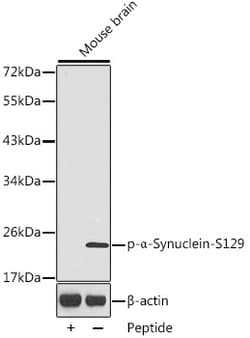
ABclonal Technology Phospho-α-Synuclein-S129 Rabbit pAb
Alpha-synuclein is a member of the synuclein family, which also includes beta- and gamma-synuclein. Synucleins are abundantly expressed in the brain and alpha- and beta-synuclein inhibit phospholipase D2 selectively. SNCA may serve to integrate presynaptic signaling and membrane trafficking. Defects in SNCA have been implicated in the pathogenesis of Parkinson disease. SNCA peptides are a major component of amyloid plaques in the brains of patients with Alzheimers disease. Alternatively spliced transcripts encoding different isoforms have been identified for this gene.
Cayman Chemical O-Phospho-L-TyrosIn 100mg
A phosphorylated form of L-tyrosine; used in studies of tyrosine phosphorylation; has been used in affinity chromatography to purify IgG