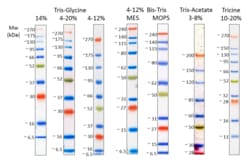
Protein Molecular Weight Markers
- (1)
- (1)
- (1)
- (1)
- (1)
- (39)
- (2)
- (19)
- (1)
- (2)
- (1)
- (1)
- (2)
- (2)
- (1)
- (1)
- (2)
- (2)
- (1)
- (2)
- (2)
- (1)
- (4)
- (1)
- (1)
- (1)
- (1)
- (1)
- (2)
- (3)
- (3)
- (1)
- (1)
- (2)
- (2)
- (1)
- (1)
- (2)
- (4)
- (2)
- (1)
- (1)
- (1)
- (4)
- (1)
- (2)
- (3)
- (1)
- (1)
- (2)
- (3)
- (13)
- (1)
- (3)
- (2)
- (5)
- (3)
- (2)
- (9)
- (3)
- (5)
- (2)
- (1)
- (1)
- (3)
- (2)
- (9)
- (9)
- (1)
- (7)
- (2)
- (1)
- (2)
- (2)
- (3)
- (1)
- (24)
Filtered Search Results
Electron Microscopy Sciences Film Marker
Small and Specialty Supplier Partner
Small and/or specialty supplier based on Federal laws and SBA requirements.
Learn More
Small and/or specialty supplier based on Federal laws and SBA requirements.
Learn More
This device when fitted to the 8X magnifier (68125) enables you to view and check the 35 mm roll film while marking the desired frame by depressing the puncher (located on the side of the device). The puncher punches out a V-shaped piece of film on the perforation to mark the frame. When fitted in the reverse position to the 8X magnifier, you are able to view and check the slides.
Non-distribution item offered as a customer accommodation; additional freight charges may apply.
Learn More
ABclonal Technology CD239/BCAM Rabbit pAb
Small and Specialty Supplier Partner
Small and/or specialty supplier based on Federal laws and SBA requirements.
Learn More
Small and/or specialty supplier based on Federal laws and SBA requirements.
Learn More
This gene encodes Lutheran blood group glycoprotein, a member of the immunoglobulin superfamily and a receptor for the extracellular matrix protein, laminin. The protein contains five extracellular immunoglobulin domains, a single transmembrane domain, and a short C-terminal cytoplasmic tail. This protein may play a role in epithelial cell cancer and in vaso-occlusion of red blood cells in sickle cell disease. Polymorphisms in this gene define some of the antigens in the Lutheran system and also the Auberger system. Inactivating variants of this gene result in the recessive Lutheran null phenotype, Lu(a-b-), of the Lutheran blood group. Two transcript variants encoding different isoforms have been found for this gene.
Non-distribution item offered as a customer accommodation; additional freight charges may apply.
Learn More
Biotium CF640R-Dextran 10, 000 MW, Anionic and Fixable
CF dye labeled dextrans could be used as a fluorescent fluid-phase markers to study cell permeability, endocytosis, or mechanisms of biomolecular delivery. The dextran conjugates are available in a variety of molecular weights, and contain a formaldehyde-fixable free-amine group. CF dyes are Biotium's line of next-generation fluorescent dyes with advantages in brightness, photostability, and conjugate specificity compared to other fluorescent dyes. Far-red fluorescent CF640R dye has excitation/emission at 642/662 nm.
Non-distribution item offered as a customer accommodation; additional freight charges may apply.
Learn More
ABclonal Technology [KO Validated] IMPDH2 Rabbit mAb
Small and Specialty Supplier Partner
Small and/or specialty supplier based on Federal laws and SBA requirements.
Learn More
Small and/or specialty supplier based on Federal laws and SBA requirements.
Learn More
This gene encodes the rate-limiting enzyme in the de novo guanine nucleotide biosynthesis. It is thus involved in maintaining cellular guanine deoxy- and ribonucleotide pools needed for DNA and RNA synthesis. The encoded protein catalyzes the NAD-dependent oxidation of inosine-5-monophosphate into xanthine-5-monophosphate, which is then converted into guanosine-5-monophosphate. This gene is up-regulated in some neoplasms, suggesting it may play a role in malignant transformation.
Non-distribution item offered as a customer accommodation; additional freight charges may apply.
Learn More
ABclonal Technology LPIN2 Rabbit pAb
Small and Specialty Supplier Partner
Small and/or specialty supplier based on Federal laws and SBA requirements.
Learn More
Small and/or specialty supplier based on Federal laws and SBA requirements.
Learn More
Mouse studies suggest that this gene functions during normal adipose tissue development and may play a role in human triglyceride metabolism. This gene represents a candidate gene for human lipodystrophy, characterized by loss of body fat, fatty liver, hypertriglyceridemia, and insulin resistance.
Non-distribution item offered as a customer accommodation; additional freight charges may apply.
Learn More
ABclonal Technology SULT1C4 Rabbit pAb
Small and Specialty Supplier Partner
Small and/or specialty supplier based on Federal laws and SBA requirements.
Learn More
Small and/or specialty supplier based on Federal laws and SBA requirements.
Learn More
Sulfotransferase enzymes catalyze the sulfate conjugation of many hormones, neurotransmitters, drugs, and xenobiotic compounds. These cytosolic enzymes are different in their tissue distributions and substrate specificities. The gene structure (number and length of exons) is similar among family members. This gene encodes a protein that belongs to the SULT1 subfamily, responsible for transferring a sulfo moiety from PAPS to phenol-containing compounds.
Non-distribution item offered as a customer accommodation; additional freight charges may apply.
Learn More
ABclonal Technology PRPSAP2 Rabbit pAb
Small and Specialty Supplier Partner
Small and/or specialty supplier based on Federal laws and SBA requirements.
Learn More
Small and/or specialty supplier based on Federal laws and SBA requirements.
Learn More
This gene encodes a protein that associates with the enzyme phosphoribosylpyrophosphate synthetase (PRS). PRS catalyzes the formation of phosphoribosylpyrophosphate which is a substrate for synthesis of purine and pyrimidine nucleotides, histidine, tryptophan and NAD. PRS exists as a complex with two catalytic subunits and two associated subunits. This gene encodes a non-catalytic associated subunit of PRS. Alternate splicing results in multiple transcript variants.
Non-distribution item offered as a customer accommodation; additional freight charges may apply.
Learn More
ABclonal Technology SLC25A26 Rabbit pAb
Small and Specialty Supplier Partner
Small and/or specialty supplier based on Federal laws and SBA requirements.
Learn More
Small and/or specialty supplier based on Federal laws and SBA requirements.
Learn More
This gene is a member of the mitochondrial carrier family which includes nuclear-encoded transporters localized on the inner mitochondrial membranes. Members of the family transport important small molecules across the mitochondrial inner membrane. This protein is involved in the transport of S-adenosylmethionine (SAM) into the mitochondria. Mutations in this gene are associated with combined oxidative phosphorylation deficiency 28. Alternative splicing results in multiple transcript variants encoding different isoforms.
Non-distribution item offered as a customer accommodation; additional freight charges may apply.
Learn More
Rockland Immunochemicals Protein Molecular Weight Marker (14 - 120kDa) - MB-201-0200
Small and Specialty Supplier Partner
Small and/or specialty supplier based on Federal laws and SBA requirements.
Learn More
Small and/or specialty supplier based on Federal laws and SBA requirements.
Learn More
This protein molecular weight marker is a cocktail containing seven purified proteins that range in size from 14 to 120 kDa and thus span a molecular weight range common to most proteins and protein subunits. The protein mixture has been formulated to yield well-defined bands after SDS–polyacrylamide gel electrophoresis and staining with Coomassie blue or other common staining techniques.
Non-distribution item offered as a customer accommodation; additional freight charges may apply.
Learn More
ABclonal Technology RPS17 Rabbit pAb
Small and Specialty Supplier Partner
Small and/or specialty supplier based on Federal laws and SBA requirements.
Learn More
Small and/or specialty supplier based on Federal laws and SBA requirements.
Learn More
Ribosomes, the organelles that catalyze protein synthesis, consist of a small 40S subunit and a large 60S subunit. Together these subunits are composed of four RNA species and approximately 80 structurally distinct proteins. This gene encodes a ribosomal protein that is a component of the 40S subunit. The protein belongs to the S17E family of ribosomal proteins and is located in the cytoplasm. Mutations in this gene cause Diamond-Blackfan anemia 4. Alternative splicing of this gene results in multiple transcript variants. As is typical for genes encoding ribosomal proteins, there are multiple processed pseudogenes of this gene dispersed through the genome.
Non-distribution item offered as a customer accommodation; additional freight charges may apply.
Learn More
ABclonal Technology IL36R Rabbit pAb
Small and Specialty Supplier Partner
Small and/or specialty supplier based on Federal laws and SBA requirements.
Learn More
Small and/or specialty supplier based on Federal laws and SBA requirements.
Learn More
The protein encoded by this gene is a member of the interleukin 1 receptor family. An experiment with transient gene expression demonstrated that this receptor was incapable of binding to interleukin 1 alpha and interleukin 1 beta with high affinity. This gene and four other interleukin 1 receptor family genes, including interleukin 1 receptor, type I (IL1R1), interleukin 1 receptor, type II (IL1R2), interleukin 1 receptor-like 1 (IL1RL1), and interleukin 18 receptor 1 (IL18R1), form a cytokine receptor gene cluster in a region mapped to chromosome 2q12.
Non-distribution item offered as a customer accommodation; additional freight charges may apply.
Learn More
ABclonal Technology MICAL1 Rabbit pAb
Small and Specialty Supplier Partner
Small and/or specialty supplier based on Federal laws and SBA requirements.
Learn More
Small and/or specialty supplier based on Federal laws and SBA requirements.
Learn More
This gene encodes an enzyme that oxidizes methionine residues on actin, thereby promoting depolymerization of actin filaments. This protein interacts with and regulates signalling by NEDD9/CAS-L (neural precursor cell expressed, developmentally down-regulated 9). Alternative splicing results in multiple transcript variants.
Non-distribution item offered as a customer accommodation; additional freight charges may apply.
Learn More
ABclonal Technology IGFBP2 Rabbit pAb
Small and Specialty Supplier Partner
Small and/or specialty supplier based on Federal laws and SBA requirements.
Learn More
Small and/or specialty supplier based on Federal laws and SBA requirements.
Learn More
The protein encoded by this gene is one of six similar proteins that bind insulin-like growth factors I and II (IGF-I and IGF-II). The encoded protein can be secreted into the bloodstream, where it binds IGF-I and IGF-II with high affinity, or it can remain intracellular, interacting with many different ligands. High expression levels of this protein promote the growth of several types of tumors and may be predictive of the chances of recovery of the patient. Several transcript variants, one encoding a secreted isoform and the others encoding nonsecreted isoforms, have been found for this gene.
Non-distribution item offered as a customer accommodation; additional freight charges may apply.
Learn More
ABclonal Technology TIAM1 Rabbit pAb
Small and Specialty Supplier Partner
Small and/or specialty supplier based on Federal laws and SBA requirements.
Learn More
Small and/or specialty supplier based on Federal laws and SBA requirements.
Learn More
This gene encodes a RAC1-specific guanine nucleotide exchange factor (GEF), which promotes the exchange of GDP for GTP on RAC1, activating it to bind downstream effectors. This activation regulates RAC1 signaling pathways involved in cell shape, migration, adhesion, growth, survival, polarity, cytoskeletal dynamics, endocytosis, and membrane trafficking, playing key roles in invasion, metastasis, and cancer. The encoded protein also activates other Rho-like GTPases including CDC42, RAC2, RAC3, and RHOA. Multiple isoforms exist, differing in domain composition. All have C-terminal Dbl homology (DH) and pleckstrin homology (PH) domains, while only longer isoforms have an N-terminal myristoylation site, additional PH and ras-binding domains, and a PDZ domain. These isoforms interact with various proteins and lipids, undergoing complex regulation.
Non-distribution item offered as a customer accommodation; additional freight charges may apply.
Learn More
Sigma Aldrich Fine Chemicals Biosciences VivaspinR 500 5 kDa MWCO P
Designed for fast nondenaturing concentration of biological samples by membrane ultrafiltration. Up to 30-fold concentration of the sample can be achieved with recovery of the target molecule typically exceeding 95%.Vivaspin(R) sample concentrators are designed for fast nondenaturing concentration of biological samples by membrane ultrafiltration. Up to 30-fold concentration of the sample can be achieved with recovery of the target molecule typically exceeding 95%. The entire process is performed in a single tube with an upper compartment containing sample and lower compartment separated by a semipermeable membrane with a molecular weight cut-off (MWCO) selected by the user. Centrifugation is applied to force solvent through the membrane leaving a more concentrated sample in the upper chamber.Vivaspin(R) sample concentrators cater for sample volumes from 100 mul to 20 ml with a range of molecular weight cutoff values from Mr 3 000 to 100 000. for maximum recovery select a MWCO at
Non-distribution item offered as a customer accommodation; additional freight charges may apply.
Learn More