
Protein Molecular Weight Markers


S2 Media 15x100mm Chameleon™ COLOREX™ ECC, 10/pack
Chameleon™ COLOREX™ ECC is a selective and differential, chromogenic medium used for the detection and enumeration of ß-glucuronidase positive Escherichia coli and coliforms in food, water and environmental samples.• Product meets CLSI performance criteria.• Chameleon™ COLOREX™ ECC should be used by trained professionals within a laboratory setting. • Product is not intended for use in the diagnosis or treatment of disease or other human conditions.

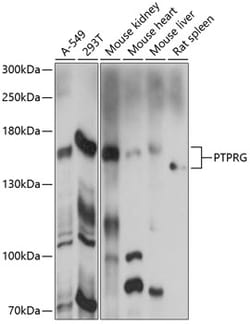
ABclonal Technology PTPRG Rabbit pAb

The protein encoded by this gene is a member of the protein tyrosine phosphatase (PTP) family. PTPs are known to be signaling molecules that regulate a variety of cellular processes including cell growth, differentiation, mitotic cycle, and oncogenic transformation. This PTP possesses an extracellular region, a single transmembrane region, and two tandem intracytoplasmic catalytic domains, and thus represents a receptor-type PTP. The extracellular region of this PTP contains a carbonic anhydrase-like (CAH) domain, which is also found in the extracellular region of PTPRBETA/ZETA. This gene is located in a chromosomal region that is frequently deleted in renal cell carcinoma and lung carcinoma, thus is thought to be a candidate tumor suppressor gene.
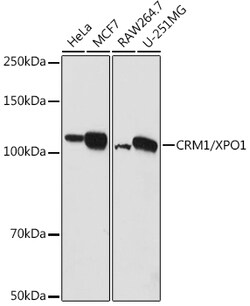
ABclonal Technology CRM1/XPO1 Rabbit pAb
This cell-cycle-regulated gene encodes a protein that mediates leucine-rich nuclear export signal (NES)-dependent protein transport. The protein specifically inhibits the nuclear export of Rev and U snRNAs. It is involved in the control of several cellular processes by controlling the localization of cyclin B, MPAK, and MAPKAP kinase 2. This protein also regulates NFAT and AP-1.
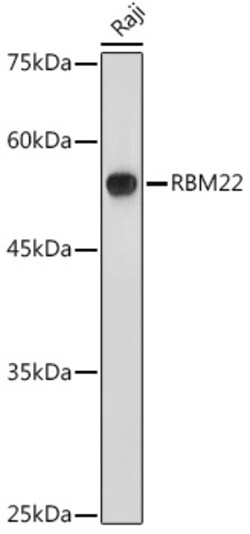
ABclonal Technology RBM22 Rabbit pAb
This gene encodes an RNA binding protein. The encoded protein may play a role in cell division and may be involved in pre-mRNA splicing. Related pseudogenes exist on chromosomes 6, 7, 9, 13, 16, 18, and X.
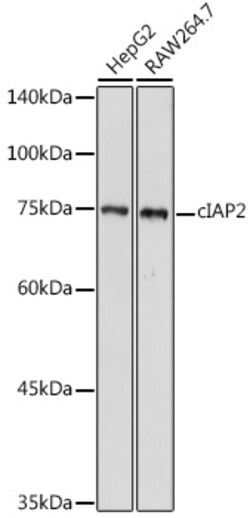
ABclonal Technology cIAP2 Rabbit pAb
This gene encodes a member of the IAP family of proteins that inhibit apoptosis by binding to tumor necrosis factor receptor-associated factors TRAF1 and TRAF2, probably by interfering with activation of ICE-like proteases. The encoded protein inhibits apoptosis induced by serum deprivation but does not affect apoptosis resulting from exposure to menadione, a potent inducer of free radicals. It contains 3 baculovirus IAP repeats and a ring finger domain. Transcript variants encoding the same isoform have been identified.
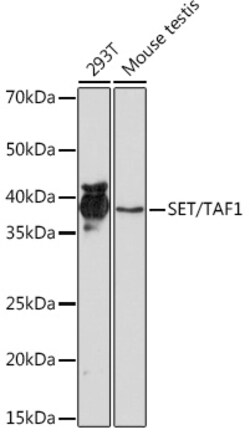
ABclonal Technology SET/TAF1 Rabbit mAb
The protein encoded by this gene inhibits acetylation of nucleosomes, especially histone H4, by histone acetylases (HAT). This inhibition is most likely accomplished by masking histone lysines from being acetylated, and the consequence is to silence HAT-dependent transcription. The encoded protein is part of a complex localized to the endoplasmic reticulum but is found in the nucleus and inhibits apoptosis following attack by cytotoxic T lymphocytes. This protein can also enhance DNA replication of the adenovirus genome. Several transcript variants encoding different isoforms have been found for this gene.
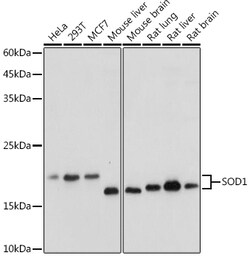
ABclonal Technology SOD1 Rabbit pAb
The protein encoded by this gene binds copper and zinc ions and is one of two isozymes responsible for destroying free superoxide radicals in the body. The encoded isozyme is a soluble cytoplasmic protein, acting as a homodimer to convert naturally-occuring but harmful superoxide radicals to molecular oxygen and hydrogen peroxide. The other isozyme is a mitochondrial protein. In addition, this protein contains an antimicrobial peptide that displays antibacterial, antifungal, and anti-MRSA activity against E. coli, E. faecalis, S. aureus, S. aureus MRSA LPV+, S. agalactiae, and yeast C. krusei. Mutations in this gene have been implicated as causes of familial amyotrophic lateral sclerosis. Rare transcript variants have been reported for this gene.
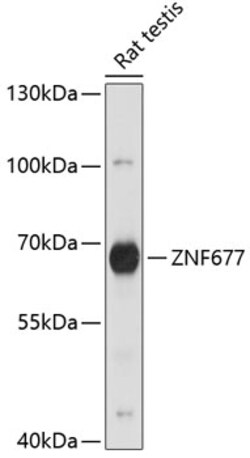
ABclonal Technology ZNF677 Rabbit pAb
Predicted to enable DNA-binding transcription factor activity, RNA polymerase II-specific and RNA polymerase II cis-regulatory region sequence-specific DNA binding activity. Predicted to be involved in regulation of transcription by RNA polymerase II. Predicted to be active in nucleus.
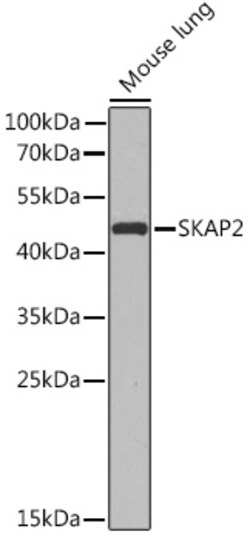
ABclonal Technology SKAP2 Rabbit pAb
The protein encoded by this gene shares homology with Src kinase-associated phosphoprotein 1, and is a substrate of Src family kinases. It is an adaptor protein that is thought to play an essential role in the Src signaling pathway, and in regulating proper activation of the immune system. This protein contains an amino terminal coiled-coil domain for self-dimerization, a plecskstrin homology (PH) domain required for interactions with lipids at the membrane, and a Src homology (SH3) domain at the carboxy terminus. Some reports indicate that this protein inhibits actin polymerization through interactions with actin assembly factors, and might negatively regulate the invasiveness of tumors by modulating actin assembly. Alternative splicing results in multiple transcript variants encoding different isoforms.
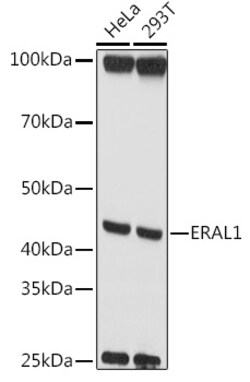
ABclonal Technology ERAL1 Rabbit pAb
The protein encoded by this gene is a GTPase that localizes to the mitochondrion. The encoded protein binds to the 3 terminal stem loop of 12S mitochondrial rRNA and is required for proper assembly of the 28S small mitochondrial ribosomal subunit. Deletion of this gene has been shown to cause mitochondrial dysfunction, growth retardation, and apoptosis. Several transcript variants encoding different isoforms have been found for this gene.
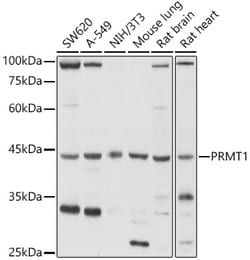
ABclonal Technology PRMT1 Rabbit pAb
This gene encodes a member of the protein arginine N-methyltransferase (PRMT) family. Post-translational modification of target proteins by PRMTs plays an important regulatory role in many biological processes, whereby PRMTs methylate arginine residues by transferring methyl groups from S-adenosyl-L-methionine to terminal guanidino nitrogen atoms. The encoded protein is a type I PRMT and is responsible for the majority of cellular arginine methylation activity. Increased expression of this gene may play a role in many types of cancer. Alternatively spliced transcript variants encoding multiple isoforms have been observed for this gene, and a pseudogene of this gene is located on the long arm of chromosome 5.
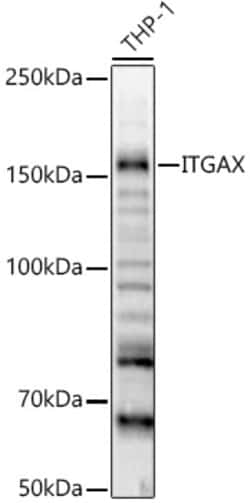
ABclonal Technology ITGAX Rabbit pAb
This gene encodes the integrin alpha X chain protein. Integrins are heterodimeric integral membrane proteins composed of an alpha chain and a beta chain. This protein combines with the beta 2 chain (ITGB2) to form a leukocyte-specific integrin referred to as inactivated-C3b (iC3b) receptor 4 (CR4). The alpha X beta 2 complex seems to overlap the properties of the alpha M beta 2 integrin in the adherence of neutrophils and monocytes to stimulated endothelium cells, and in the phagocytosis of complement coated particles. Two transcript variants encoding different isoforms have been found for this gene.
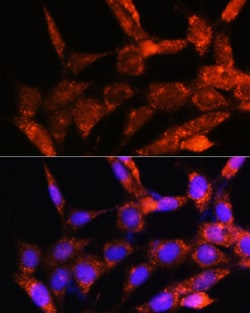
ABclonal Technology COX6C Rabbit pAb
Cytochrome c oxidase, the terminal enzyme of the mitochondrial respiratory chain, catalyzes the electron transfer from reduced cytochrome c to oxygen. It is a heteromeric complex consisting of 3 catalytic subunits encoded by mitochondrial genes and multiple structural subunits encoded by nuclear genes. The mitochondrially-encoded subunits function in electron transfer, and the nuclear-encoded subunits may be involved in the regulation and assembly of the complex. This nuclear gene encodes subunit VIc, which has 77% amino acid sequence identity with mouse subunit VIc. This gene is up-regulated in prostate cancer cells. A pseudogene has been found on chromosomes 16p12.

LUNA NANOTECH INC Amine-Functionlzd Dextran 40Kda
Dextran Size: 40 kDa
Volume (@ 5 mg/mL Fe): 5 mL
General Information:
Amine-functionalized Dextran coated crosslinked iron oxide nanoparticles (CLIO-NH2) have 1-3 superparamagnetic Fe3O4 iron oxide cores (8-10 nm in diameter) imbedded within the matrix of dextran sugar strands of 40 kDa or 70 kDa size. Dextran strands are crosslinked to prevent their disassociation, ensuring long-term biological stability. Dextran surface has been functionalized with Amine NH2 groups.
Features:
Highly biocompatible, non-toxic
Long term stable under physiological conditions
40 kDa and 70 kDa dextran coats are available
Highly magnetic
Can be easily conjugated to NHS-activated ligands
Applications:
In vitro and in vivo magnetic labels for cells and tissues
Magnetic cell separation
Probes for MRI
Specifications:
Iron Oxide Core Diameter: 8 – 10 nm
Hydrodyn
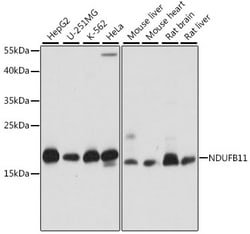
ABclonal Technology NDUFB11 Rabbit pAb
The protein encoded by this gene is a subunit of the multisubunit NADHubiquinone oxidoreductase (complex I). Mammalian complex I is located at the mitochondrial inner membrane. This protein has NADH dehydrogenase activity and oxidoreductase activity. It transfers electrons from NADH to ubiquinone. Mutations in the human gene are associated with linear skin defects with multiple congenital anomalies 3 and mitochondrial complex I deficiency.