
Cell Culture Growth Factors and Hormones


Medchemexpress LLC CD44 Human HEK293 5ug

Recombinant human CD44 extracellular domain produced in HEK293 cells and supplied as a C-terminal His-tagged, lyophilized protein. It is formulated for reconstitution and validated for biochemical and cell-based assays, offering high purity and characterized biological activity for binding and proliferation studies.
- Expressed in human HEK293 cells.
- C-terminal 6xHis tag for detection and purification.
- Amino acid range Q21-P220 representing the extracellular domain.
- Purity greater than 95% by reducing SDS-PAGE.
- Lyophilized from 20 mM PB, 150 mM NaCl, pH 7.4.
- Do not reconstitute below 100 μg/mL in ddH2O.
- Store at -20°C; freeze aliquots for long-term storage at -80°C.
- Validated in binding and cell proliferation assays with reported activity.

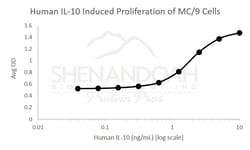
FUJIFILM Biosciences Human IL-10, Recombinant Protein, Shenandoah Biotechnology, 100 ug vial
Interleukin 10 (IL-10) is an anti-inflammatory cytokine produced by macrophages and type 2 T helper (Th2) cells. IL-10 inhibits the production of pro-inflammatory cytokines such as interferon gamma (IFN-ɣ), tumor necrosis factor alpha (TNF-A), interleukin 2 (IL-2), interleukin 3 (IL-3), interleukin 4 (IL-4), and granulocyte-macrophage colony-stimulating factor (GM-CSF), made by macrophages and regulatory T cells. IL-10 also suppresses antigen presentation on antigen presenting cells, and enhances the survival, proliferation, and antibody production of B cells. Human IL-10 can act on murine cells, while murine IL-10 is not active on human cells.

American Research Products Inc Mouse Insulin like growth fact
Mouse Insulin-like growth factor binding protein 4 IGFBP-4 ELISA kit from CUSABIO Detection Range 0 78 ng/mL-50 ng/mL Sensitivity 0 195 ng/mL Sample serum plasma Method Sandwich

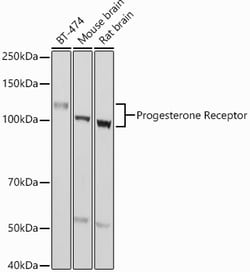
ABclonal Technology Progesterone Receptor Rabbit pAb
This gene encodes a member of the steroid receptor superfamily. The encoded protein mediates the physiological effects of progesterone, which plays a central role in reproductive events associated with the establishment and maintenance of pregnancy. This gene uses two distinct promotors and translation start sites in the first exon to produce several transcript variants, both protein coding and non-protein coding. Two of the isoforms (A and B) are identical except for an additional 165 amino acids found in the N-terminus of isoform B and mediate their own response genes and physiologic effects with little overlap.
American Research Products Inc Mouse FGF2 ELISA Kit
This Mouse Fibroblast Growth Factor 2 Basic (FGF2) ELISA Kit is a precoated Sandwich ELISA assay designed to detect and quantify the target analyte in serum plasma tissue homogenates cell lysates cell culture supernatants and other biological fluids This product is for Research Use Only
Sigma Aldrich Fine Chemicals Biosciences PDGf BB human Animal compo
PDGfs (platelet-derived growth factors) are disulfide-linked dimers consisting of two 12.0-13.5kDa polypeptide chains designated PDGf-A and PDGf-B chains. Two distinct signaling receptors used by PDGfs have been identified and named PDGfR and PDGfR-. PDGfR is high-affinity receptor for each of the three PDGf forms. On the other hand PDGfR- interacts with only PDGf-BB and PDGf-AB. The gene PDGf-B is mapped to human chromosome 22q13.1. Recombinant human PDGf-BB is a 24.3kDa disulfide-linked homodimer of two B chains (218 total amino acids).

Medchemexpress LLC IL-31 Human HEK293 5ug
IL-31 is a multifunctional cytokine that activates STAT3 through IL-31 heterodimeric receptors (IL31RA and OSMR) and may activate STAT1 and STAT5 IL-31 is known for its involvement in skin immunity where it regulates immune responses IL-31 Protein Human (HEK293 His) is the recombinant human-derived IL-31 protein expressed by HEK293 with C-10 His labeled tag

Medchemexpress LLC TrkB Human HEK293 100ug
The TrkB protein is a key receptor tyrosine kinase that plays a key role in central and peripheral nervous system development It regulates neuronal survival proliferation migration differentiation synapse formation and plasticity TrkB Protein Human (HEK293 His-Fc) is the recombinant human-derived TrkB protein expressed by HEK293 with C-hFc C-10 His labeled tag
Medchemexpress LLC PDGF-CC Mouse HEK2 10ug
The PDGF-CC protein is a key growth factor that plays crucial roles in a variety of cellular processes including embryonic development cell proliferation migration survival and chemotaxis It has potent mitogenic and chemoattractant properties and is essential during embryonic skeletal formation craniofacial development palate development skin morphogenesis and wound healing stages PDGF-CC Protein Mouse (HEK293 Fc) is the recombinant mouse-derived PDGF-CC protein expressed by HEK293 with N-hFc labeled tag

Medchemexpress LLC HGF Mouse HEK293 100ug
HGF Protein a potent mitogen stimulates mature hepatocyte cell growth and acts as a hepatotrophic factor for various tissues As an activating ligand for MET receptor tyrosine kinase HGF binds and promotes dimerization activating MAPK signaling through TMPRSS13 cleavage Structurally HGF comprises alpha and beta chains connected by a disulfide bond Interaction with SRPX2 enhances its mitogenic activity HGF Protein Mouse (HEK293) is the recombinant mouse-derived HGF protein expressed by HEK293 with tag free
CPC Scientific H-Ser-Arg-Val-Ser-Arg-Arg-Ser-Arg-OH (trifluoroacetate salt) 5MG
ONE-LETTER SEQUENCE: SRVSRRSRMOLECULAR FORMULA: C38H74N20O12MOLECULAR WEIGHT:1003.13STORAGE CONDITIONS: -20 5C, CAS REGISTRY NUMBER: [103244-41-3], RESEARCH AREA: DiabetesREFERENCES: R.L.Hintz and F.Liu, J. Clin. Endocrinol. Metab., 54, 442 (1982); W.F.Blum et al., Acta Endocrinol., 111, 271 (1986);

Medchemexpress LLC CD81 Human HEK293 50ug
The CD19 receptor is critical for B cell activation driving the trafficking and assembly of CD19-CR2 and BCR complexes thereby lowering the antigenic threshold for B cell clonal expansion In T cells CD19 contributes to CD3 localization and influences polarization CD81 Protein Human (HEK293 His) is the recombinant human-derived CD81 protein expressed by HEK293 with N-His labeled tag

Medchemexpress LLC HY-P7153 10ug Medchemexpress, CXCL3, Mouse CAS: Purity:>98%
Medchemexpress, HY-P7153 10ug CXCL3, Mouse CAS: Recombinant Mouse CXCL3 acts as a chemoattractant for neutrophils and is involved in the inflammatory response. Purity:>98% Medchemexpress has over 10000 novel life-science reagents, reference compounds, APIs and natural compounds for laboratory and scientific use. Other quantity can also be offered.

Medchemexpress LLC FGF-8e Human 193a. 50ug
FGF-8e Protein Human is an isoform of FGF-8 an essential factor during embryonic development involved in the progression of prostate cancer

Medchemexpress LLC Zymogen granule protein 16 homolog B | >95.0% | 250UG
Recombinant human ZG16B protein (mature chain G17-R172) produced in HEK293 cells and supplied as a lyophilized, C-terminal His-tagged protein for research use. Intended for biochemical characterization, antibody and assay development; reconstitute according to instructions and store frozen in aliquots for long-term stability.
- Expressed in HEK293 cells (human)
- Includes C-terminal His tag for purification
- High purity (>95% by reducing SDS-PAGE)
- Lyophilized formulation with trehalose for enhanced stability
- Available in research sizes including 250 μg
- Store lyophilized at -20 °C; aliquot and freeze at -20 °C or -80 °C after reconstitution