
General Cell Lines and Cell Cultures


Biochain Institute Inc Paraffin Tissue Section Panel - Human Tumor Same Tumor Type, Different Donors (5 tissues), 5 slides/PK
BioChain's tissue products are based on the sample repository network established following the IRB-approved ethical standard and procedures.The tissues are immediately put in liquid nitrogen after being excised, and then identified by a board-licensed pathologist. Patient demographic and disease related history data are available. he tissue sections are approximately 5-10 um thick.

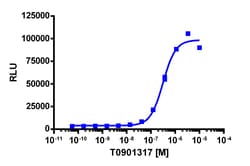
Eurofins Discoverx PathHunter CHO-K1 LXRβ Protein Interaction Cell Line, 2 vials. (93-0442C2)
The PathHunter LXRβ Protein Interaction cell line is a stable, engineered cell line for use in studying drug candidates (small molecules or biologics) affecting NHR activation and recruitment of cofactors. This cell line enables assessment of ligand (e.g. oxysterols) based NHR activation via detection of SRCP (steroid receptor co-activator peptide) recruitment. The included cell line overexpresses ProLink-tagged LXRβ NHR and EA-tagged steroid receptor co-activator peptide (SRCP). Upon activation of LXRβ, induced interaction with SRCP leads to production of EFC signal. This stable modified cell line is provided as two vials of cryopreserved cells. For detailed product information, User Manual and datasheet, visit www.discoverx.com/nhr.

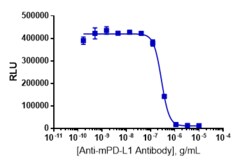
Eurofins Discoverx PathHunter U2OS mPD-L1 Ligand Cell Line, 2 vials. (93-1159C3)
The PathHunter mPD-L1 Ligand cell line is a stable, engineered cell line designed as a companion product for use with mPD-1 Checkpoint Signaling Cell Lines. When co-cultured, the mPD-L1 expressed in this cell line will induce activity of mPD-1 receptors, which may be assayed through SH2 domain protein recruitment. The cell line included overexpresses mPD-L1 cell surface ligand. When co-cultured with the mPD-1 Checkpoint Signaling Cell Line, the mPD-L1 ligand binds to the checkpoint receptor, inducing receptor activity. This receptor activity leads to recruitment of the relevant SH2 domain protein to the checkpoint receptor inside the receptor cell line and production of EFC signal. This stable modified cell line is provided as two vials of cryopreserved cells. Please note that this product expresses the Mouse version of this protein. For detailed product information, User Manual and datasheet, visit www.discoverx.com/checkpoint.

Biochain Institute Inc Paraffin Tissue Section - Human Adult Normal: Brain: Medulla Oblongata, 5 slides/PK
BioChain's tissue products are based on the sample repository network established following the IRB-approved ethical standard and procedures. BioChain's formalin fixed paraffin embedded (FFPE) tissue section line encompasses a large selection of tissue sections which are suitable for immunohistochemistry and in situ hybridization assays. The tissue sections are approximately 5 um thick. For those customers who want to perform FFPE DNA and RNA isolation, BioChain can provide tissue section slices in tubes instead of mounting them on glass slides.

ATCC Klebsiella pneumoniae; Strain 1002565
Klebsiella pneumoniae subsp. pneumoniae strain 1002565 is a whole-genome sequenced bacterium that was isolated from a respiratory sample. This strain is resistant to ertapenem and imipenem and was confirmed by PCR to contain the blaNDM gene. This bacterial culture can be used in antimicrobial resistance research, drug development, infectious disease research, and respiratory disease research.
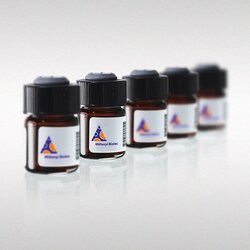
Miltenyi Biotec, Inc. MACSxpress LRSC Pan TC Iso Kit, h
Untouched isolation of pan T cells directly from LRSC
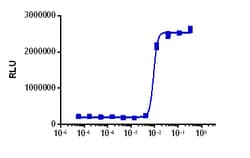
Eurofins Discoverx KILR SK-MEL-28 Cell Pool, 2 vials. (97-1017P031)
The KILR SK-MEL-28 cell pool is a stable, engineered target cell pool, which closely reflects the heterogeneous native protein expression of tumor environments, used to measure direct cell death mediated by immunooncology treatments (e.g. checkpoint modulators, bispecifics, CAR-T, etc.) via Antibody Dependent Cell-mediated Cytotoxicity (ADCC), Complement Dependent Cytotoxicity (CDC), and Antibody Dependent Cell Phagocytosis (ADCP). This product uses EFC technology. The cell pool is a heterogeneous population of SK-MEL-28 cells that overexpress a ProLabel-tagged housekeeping gene. Upon effector cells-mediated cell lysis, ProLabel is released to the media, where EA in the detection kit produces an EFC signal proportional to the level of ProLabel released. This allows for calculation of percent lysis of the KILR cell pool. This stable cell pool is provided as two vials of cryopreserved cells. For detailed product information, User Manual and datasheet, visit www.discoverx.com/kilr.

Genscript Corporation CHO-K1/M4/G15 Stable Cell Lin
Recombinant CHO-K1 cells stably overexpress human cholinergic receptor muscarinic 4 (M4) on the surface and contain high levels of G protein G i to couple with the receptor in downstream signaling pathways
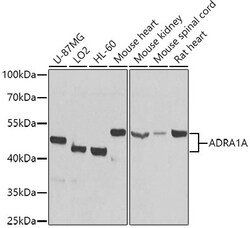
ABclonal Technology ADRA1A Rabbit pAb

Alpha-1-adrenergic receptors (alpha-1-ARs) are members of the G protein-coupled receptor superfamily. They activate mitogenic responses and regulate growth and proliferation of many cells. There are 3 alpha-1-AR subtypes alpha-1A, -1B and -1D, all of which signal through the Gq/11 family of G-proteins and different subtypes show different patterns of activation. This gene encodes alpha-1A-adrenergic receptor. Alternative splicing of this gene generates four transcript variants, which encode four different isoforms with distinct C-termini but having similar ligand binding properties.
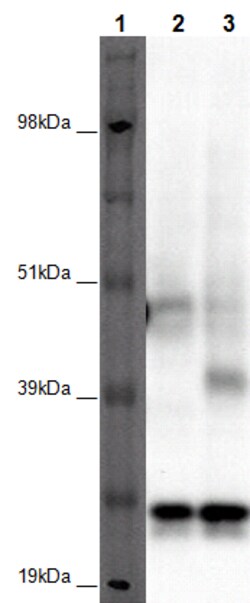
Eurofins Discoverx PathHunter HEK 293 GPR173 β-Arrestin Orphan GPCR Cell Line, 2 vials. (93-0380C1A)
The PathHunter GPR173 cell line is a stable, engineered cell line for use in studying drug candidates (small molecules or biologics) targeting GPCRs. This cell line enables assessment of ligand based activation of GPR173 GPCR activity via detection of β-arrestin recruitment. The included cell line overexpresses ProLink-tagged GPR173 and EA-tagged β-Arrestin-2. Activation of GPR173 stimulates the recruitment of β-Arrestin-2 and produces EFC signal. This stable modified cell line is provided as two vials of cryopreserved cells. This is an orphan receptor without a known ligand. For detailed product information, User Manual and datasheet, visit www.discoverx.com/gpcr.
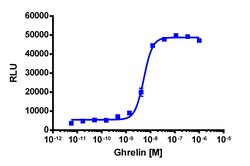
Eurofins Discoverx PathHunter CHO-K1 mGHSR1a β-Arrestin Cell Line, 2 vials. (93-0605C2)
The PathHunter mGHSR1a cell line is a stable, engineered cell line for use in studying drug candidates (small molecules or biologics) targeting GPCRs. This cell line enables assessment of ligand (e.g. grehlin) based activation of mGHSR1a GPCR activity via detection of β-arrestin recruitment. The included cell line overexpresses ProLink-tagged mGHSR1a and EA-tagged β-Arrestin-2. Activation of mGHSR1a stimulates the recruitment of β-Arrestin-2 and produces EFC signal. This stable modified cell line is provided as two vials of cryopreserved cells. Please note that this product expresses the Mouse version of this protein. For detailed product information, User Manual and datasheet, visit www.discoverx.com/gpcr.
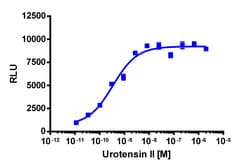
Eurofins Discoverx PathHunter CHO-K1 UTR2 β-Arrestin Cell Line, 2 vials. (93-0283C2)
The PathHunter UTR2 cell line is a stable, engineered cell line for use in studying drug candidates (small molecules or biologics) targeting GPCRs. This cell line enables assessment of ligand (e.g. urotensin) based activation of UTR2 GPCR activity via detection of β-arrestin recruitment. The included cell line overexpresses ProLink-tagged UTR2 and EA-tagged β-Arrestin-2. Activation of UTR2 stimulates the recruitment of β-Arrestin-2 and produces EFC signal. This stable modified cell line is provided as two vials of cryopreserved cells. For detailed product information, User Manual and datasheet, visit www.discoverx.com/gpcr.
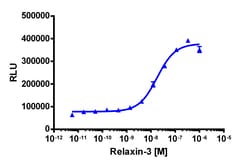
Eurofins Discoverx PathHunter CHO-K1 mRXFP3 β-Arrestin Cell Line, 2 vials. (93-0928C2)
The PathHunter mRXFP3 cell line is a stable, engineered cell line for use in studying drug candidates (small molecules or biologics) targeting GPCRs. This cell line enables assessment of ligand (e.g. relaxin-3) based activation of mRXFP3 GPCR activity via detection of β-arrestin recruitment. The included cell line overexpresses ProLink-tagged mRXFP3 and EA-tagged β-Arrestin-2. Activation of mRXFP3 stimulates the recruitment of β-Arrestin-2 and produces EFC signal. This stable modified cell line is provided as two vials of cryopreserved cells. Please note that this product expresses the Mouse version of this protein. For detailed product information, User Manual and datasheet, visit www.discoverx.com/gpcr.
Genscript Corporation CHO-K1/BDCA2 and FcER1G Stable
Recombinant CHO-K1 cells stably overexpress human C-type lectin domain family 4 member C (BDCA2) and Fc epsilon receptor Ig (FcER1G) on the surface The surface expression of BDCA2 is validated by FACS analysis
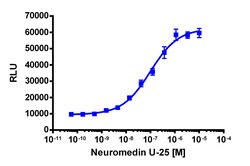
Eurofins Discoverx PathHunter NMU1R Total Internalization U2OS Cell Line, 2 vials. (93-0782C3)
The PathHunter NMU1R Total Internalization cell line is a stable, engineered cell line for use in studying drug candidates (small molecules or biologics) affecting GPCR activation and internalization. This cell line uses EFC technology to measure ligand-induced internalization of nMU1R via detection of localization to the early endosome. The included cell line overexpresses ProLink-tagged nMU1R and an EA-tagged early endosome protein. Upon ligand-induced receptor activation, resulting internalization of the nMU1R receptor to the early endosome leads to production of EFC signal. This stable modified cell line is provided as two vials of cryopreserved cells. For detailed product information, User Manual and datasheet, visit www.discoverx.com/gpcr.