
Primary Antibody Matched Pairs



Mouse CSF2 ELISA Pair Set 15PP (Sino Biological)
Each vial contains 11 ng of recombinant Mouse GM-CSF/CSF2. Reconstitute with 1 mL detection antibody dilution buffer. After reconstitution, store at -20℃ to -80℃ in a manual defrost freezer. A seven-point standard curve using 2-fold serial dilutions in sample dilution buffer, and a high standard of 120 pg/mL is recommended.

Human TNFRSF18 Protein 20ug (Sino Biological)
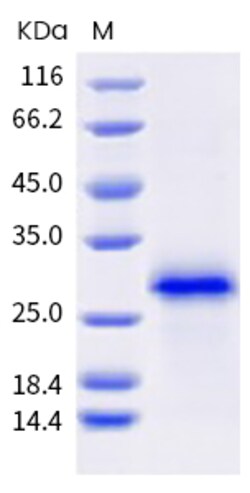
A DNA sequence encoding the Human TNFRSF18 (NP_683700.1) (Met1-Glu161) was expressed with a C-terminal polyhistidine tag followed by an AVI tag. The expressed protein was biotinylated in vivo by the Biotin-Protein ligase (BirA enzyme) which is co-expressed.
Sino Biological Recombinant Anti-EPCR Antibody (FITC), Rabbit Monoclonal 25 Tests
This antibody was obtained from a rabbit immunized with purified, recombinant Mouse Epcr/PROCR (rM Epcr/PROCR; Catalog#50874-M08H; Q64695; Met1-Ser214) and conjugated with FITC under optimum conditions, the unreacted FITC was removed.
Sino Biological Mouse CD8 alpha Matched ELISA Antibody Pair Set 5 Plates
The Mouse CD8a ELISA Pair Set is for the quantitative determinationof Mouse CD8a.This ELISA Pair Set contains the basic components required for the development of sandwich ELISAs.The Sino Biological ELISA Pair Set is a solid phase sandwich ELISA (Enzyme-Linked Immunosorbent Assay). It utilizes a monoclonal antibody specific for CD8a coated on a 96-well plate. Standards and samples are added to the wells, and any CD8a present binds to the immobilized antibody. The wells are washed and a horseradish peroxidase conjugated rabbit anti-CD8a polyclonal antibody is then added, producing an antibody-antigen-antibody "sandwich". The wells are again washed and TMB substrate solution is loaded, which produces color in proportion to the amount of CD8a present in the sample. To end the enzyme reaction, the stop solution is added and absorbances of the microwell are read at 450 nm.
Sino Biological Human IL-15 Matched ELISA Antibody Pair Set 15 Plates
The Human IL-15 ELISA Pair Set is for the quantitative determination of Human IL-15.The Sino Biological ELISA Pair Set is a solid phase sandwich ELISA (Enzyme-Linked Immunosorbent Assay). It utilizes a monoclonal antibody specific for Human IL-15 coated on a 96-well plate. Standards and samples are added to the wells, and any Human IL-15 present binds to the immobilized antibody. The wells are washed and a horseradish peroxidase conjugated rabbit anti-Human IL-15 monoclonal antibody is then added, producing an antibody-antigen-antibody "sandwich". The wells are again washed and TMB substrate solution is loaded, which produces color in proportion to the amount of Human IL-15 present in the sample. To end the enzyme reaction, the stop solution is added and absorbances of the microwell are read at 450 nm.
Sino Biological Mouse Semaphorin 4D Matched ELISA Antibody Pair Set 5 Plates
The Mouse Semaphorin 4D / SEMA4D / CD100 ELISA Pair Set is for the quantitative determination of Mouse Semaphorin 4D / SEMA4D / CD100. This ELISA Pair Set contains the basic components required for the development of sandwich ELISAs.The Sino Biological ELISA Pair Set is a solid phase sandwich ELISA (Enzyme-Linked Immunosorbent Assay). It utilizes a monoclonal antibody specific for Semaphorin 4D / SEMA4D / CD100 coated on a 96-well plate. Standards and samples are added to the wells, and any Semaphorin 4D / SEMA4D / CD100 present binds to the immobilized antibody. The wells are washed and a horseradish peroxidase conjugated rabbit anti-Semaphorin 4D / SEMA4D / CD100 monoclonal antibody is then added, producing an antibody-antigen-antibody “sandwich”. The wells are again washed and TMB substrate solution is loaded, which produces color in proportion to the amount of Semaphorin 4D / SEMA4D / CD100 present in the sample. To end the enzyme reaction, the stop solution is added and absorban
Sino Biological Human Urokinase/uPA Matched ELISA Antibody Pair Set 15 Plates
The Human Urokinase / PLAU / UPA ELISA Pair Set is for the quantitative determination of Human Urokinase / PLAU / UPA.The Sino Biological ELISA Pair Set is a solid phase sandwich ELISA (Enzyme-Linked Immunosorbent Assay). It utilizes a monoclonal antibody specific for Human Urokinase / PLAU / UPA coated on a 96-well plate. Standards and samples are added to the wells, and any Human Urokinase / PLAU / UPA present binds to the immobilized antibody. The wells are washed and a horseradish peroxidase conjugated mouse anti-Human Urokinase / PLAU / UPA monoclonal antibody is then added, producing an antibody-antigen-antibody "sandwich". The wells are again washed and TMB substrate solution is loaded, which produces color in proportion to the amount of Human Urokinase / PLAU / UPA present in the sample. To end the enzyme reaction, the stop solution is added and absorbances of the microwell are read at 450 nm.
Sino Biological Human COMP Matched ELISA Antibody Pair Set 5 Plates
The Human COMP / TSP5 ELISA Pair Set is for the quantitative determination of Human COMP / TSP5.The Sino Biological ELISA Pair Set is a solid phase sandwich ELISA (Enzyme-Linked Immunosorbent Assay). It utilizes a monoclonal antibody specific for Human COMP / TSP5 coated on a 96-well plate. Standards and samples are added to the wells, and any Human COMP / TSP5 present binds to the immobilized antibody. The wells are washed and a horseradish peroxidase conjugated mouse anti-Human COMP / TSP5 monoclonal antibody is then added, producing an antibody-antigen-antibody "sandwich". The wells are again washed and TMB substrate solution is loaded, which produces color in proportion to the amount of Human COMP / TSP5 present in the sample. To end the enzyme reaction, the stop solution is added and absorbances of the microwell are read at 450 nm.
Sino Biological Human IL1R2 Matched ELISA Antibody Pair Set 15 Plates
The human IL1R2 (IL1RB / CD121b) ELISA Pair Set is for the quantitative determinationof human IL1R2.This ELISA Pair Set contains the basic components required for the development of sandwich ELISAs.The Sino Biological ELISA Pair Set is a solid phase sandwich ELISA (Enzyme-Linked Immunosorbent Assay). It utilizes a monoclonal antibody specific for IL1R2(IL1RB / CD121b) coated on a 96-well plate. Standards andsamples are added to the wells, and any IL1R2 ( IL1RB / CD121b) present binds tothe immobilized antibody. The wells are washed and a horseradish peroxidaseconjugated mouse anti-IL1R2 monoclonal antibody is then added, producing anantibody-antigen-antibody "sandwich". The wells are again washed and TMBsubstrate solution is loaded, which produces color in proportion to the amountof IL1R2 present in the sample. To end the enzyme reaction, the stop solutionis added and absorbances of the microwell are read at 450 nm.
Sino Biological Mouse PCSK9 Matched ELISA Antibody Pair Set 5 Plates
The Mouse PCSK9 ELISA Pair Set is for the quantitative determination of Mouse PCSK9.This ELISA Pair Set contains the basic components required for the development of sandwich ELISAs.The Sino Biological ELISA Pair Set is a solid phase sandwich ELISA (Enzyme-Linked Immunosorbent Assay). It utilizes a monoclonal antibody specific for PCSK9 coated on a 96-well plate. Standards and samples are added to the wells, and any PCSK9 present binds to the immobilized antibody. The wells are washed and a horseradish peroxidase conjugated rabbit anti-PCSK9 polyclonal antibody is then added, producing an antibody-antigen-antibody “sandwich”. The wells are again washed and TMB substrate solution is loaded, which produces color in proportion to the amount of PCSK9 present in the sample. To end the enzyme reaction, the stop solution is added and absorbances of the microwell are read at 450 nm.
Sino Biological Mouse THSD1 Matched ELISA Antibody Pair Set 5 Plates
The Mouse THSD1 / TMTSP ELISA Pair Set is for the quantitative determination of Mouse THSD1 / TMTSP. This ELISA Pair Set contains the basic components required for the development of sandwich ELISAs.The Sino Biological ELISA Pair Set is a solid phase sandwich ELISA (Enzyme-Linked Immunosorbent Assay). It utilizes a monoclonal antibody specific for THSD1 / TMTSP coated on a 96-well plate. Standards and samples are added to the wells, and any THSD1 / TMTSP present binds to the immobilized antibody. The wells are washed and a horseradish peroxidase conjugated rabbit anti-THSD1 / TMTSP polyclonal antibody is then added, producing an antibody-antigen-antibody "sandwich". The wells are again washed and TMB substrate solution is loaded, which produces color in proportion to the amount of THSD1 / TMTSP present in the sample. To end the enzyme reaction, the stop solution is added and absorbances of the microwell are read at 450 nm.
Sino Biological Rhesus CD32A/FCGR2A Matched ELISA Antibody Pair Set 15 Plates
The Rhesus CD32a / Fc gamma RIIA / FCGR2A ELISA Pair Set is for the quantitative determination of Rhesus CD32a / Fc gamma RIIA / FCGR2A.This ELISA Pair Set contains the basic components required for the development of sandwich ELISAs.The Sino Biological ELISA Pair Set is a solid phase sandwich ELISA (Enzyme-Linked Immunosorbent Assay). It utilizes a monoclonal antibody specific for CD32a / Fc gamma RIIA / FCGR2A coated on a 96-well plate. Standards and samples are added to the wells, and any CD32a / Fc gamma RIIA / FCGR2A present binds to the immobilized antibody. The wells are washed and a horseradish peroxidase conjugated mouse anti-CD32a / Fc gamma RIIA / FCGR2A monoclonal antibody is then added, producing an antibody-antigen-antibody “sandwich”. The wells are again washed and TMB substrate solution is loaded, which produces color in proportion to the amount of CD32a / Fc gamma RIIA / FCGR2A present in the sample. To end the enzyme reaction, the stop solution is added and absorban
Sino Biological Human IL-3R alpha/CD123 Matched ELISA Antibody Pair Set 5 Plates
The human IL3RA / CD123 ELISA Pair Set is for the quantitative determinationof human IL3RA / CD123.This ELISA Pair Set contains the basic components required for the development of sandwich ELISAs.The Sino Biological ELISA Pair Set is a solid phase sandwich ELISA (Enzyme-Linked Immunosorbent Assay). It utilizes a monoclonal antibody specific for IL3RA / CD123 coated on a 96-well plate. Standards and samples are added to the wells,and any IL3RA / CD123 present binds to the immobilized antibody. The wells arewashed and a horseradish peroxidase conjugated rabbit anti-IL3RA / CD123 monoclonal antibody is then added, producing an antibody-antigen-antibody "sandwich". The wells are again washed and TMB substrate solution is loaded, which produces color in proportion to the amount of IL3RA / CD123 present in the sample. To end the enzyme reaction, the stop solution is added and absorbances of themicrowell are read at 450 nm.
Sino Biological Human PAI-1/Serpin E1 Matched ELISA Antibody Pair Set 15 Plates
The Human SerpinE1 / PAI-1 ELISA Pair Set is for the quantitative determination of Human SerpinE1 / PAI-1.The Sino Biological ELISA Pair Set is a solid phase sandwich ELISA (Enzyme-Linked Immunosorbent Assay). It utilizes a monoclonal antibody specific for Human SerpinE1 / PAI-1 coated on a 96-well plate. Standards and samples are added to the wells, and any Human SerpinE1 / PAI-1 present binds to the immobilized antibody. The wells are washed and a horseradish peroxidase conjugated rabbit anti-Human SerpinE1 / PAI-1 monoclonal antibody is then added, producing an antibody-antigen-antibody "sandwich". The wells are again washed and TMB substrate solution is loaded, which produces color in proportion to the amount of Human SerpinE1 / PAI-1 present in the sample. To end the enzyme reaction, the stop solution is added and absorbances of the microwell are read at 450 nm.