
Immunohistochemistry Kits and Reagents

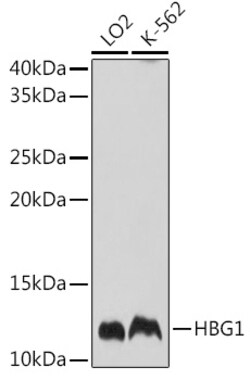
ABclonal Technology HBG1 Rabbit pAb

The gamma globin genes (HBG1 and HBG2) are normally expressed in the fetal liver, spleen and bone marrow. Two gamma chains together with two alpha chains constitute fetal hemoglobin (HbF) which is normally replaced by adult hemoglobin (HbA) at birth. In some beta-thalassemias and related conditions, gamma chain production continues into adulthood. The two types of gamma chains differ at residue 136 where glycine is found in the G-gamma product (HBG2) and alanine is found in the A-gamma product (HBG1). The former is predominant at birth. The order of the genes in the beta-globin cluster is 5-epsilon -- gamma-G -- gamma-A -- delta -- beta--3.


Abcam DoubleStain IHC Kit: M&Rt on mouse tissue (BCIP & AEC), 6ML
Abcam's DoubleStain IHC Kit (ab183278) is designed to use with user supplied mouse and rat primary antibody to detect two distinct antigens on mouse tissue or cell samples.
The product is subject to the following: Abcam Restricted Use Statement
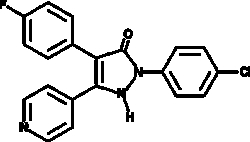

Abcam TripleStain IHC Kit: R&R&M on human tissue (DAB, AP/Red & Green/HRP), 60ML
Abcam's TripleStain IHC Kit (ab183288) is designed to be used with one mouse and two rabbit primary antibodies, supplied by the user, to detect three distinct antigens on human tissue or cell samples.
The product is subject to the following: Abcam Restricted Use Statement

ABclonal Technology Phospho-p38 MAPK-T180
The protein encoded by this gene is a member of the MAP kinase family MAP kinases act as an integration point for multiple biochemical signals and are involved in a wide variety of cellular processes such as proliferation differentiation transcription regulation and development This kinase is activated by various environmental stresses and proinflammatory cytokines The activation requires its phosphorylation by MAP kinase kinases (MKKs) or its autophosphorylation triggered by the interaction of MAP3K7IP1 TAB1 protein with this kinase The substrates of this kinase include transcription regulator ATF2 MEF2C and MAX cell cycle regulator CDC25B and tumor suppressor p53 which suggest the roles of this kinase in stress related transcription and cell cycle regulation as well as in genotoxic stress response Four alternatively spliced transcript variants of this gene encoding distinct isoforms have been reported

Biocare Medical, LLC Hot Rinse, 25X - 500 ml
Hot Rinse, 25X is intended for laboratory use in immunohistochemistry procedures on formalin-fixed paraffin-embedded (FFPE) tissues to ensure complete deparaffinization. Hot Rinse is sodium azide and thimerosal free, non-toxic, non-flammable and odorless. After deparaffinizing tissues in Reveal, Universal or Borg Decloaker, a subsequent hot rinse ensures complete deparaffinization. It is specially designed for use with Biocare Decloaking Chamber and is also compatible with other commercial heat retrieval deparaffinization solutions.
Biotium CDw78(DF1588), CF594 conjugate, 0.1mg/mL
This antibody reacts with a carbohydrate determinant, identified as CDw78 (Workshop V; Code CDw78.2). Epitope recognized by this MAb and Leu21 is the same. It is present on some immature and some peripheral blood B cells, and some B cell lines. Its expression is increased after B-cell activation in vitro. CDw78 is also found on tissue macrophages and on epithelial cells, but not on T cells, NK cells, monocytes, granulocytes and myeloid tissues. It appears that CDw78 is a determinant on a major histocompatibility complex (MHC) class II subpopulation.

Meso Scale Discovery R-PLEX Human Calbindin ASYQP
The R-Plex Human Calbindin Assay from Meso Scale Diagnostics is a multiplex immunoassay measuring calbindin in human serum plasma urine and other matrices It uses electrochemiluminescence (ECL) detection for high sensitivity a wide dynamic range and low sample volume This assay quantifies calbindin a calcium-binding protein in the intestine and kidneys aiding in diagnosing diseases related to calbindin levels The kit includes a 96-well plate with capture antibodies detection antibodies calibrators and necessary reagents

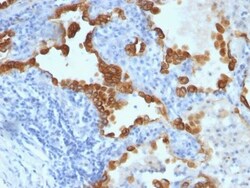
Biotium Cytokeratin 8/18(B22.1 + B23.1), CF740 conjugate, 0.1mg/mL
Cytokeratin 8 (CK8) belongs to the type II (or B or basic) subfamily of high molecular weight cytokeratins and exists in combination with cytokeratin 18 (CK18). This MAb cocktail recognizes all simple epithelia including glandular epithelium, for example thyroid, female breast, gastrointestinal tract, respiratory tract, and urogenital tract including transitional epithelium. All adenocarcinomas and most squamous carcinomas are positive but keratinizing squamous carcinomas are usually negative. This antibody is useful in demonstrating the presence of Paget cells; there is very little keratin 18 in the normal epidermis so only Paget cells are stained.Immunohistochemical staining with this MAb is indistinguishable from that obtained with monoclonal antibody 5D3.Primary antibodies are available purified, or with a selection of fluorescent CF Dyes and other labels. CF Dyes offer exceptional brightness and photostability. Note: Conjugates of blue fluorescent dyes like CF405S an

Bioss p38 MAP Kinase - C-terminal M
p38 MAP Kinase (C-terminal) M138 Primary Antibody Unconjugated Host Species Mouse Target Species Human Mouse Rat Clonality Monoclonal Applications WB M138Concentration Size 100 ul Storage Buffer PBS 1 mg/ml BSA 0 05% NaN3 and 50% glycerol
Cell Signaling Technology FastScantm Phospho-STING Ser366 ELISA Kit 20 Kit
FastScantm Phospho-STING Ser366 ELISA Kit 20 Kit
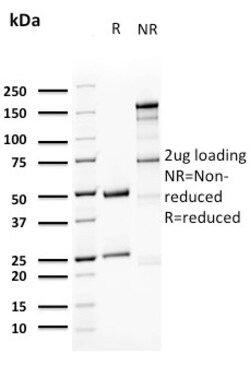
Biotium Uroplakin 1A (Urothelial Differentiation Marker)(UPK1A/2923), Biotin conjugate, 0.1mg/mL
The protein encoded by this gene is a member of the transmembrane 4 superfamily, also known as the tetraspanin family. Most of these members are cell-surface proteins that are characterized by the presence of four hydrophobic domains. The proteins mediate signal transduction events that play a role in the regulation of cell development, activation, growth and motility. This encoded protein is found in the asymmetrical unit membrane (AUM) where it can complex with other transmembrane 4 superfamily proteins. It may play a role in normal bladder epithelial physiology, possibly in regulating membrane permeability of superficial umbrella cells or in stabilizing the apical membrane through AUM/cytoskeletal interactions. The protein may also play a role in tumor suppression. Primary antibodies are available purified, or with a selection of fluorescent CF Dyes and other labels. CF Dyes offer exceptional brightness and photostability. Note: Conjugates of blue fluorescent dyes like
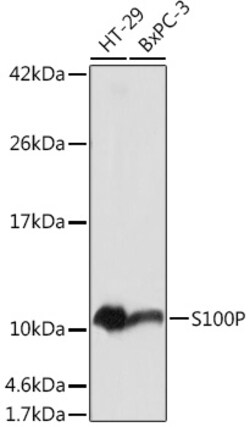
ABclonal Technology S100P Rabbit pAb
The protein encoded by this gene is a member of the S100 family of proteins containing 2 EF-hand calcium-binding motifs. S100 proteins are localized in the cytoplasm and/or nucleus of a wide range of cells, and involved in the regulation of a number of cellular processes such as cell cycle progression and differentiation. S100 genes include at least 13 members which are located as a cluster on chromosome 1q21, however, this gene is located at 4p16. This protein, in addition to binding Ca2+, also binds Zn2+ and Mg2+. This protein may play a role in the etiology of prostate cancer.