
Immunohistochemistry Kits and Reagents


Meso Scale Discovery V-PLEX Plus Human ICAM-1 Kit

The V-PLEX Plus Human ICAM-1 Kit is a 5-plate kit used to quantitatively measure human ICAM-1 in cell culture supernatants serum plasma and urine It utilizes electrochemiluminescence (ECL) technology and contains a V-PLEX Human ICAM-1 Plate Detection Antibody Concentrate Calibrator Blend Diluent 35 Read Buffer T (4X) and Wash Buffer This multiplex immunoassay kit has a detection range of 3 2-10 000 pg/mL and a sensitivity of 0 3 pg/mL It requires 2 5 hours to complete with only a 30 minute hands-on time


ACROBiosystems Human Claudin-18.1 Protein, His-Flag Tag (Detergent), 100 μg
Recombinant human Claudin-18.1 is an integral membrane protein provided as a detergent-solubilized, tagged protein for biochemical and binding studies. It is expressed in baculovirus-insect cells and formulated to preserve membrane protein solubility and activity.
- Expressed in baculovirus-insect cells.
- Contains amino acids Met 1-Ala 200 (Accession # P56856-1).
- Includes an N-terminal polyhistidine tag and a C-terminal Flag tag.
- Supplied in a detergent buffer containing DDM and CHS to maintain membrane protein solubility.
- Provided as a 0.2 μm filtered solution with glycerol as protectant.
- Not suitable for cell-based experiments due to detergent cytotoxicity.
- Supplied amount: 100 μg.
- Purity greater than 90% as determined by SDS-PAGE.
- Calculated molecular weight: 40.9 kDa.

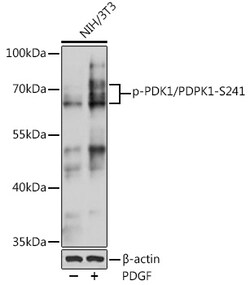
ABclonal Technology Phospho-PDK1/PDPK1-S241 Rabbit pAb
Enables 3-phosphoinositide-dependent protein kinase activity, phospholipase activator activity, and phospholipase binding activity. Involved in several processes, including cell surface receptor signaling pathway, regulation of protein kinase activity, and regulation of signal transduction. Acts upstream of or within intracellular signal transduction. Located in cell projection, cytosol, and plasma membrane. Implicated in prostate cancer. Biomarker of lung non-small cell carcinoma.

ABclonal Technology KO Validated Claudin 1
Tight junctions represent one mode of cell-to-cell adhesion in epithelial or endothelial cell sheets forming continuous seals around cells and serving as a physical barrier to prevent solutes and water from passing freely through the paracellular space These junctions are comprised of sets of continuous networking strands in the outwardly facing cytoplasmic leaflet with complementary grooves in the inwardly facing extracytoplasmic leaflet The protein encoded by this gene a member of the claudin family is an integral membrane protein and a component of tight junction strands Loss of function mutations result in neonatal ichthyosis-sclerosing cholangitis syndrome
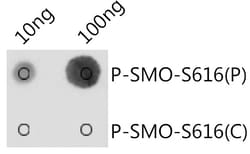
ABclonal Technology Phospho-SMO-S616 Rabbit pAb
The protein encoded by this gene is a G protein-coupled receptor that interacts with the patched protein, a receptor for hedgehog proteins. The encoded protein tranduces signals to other proteins after activation by a hedgehog protein/patched protein complex.
Cell Signaling Technology PathScanR Phospho-DDR1 panTyr Sandwich ELISA Kit 20 Kit
PathScanR Phospho-DDR1 panTyr Sandwich ELISA Kit 20 Kit

Bioss Nucleoporin p62 - N-terminal r
Nucleoporin p62 (N-terminal region) Primary Antibody Unconjugated Host Species Mouse Target Species Human Mouse Rat Chicken Clonality Monoclonal Applications WB M436Concentration Size 100 ul Storage Buffer PBS 1 mg/ml BSA 0 05% NaN3 and 50% glycerol

Bioss FTO/Fat mass and obesity relat
FTO (Fat mass and obesity related protein) Primary Antibody Unconjugated Host Species Mouse Target Species Human Mouse Rat Clonality Monoclonal Applications WB 5-2H10Concentration Lot Dependent Size 100 ul Storage Buffer 10 mM HEPES (pH 7 5) 150 mM NaCl 100 g per ml BSA and 50% glycerol
American Research Products Inc Mouse b2 microglobulin BMG b2
Mouse b2-microglobulin BMG/b2-MG ELISA Kit from CUSABIO Detection Range 0 156 g/ml-10 g/ml Sensitivity 0 156 g/ml Sample serum plasma urine tissue homogenates Method Competitive
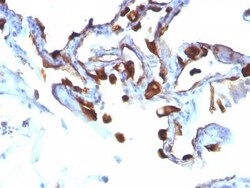
Biotium Cytokeratin 8(KRT8/803), CF740 conjugate, 0.1mg/mL
Cytokeratin 8 (CK8) belongs to the type II (or B or basic) subfamily of high molecular weight cytokeratins and exists in combination with cytokeratin 18 (CK18). CK8 is primarily found in the non-squamous epithelia and is present in majority of adenocarcinomas and ductal carcinomas. It is absent in squamous cell carcinomas. Hepatocellular carcinomas are defined by the use of antibodies that recognize only cytokeratin 8 and 18. CK8 exists on several types of normal and neoplastic epithelia, including many ductal and glandular epithelia such as colon, stomach, small intestine, trachea, and esophagus as well as in transitional epithelium. Anti-CK8 does not react with skeletal muscle or nerve cells. Epithelioid sarcoma, chordoma, and adamantinoma show strong positivity corresponding to that of simple epithelia (with antibodies against CK8, CK18 and CK19). Anti-CK8 is useful for the differentiation of lobular (ring-like, perinuclear) from ductal (peripheral-predominant) carcinoma o
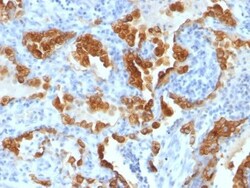
Biotium Cytokeratin 8(H1 + TS1), CF740 conjugate, 0.1mg/mL
Cytokeratin 8 (CK8) belongs to the type II (or B or basic) subfamily of high molecular weight cytokeratins and exists in combination with cytokeratin 18 (CK18). CK8 is primarily found in the non-squamous epithelia and is present in majority of adenocarcinomas and ductal carcinomas. It is absent in squamous cell carcinomas. Hepatocellular carcinomas are defined by the use of antibodies that recognize only cytokeratin 8 and 18. CK8 exists on several types of normal and neoplastic epithelia, including many ductal and glandular epithelia such as colon, stomach, small intestine, trachea, and esophagus as well as in transitional epithelium. Anti-CK8 does not react with skeletal muscle or nerve cells. Epithelioid sarcoma, chordoma, and adamantinoma show strong positivity corresponding to that of simple epithelia (with antibodies against CK8, CK18 and CK19). Reportedly, anti-CK8 is useful for the differentiation of lobular (ring-like, perinuclear) from ductal (peripheral-predominant)
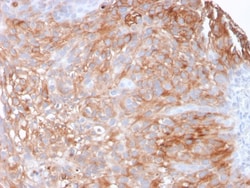
Biotium Uroplakin 1A (Urothelial Differentiation Marker)(UPK1A/2925), Biotin conjugate, 0.1mg/mL
The protein encoded by this gene is a member of the transmembrane 4 superfamily, also known as the tetraspanin family. Most of these members are cell-surface proteins that are characterized by the presence of four hydrophobic domains. The proteins mediate signal transduction events that play a role in the regulation of cell development, activation, growth and motility. This encoded protein is found in the asymmetrical unit membrane (AUM) where it can complex with other transmembrane 4 superfamily proteins. It may play a role in normal bladder epithelial physiology, possibly in regulating membrane permeability of superficial umbrella cells or in stabilizing the apical membrane through AUM/cytoskeletal interactions. The protein may also play a role in tumor suppression. Primary antibodies are available purified, or with a selection of fluorescent CF Dyes and other labels. CF Dyes offer exceptional brightness and photostability. Note: Conjugates of blue fluorescent dyes like
Biotium Ksp-Cadherin (Kidney-Specific Cadherin) / CDH16 (CDH16/1532R), CF740 conjugate, 0.1mg/mL
This MAb recognizes a protein of 130 kDa, identified as Ksp-cadherin. Cadherins form a superfamily of related glycoproteins that mediate calcium-dependent cell adhesion and transmit signals from the extracellular matrix to the cytoplasm. Cadherins have been implicated in embryogenesis, tissue morphogenesis, tissue structure maintenance, cell polarization, neoplastic invasiveness and metastasis, and membrane transport. It is suggested that Ksp-cadherin is a marker for terminal differentiation of the basolateral membranes of renal tubular epithelial cells. Within the kidney, Ksp-Cadherin is found exclusively in the basolateral membrane of renal tubular epithelial cells and collecting duct cells, and not in glomeruli, renal interstitial cells, or blood vessels. Ksp-Cadherin has been suggested to distinguish Chromophobe Renal-Cell Carcinoma from Oncocytoma.Primary antibodies are available purified, or with a selection of fluorescent CF Dyes and other labels. CF Dyes offer excep
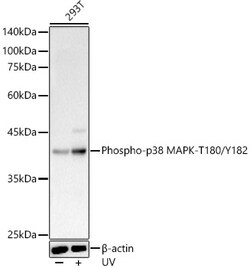
ABclonal Technology Phospho-p38 MAPK-T180/Y182 Rabbit pAb
The protein encoded by this gene is a member of the MAP kinase family. MAP kinases act as an integration point for multiple biochemical signals, and are involved in a wide variety of cellular processes such as proliferation, differentiation, transcription regulation and development. This kinase is activated by various environmental stresses and proinflammatory cytokines. The activation requires its phosphorylation by MAP kinase kinases (MKKs), or its autophosphorylation triggered by the interaction of MAP3K7IP1/TAB1 protein with this kinase. The substrates of this kinase include transcription regulator ATF2, MEF2C, and MAX, cell cycle regulator CDC25B, and tumor suppressor p53, which suggest the roles of this kinase in stress related transcription and cell cycle regulation, as well as in genotoxic stress response. Four alternatively spliced transcript variants of this gene encoding distinct isoforms have been reported.

Enzo Life Sciences MULTIVIEW (mouse-HRP/rabbit-AP) IHC kit (1x100tests)
Superior multiplex IHC kit for efficient detection of multiple antigens in a single tissue sample. The MULTIVIEW (mouse-HRP/rabbit-AP) IHC kit is a non-biotin one-step detection system suitable for demonstrating antigens in formalin-fixed paraffin-embedded tissues and cryostat sections. The kit may also be used with blood smears, cytosmears, and cell preparations. Assay Time: ~2 hours. Applications: IHC. Contents: Peroxidase Block, POLYVIEW IHC reagent (mouse-HRP), POLYVIEW IHC reagent (rabbit-AP), HIGHDEF IHC chromogen substrate (DAB, stable) buffer & chromogen, HIGHDEF red IHC chromogen (AP) buffer & chromogen, Empty mixing bottles