
Antibody and Dye Based Assays


Promega ADCC Reporter Bioassay, V Variant Core Kit
Provides a biologically relevant and specific mechanism-of-action-based measure of ADCC without the complex workflow and variability inherent in primary cell-based assays. The bioassay also can be used to quantify effects of antibody glycosylation on Fc effector function.


Promega ADCC Bioassay Effector Cells, Propagation Model
Allows propagation and banking of the ADCC Bioassay Effector Cells. Product includes two frozen vials of Bio-Glo™ Luciferase Assay System reagent at 2 x 10⁷ cells/mL and 0.65mL/vial. One vial should be used to create a cell bank, and the other should be reserved as backup.

Promega ADCC Reporter Bioassay, Complete (Raji)
Provides a biologically relevant and specific mechanism-of-action-based measure of ADCC without the complex workflow and variability inherent in primary cell-based assays. The bioassay also can be used to quantify effects of antibody glycosylation on Fc effector function.
Promega ADCC Reporter Bioassay, Target (WIL2-S)
Recommended for use as a control with all Fc Effector Bioassay Core Kits. ADCC Reporter Bioassay provides a biologically relevant and specific mechanism-of-action-based measure of ADCC without the complex workflow and variability inherent in primary cell-based assays.
Romer Labs AgraStrip Gluten G12 test kits, 10 tests, 11-12 min assay time, qualitative result, gluten detection, antibody G12 monoclonal
AgraStrip Gluten G12 test kits, 10 tests, 11-12 min assay time, qualitative result, gluten detection, antibody G12 monoclonal
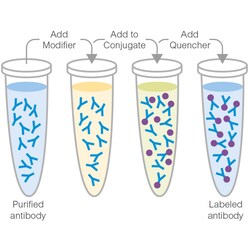
Abcam PE / R-Phycoerythrin Conjugation Kit - Lightning-Link, 600UG
The Abcam PE/R-Phycoerythrin Conjugation Kit (ab102918) offers several standout features: -Rapid Conjugation: achieve PE/R-Phycoerythrin labeling in under 4 hours with just 30 seconds of hands-on time. -High Efficiency: ensures 100% antibody recovery, preserving the integrity and value of your antibodies. -Versatility: suitable for conjugating antibodies, proteins, and peptides, and the labeled antibodies can be used immediately in applications such as Western Blotting (WB), ELISA, and Immunohistochemistry (IHC) without further purification. - Confidence: cited in over 50 publications
The product is subject to the following: Abcam Restricted Use Statement

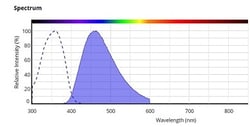
Abcam DAPI Staining Solution
DAPI Staining Solution
The product is subject to the following: Abcam Restricted Use Statement
Biotium Ep-CAM / CD326(VU-1D9), CF488A conjugate, 0.1mg/mL
This antibody reacts with the first EGF repeat in the extracellular domain of Ep-CAM. It is a 40-43 kDa transmembrane epithelial glycoprotein, also identified as epithelial specific antigen (ESA), or epithelial cellular adhesion molecule (Ep-CAM). It is expressed on baso-lateral cell surface in most simple epithelia and a vast majority of carcinomas with the exception of adult squamous epithelium, hepatocytes and gastric epithelial cells. This antibody has been used to distinguish adenocarcinoma from pleural mesothelioma and hepatocellular carcinoma. This antibody is also useful in distinguishing serous carcinomas of the ovary from mesothelioma.Primary antibodies are available purified, or with a selection of fluorescent CF Dyes and other labels. CF Dyes offer exceptional brightness and photostability. Note: Conjugates of blue fluorescent dyes like CF405S and CF405M are not recommended for detecting low abundance targets, because blue dyes have lower fluorescence and
Biotium CD3e (T-Cell Marker)(OKT3), CF488A conjugate, 0.1mg/mL
Recognizes the epsilon-chain of CD3, which consists of five different polypeptide chains (designated as gamma, delta, epsilon, zeta, and eta) with MW ranging from 16-28 kDa. CD3, also known as T3, is a member of the immunoglobulin superfamily that plays a role in antigen recognition, signal transduction, and T cell activation. It is found on all mature T-lymphocytes, NK, T-cells, and some thymocytes, and is expressed, typically at high levels, on peripheral T cells and majority of T cell neoplasms. Thymocytes express CD3 at different level on the cell surface in the course of differentiation and CD3 is predominantly intracytoplasmic in cortical thymus.Anti-CD3 clone OKT3 has been reported to have potent immunosuppressive properties in vivo and has been proven effective in the treatment of renal, heart and liver allograft rejection. In the crystal structure of the antibody-receptor complex, clone OKT3 was found to bind a conformational epitope on CD3e dominated by a linear
Biotium Calnexin (Endoplasmic Reticulum Marker) (CANX/1541), Biotin conjugate, 0.1mg/mL
Calnexin is a type-I integral membrane protein of the endoplasmic reticulum (ER). It is a calcium-binding chaperone protein that interacts transiently with newly synthesized N-linked glycoproteins, facilitating protein folding and assembly. It may also play a central role in the quality control of protein folding by retaining incorrectly folded protein subunits within the ER for degradation.Primary antibodies are available purified, or with a selection of fluorescent CF Dyes and other labels. CF Dyes offer exceptional brightness and photostability. Note: Conjugates of blue fluorescent dyes like CF405S and CF405M are not recommended for detecting low abundance targets, because blue dyes have lower fluorescence and can give higher non-specific background than other dye colors.
Biotium HER-2 / CD340(HRB2/273), CF488A conjugate, 0.1mg/mL
This MAb is specific to c-erbB-2/HER-2 and shows minimal cross-reaction with other members of the family. C-erbB-2/HER-2 is a member of the EGFR family. Receptors of this family are located on the plasma membrane and consist of an extracellular ligand-binding domain that is connected to a large intracellular domain by a single transmembrane sequence. c-erbB-2/HER-2 protein is over-expressed in a variety of carcinomas especially those of breast and ovary.Primary antibodies are available purified, or with a selection of fluorescent CF Dyes and other labels. CF Dyes offer exceptional brightness and photostability. Note: Conjugates of blue fluorescent dyes like CF405S and CF405M are not recommended for detecting low abundance targets, because blue dyes have lower fluorescence and can give higher non-specific background than other dye colors.
Biotium CD7(B-F12), CF488A conjugate, 0.1mg/mL
Recognizes a protein of 40 kDa, identified as CD7 (also known as gp40, Leu9). CD7 is a member of the immunoglobulin gene superfamily. Its N-terminal amino acids 1-107 are highly homologous to Ig kappa-L chains whereas the carboxyl-terminal region of the extracellular domain is proline-rich and has been postulated to form a stalk from which the Ig domain projects. CD7 is expressed on the majority of immature and mature T-lymphocytes, and T cell leukemia. It is also found on natural killer cells, a small subpopulation of normal B cells and on malignant B cells. Cross-linking surface CD7 positively modulates T cell and NK cell activity as measured by calcium fluxes, expression of adhesion molecules, cytokine secretion and proliferation. CD7 associates directly with phosphoinositol 3'-kinase. CD7 ligation induces production of D-3 phosphoinositides and tyrosine phosphorylation.Primary antibodies are available purified, or with a selection of fluorescent CF Dyes and other labels.
Biotium TAG-72 / CA72.4(CA72/145), CF488A conjugate, 0.1mg/mL
Recognizes an oncofetal antigen of 220 kDa, identified as a tumor-associated glycoprotein (TAG-72) with properties of a mucin. The majority of human adenocarcinomas including colorectal, pancreatic, gastric, ovarian, endometrial, mammary, and non-small cell lung cancer display some cell populations that are positive for TAG72. About 60% of carcinoma patients express TAG72 in their sera. TAG72 is reportedly useful in distinguishing pulmonary adenocarcinomas from pleural mesotheliomas.Primary antibodies are available purified, or with a selection of fluorescent CF Dyes and other labels. CF Dyes offer exceptional brightness and photostability. Note: Conjugates of blue fluorescent dyes like CF405S and CF405M are not recommended for detecting low abundance targets, because blue dyes have lower fluorescence and can give higher non-specific background than other dye colors.