
Data Logging and Monitoring Systems


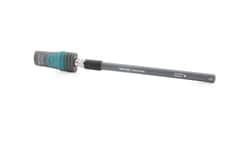
Vernier™ Go Direct™ Calcium Ion-Selective Electrode

Vernier™ Go Direct™ Calcium Ion-Selective Electrode can be used to measure the concentration of calcium in aqueous samples.
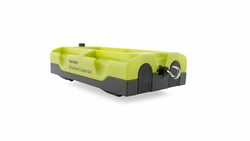
Vernier™ Go Direct™ Sensor Cart Yellow
Vernier™ Go Direct™ Sensor Cart Yellow features built-in, wireless sensors for one-dimensional dynamics and kinematics experiments.
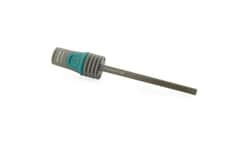
Vernier™ Go Direct™ 3-Axis Magnetic Field Sensor
Vernier™ Go Direct™ 3-Axis Magnetic Field Sensor allows you to determine the magnitude and direction of the magnetic field at any point in space.
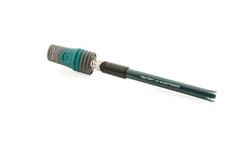
Vernier™ Go Direct™ pH Sensor
Vernier™ Go Direct™ pH Sensor is a general-purpose pH sensor used to monitor pH of aqueous solutions.

Vernier Flash Photolysis Spectrometer
The Vernier Flash Photolysis Spectrometer is a simple, user-friendly device for demonstrating the fundamental principles of chemical kinetics and photochemistry to undergraduate chemistry students. It measures the absorption and emission changes over time of a photoexcited sample at a single wavelength, which is determined by a filter (600 nm filter included).

Eisco™ NeuLog™ Wi-Fi Communication Module

Add convenience and efficiency to your workflow. The NeuLog™ Wi-Fi Communication Module allows NeuLog sensor measurements to be performed through any device which uses Wi-Fi technology.
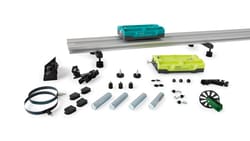
Vernier™ Dynamics Cart and Track System with Go Direct Sensor Cart
Vernier™ Dynamics Cart and Track System with Go Direct™ Sensor Cart is a completely wireless system that simplifies experiment setup and allows basic experiments to be conducted.
Vernier™ Dynamics Cart and Track System with Go Direct Sensor Cart and Long Track
Vernier™Dynamics Cart and Track System with Go Direct™ Sensor Cart and Long Track is a completely wireless system that simplifies experiment setup and allows basic experiments to be conducted.

Vernier™ Rotary Motion Sensor
The Vernier Rotary Motion Sensor is a bidirectional angle sensor designed to measure rotational or linear position, velocity and acceleration.
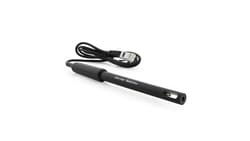
Vernier™ Salinity Sensor
The Salinity Sensor precisely measures the total dissolved salt content of ocean or brackish water.
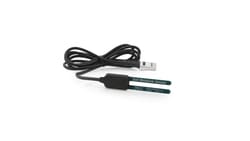
Vernier™ Soil Moisture Sensor
The Soil Moisture Sensor is used to measure the volumetric water content of soil. This makes it ideal for performing experiments in courses such as soil science, agricultural science, environmental science, horticulture, botany, and biology.
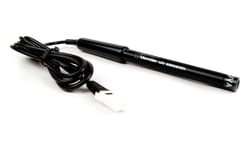
Vernier™ UVA Sensor
The UVA Sensor is an ultraviolet light sensor that responds primarily to UVA radiation (approximately 320 to 390 nm). This sensor is ideal for experiments using UV lamps.

Vernier™ Vernier Variable Load
The Vernier Variable Load is used in conjunction with the Vernier Energy Sensor to provide a range of resistive loads for projects such as wind turbines or solar panels.
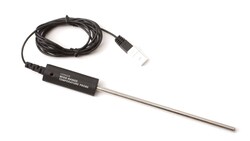
Vernier™ Wide-Range Temperature Probe
This rugged temperature probe features a wide temperature range, from –20 to 330°C. The high upper limit of the sensor allows for melting point determinations of most organic compounds.
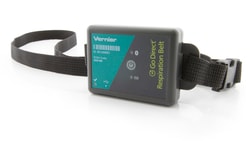
Vernier™ Go Direct™ Respiration Belt
Vernier™ Go Direct™ Respiration Belt measures human respiration rate.