Promotional price valid on web orders only. Your contract pricing may differ. Interested in signing up for a dedicated account number?
Learn More

H1F0 Antibody (1415-1), Novus Biologicals™
SDP

Catalog No. NBP24518100 Shop All R&D Systems Products
Change view
Click to view available options
Quantity:
0.02 mg
0.1 mg
0.2 mg
3 product options available for selection
Product selection table with 3 available options. Use arrow keys to navigate and Enter or Space to select.
Catalog No. Quantity
NBP24518100 0.02 mg
NBP24518101 0.1 mg
NBP24518102 0.2 mg
Use arrow keys to navigate between rows. Press Enter or Space to select a product option. 3 options available.
3 options
Catalog No. NBP24518100 Supplier Novus Biologicals Supplier No. NBP2451810.02MG
Only null left
Add to Cart
Add to Cart

Mouse Monoclonal Antibody

Ensure accurate, reproducible results in Flow Cytometry, Immunohistochemistry (Paraffin), Immunofluorescence

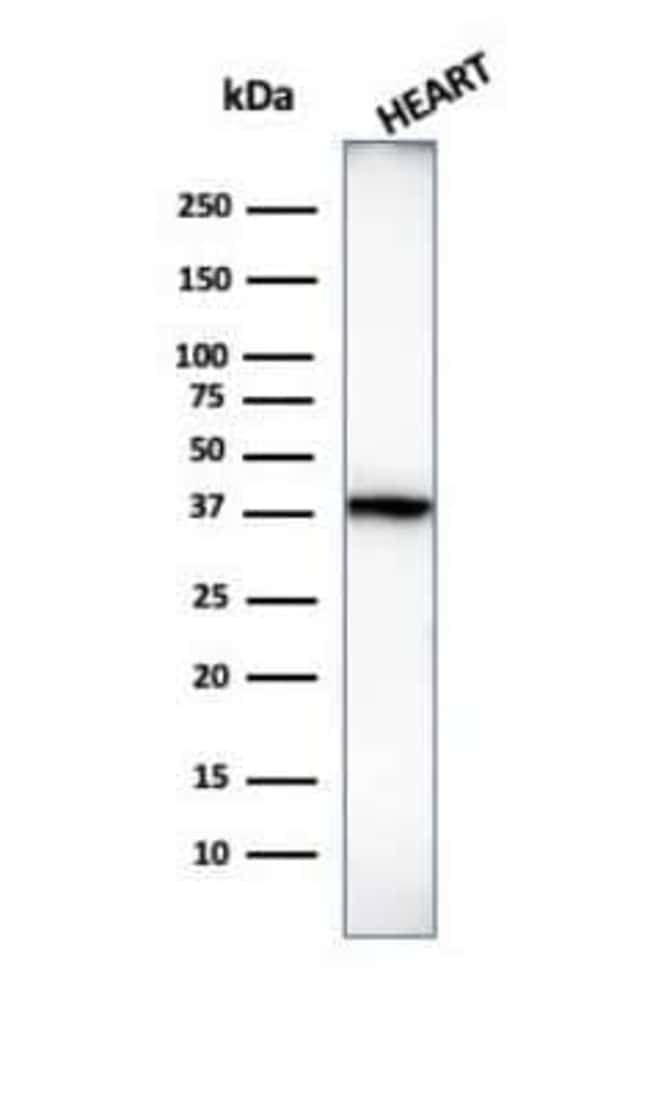
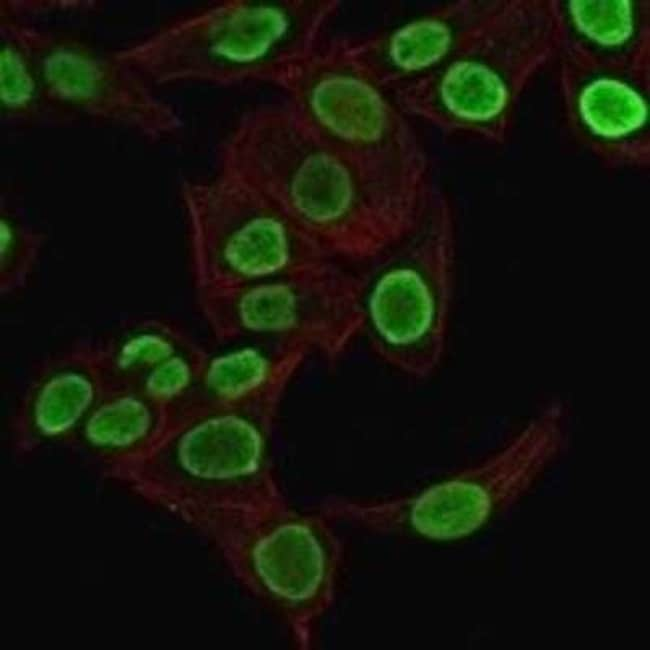
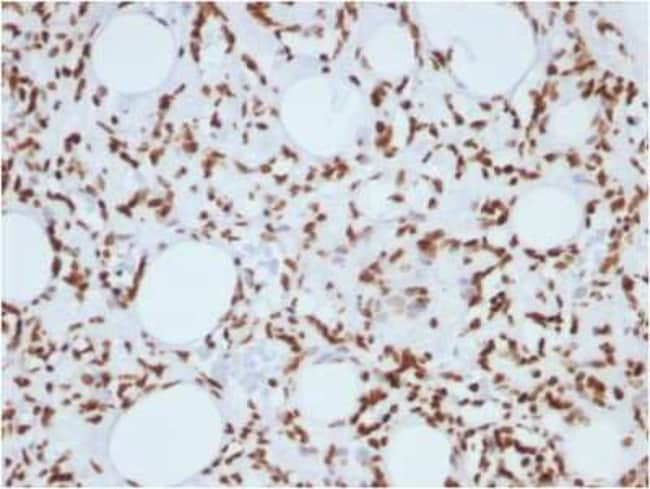
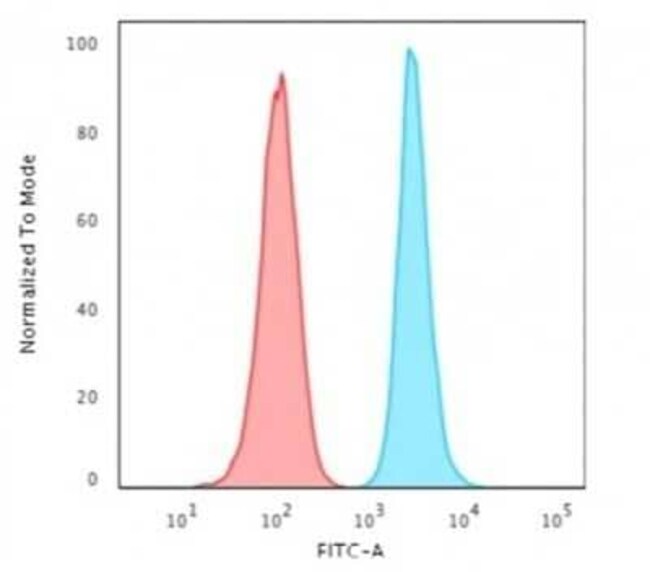
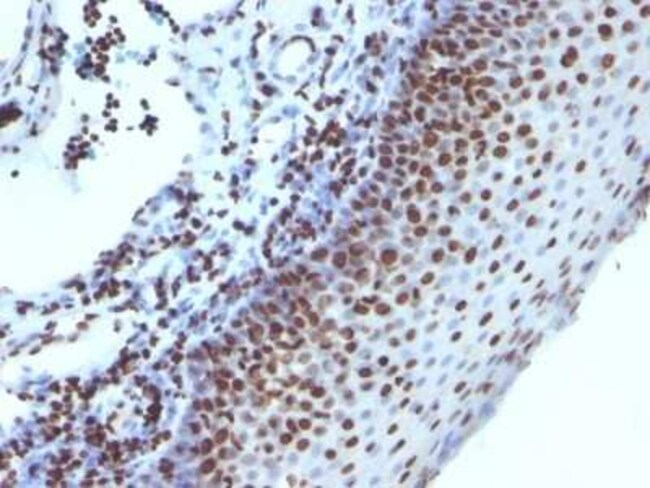
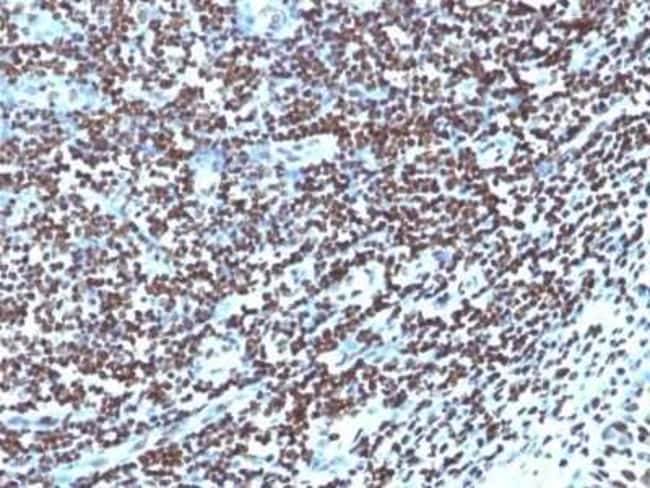
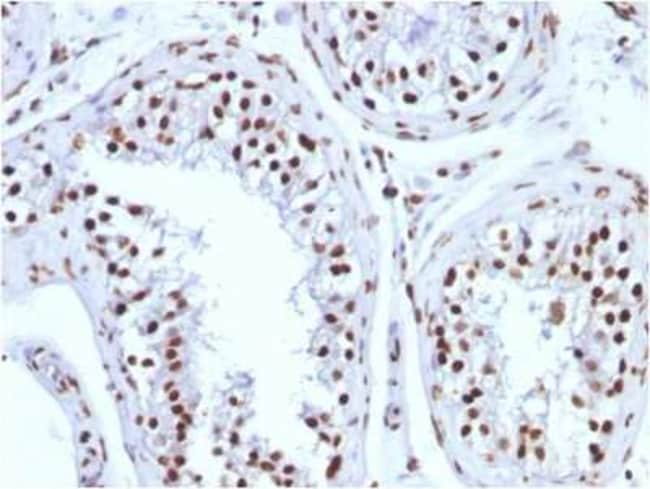
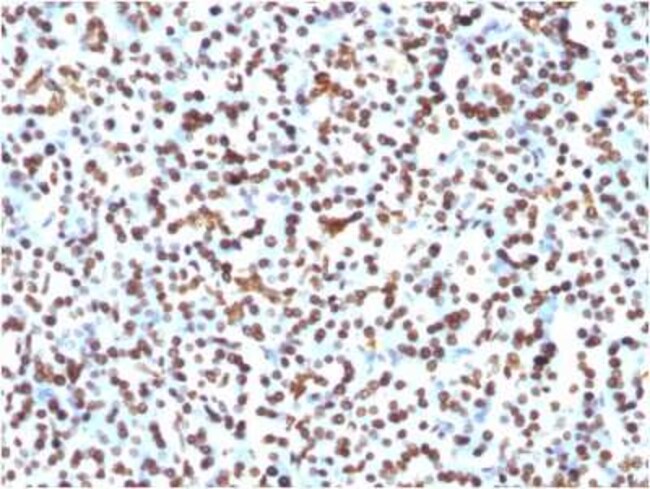
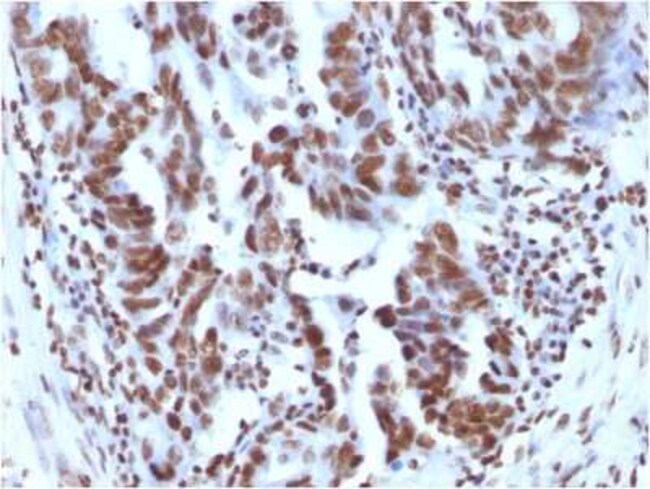
Histone H1 Monoclonal specifically detects Histone H1 in Human, Mouse, Rat samples. It is validated for Western Blot, Flow Cytometry, Immunohistochemistry, Immunocytochemistry/Immunofluorescence, Immunohistochemistry-Paraffin, Immunofluorescence.

Specifications

Antigen Histone H1
Applications Flow Cytometry, Immunohistochemistry (Paraffin), Immunofluorescence
Classification Monoclonal
Clone 1415-1.
Concentration 0.2mg/mL
Conjugate Unconjugated
Dilution Flow Cytometry 0.5 - 1 ug/million cells in 0.1 ml, Immunohistochemistry-Paraffin 0.5 - 1.0 ug/ml, Immunofluorescence 0.5 - 1.0 ug/ml
Formulation 1.0mM PBS and 0.05% BSA with 0.05% Sodium Azide
Gene Accession No. P07305
Gene Alias H1 histone family, member 1, H1.1, H1A, H1F1HIST1, histone 1, H1a, histone cluster 1, H1a, histone H1.1, MGC126642, MGC138345
Gene Symbols H1
Host Species Mouse
Immunogen Nuclei of human leukemia biopsy cells
Purification Method Protein A or G purified
Quantity 0.02 mg
Regulatory Status RUO
Primary or Secondary Primary
Gene ID (Entrez) 3024
Test Specificity Eukaryotic histones are basic and water-soluble nuclear proteins that form hetero-octameric nucleosome particles by wrapping 146 base pairs of DNA in a left-handed super-helical turn sequentially to form chromosomal fiber. Two molecules of each of the four core histones (H2A, H2B, H3, and H4) form the octamer; formed of two H2A-H2B dimers and two H3-H4 dimers, forming two nearly symmetrical halves by tertiary structure. Over 80% of nucleosomes contain the linker Histone H1, derived from an intronless gene that interacts with linker DNA between nucleosomes and mediates compaction into higher order chromatin. Histones are subject to posttranslational modification by enzymes primarily on their N-terminal tails, but also in their globular domains. Such modifications include methylation, citrullination, acetylation, phosphorylation, sumoylation, ubiquitination and ADP-ribosylation.
Target Species Human, Mouse, Rat
Content And Storage Store at 4C.
Form Purified
Isotype IgG2a κ
Show More Show Less

For Research Use Only

Product Title
Select an issue

By clicking Submit, you acknowledge that you may be contacted by Fisher Scientific in regards to the feedback you have provided in this form. We will not share your information for any other purposes. All contact information provided shall also be maintained in accordance with our Privacy Policy.