
Carbohydrates


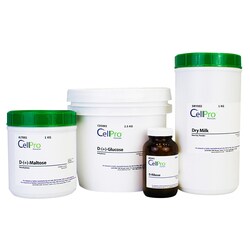
Alkali Scientific Sucrose, 5 Kg

Sucrose, 5 Kg, is a high-purity laboratory-grade chemical that plays an essential role in preparing buffers, solutions, and media for various research applications. It is particularly useful in microbiological and biochemical studies, providing energy for cell cultures and facilitating enzymatic reactions. This 5 Kg package size is suitable for laboratories needing medium-sized quantities of sucrose for regular experimental use. The product is designed for high consistency and reproducibility in both small-scale and large-scale laboratory setups, ensuring reliable results in pharmaceutical, clinical, and research environments.


Cambridge Isotope Laboratories 2 mM Sucrose 0 25 mM DSS 0 25 mM NaN3 in 90% H2O/10% D2O (v/v) 1 3mm tube
2 mM Sucrose 0 25 mM DSS 0 25 mM NaN3 in 90% H2O/10% D2O (v/v) 1 3mm tube

Cambridge Isotope Laboratories Galaxolide (4a 5 5a 8a 9 9a-13C6 99%) (mix of isomers) 100 ug/mL in acetonitrile 1 2 mL
Galaxolide (4a 5 5a 8a 9 9a-13C6 99%) (mix of isomers) 100 ug/mL in acetonitrile 1 2 mL

Medchemexpress LLC 6-chloro-1H-indol-3-yl-β-D-galactopyranoside | 138182-21-5 | MFCD00467206 | 99.7% | 329.73 g/mol | C14H16ClNO6 | 100 MG
Rose-β-D-Gal is a chromogenic β-galactosidase substrate supplied as a solid reagent for research use. Upon enzymatic cleavage it produces a pink/magenta product that enables visual detection of β-galactosidase activity in histochemical staining and enzymatic assays. Suitable for qualitative laboratory assays.
- Chromogenic β-galactosidase substrate for visual detection.
- Produces a pink/magenta color upon enzymatic cleavage.
- Suitable for histochemical staining and enzymatic assays.
- Provided as a solid reagent for convenient storage and handling.
- High purity supports consistent assay results.

Medchemexpress LLC D-(+)-Trehalose dihydrate | 6138-23-4 | 378.33 | 1 G
D-(+)-Trehalose dihydrate is a naturally occurring disaccharide isolated from *Saccharomyces cerevisiae*. It is recognized as a safe food ingredient and pharmaceutical excipient, primarily used for research purposes.
- Isolated from *Saccharomyces cerevisiae*
- Can be used as a food ingredient
- Can be used as a pharmaceutical excipient
- For research use only

Medchemexpress LLC Inosine pranobex | 36703-88-5 | MFCD05662374 | >98.0% | 1115.2 g/mol | C52H78N10O17 | 5 G
Inosine pranobex is an oral immunomodulator and antiviral salt complex supplied as a white to off-white powder for research and analytical use. The compound has CAS 36703-88-5, molecular formula C52H78N10O17, and a molar mass of approximately 1115.2 g/mol, and is used in studies of antiviral activity and immune modulation.
- Oral immunomodulator with broad-spectrum antiviral activity.
- Supplied as a powder suitable for formulation or analytical applications.
- Molecular formula C52H78N10O17 and molecular weight 1115.2 g/mol.
- Typical supplier-reported purity is >98.0% by HPLC.
- Available in multiple pack sizes, including a 5 G research pack.

Medchemexpress LLC D-(+)-Trehalose dihydrate | 6138-23-4 | 378.33 | 50 G
D-(+)-Trehalose dihydrate is a naturally occurring disaccharide isolated from Saccharomyces cerevisiae. It is widely utilized as both a food ingredient and a pharmaceutical excipient.
- Naturally occurring disaccharide
- Used as a food ingredient
- Used as a pharmaceutical excipient
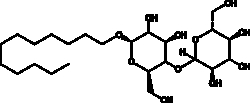
Cayman Chemical n-DodecylD-maltosIde 1g
A non-ionic detergent commonly used to solubilize membrane-associated proteins; helps retain the native conformation and activity of membrane-associated proteins, and facilitates the reforming of these proteins after denaturation

Indofine Chemical SILVER NITRATE, Products for Life Science, 7761-88-8, >99%, 25 gm
SILVER NITRATE, Products for Life Science, 7761-88-8, >99%, 25 gm

Medchemexpress LLC Trehalose-6,6'-dibehenate | 66758-35-8 | 99.9% | 987.43 | 10 MG
Trehalose-6,6'-dibehenate is an orally active glycolipid that activates Mincle and inflammasome, inducing IL-1β secretion in a caspase activity-dependent manner. It also exerts a Myd88-dependent adjuvant activity and induces Th-1/Th-17 immune responses.
- Orally active glycolipid
- Activates Mincle and inflammasome
- Induces IL-1β secretion in a caspase activity-dependent manner
- Exerts a Myd88-dependent adjuvant activity
- Induces Th-1/Th-17 immune responses