
Carbohydrates


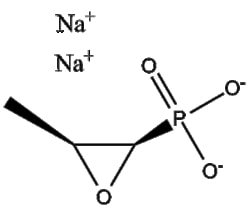
Apexbio Technology LLC Fosfomycin Disodium 26016-99-9 25mg
Fosfomycin Disodium (CAS 26016-99-9) is a small-molecule inhibitor targeting bacterial cell wall biosynthesis It is designed to irreversibly inhibit the initial enzymatic step in peptidoglycan synthesis disrupting bacterial cell structure Fosfomycin Disodium exerts its biological activity primarily through irreversible inhibition of cell wall synthesis In in vitro studies Fosfomycin Disodium demonstrates inhibitory activity against drug-resistant bacterial strains with reported IC50 values typically in the low micromolar range depending on bacterial species and experimental conditions Based on these pharmacological properties Fosfomycin Disodium holds research potential in studies of bacterial cell wall synthesis antimicrobial resistance pathways and central nervous system infection models


Medchemexpress LLC K-Ras ligand-Linker Conjugate 6 formate | 98.9% | 25 MG

K-Ras ligand-Linker Conjugate 6 formate is a chemical compound with the molecular formula C43H62N8O9 and a molecular weight of 835.00. This compound is provided in an off-white to light yellow solid form and is suitable for various laboratory applications requiring high purity chemical reagents.
- High purity of 98.93% verified by HPLC
- Appears as an off-white to light yellow solid
- Store at -20°C in sealed conditions, away from moisture
- In solvent, store at -80°C for 6 months or -20°C for 1 month in sealed conditions
- Analytical data (1H NMR spectrum, MS) are consistent with its structure

Medchemexpress LLC Fludarabine (phosphate) | 75607-67-9 | 99.8% | C10H13FN5O7P | 50 MG
Fludarabine phosphate is an analogue of adenosine and deoxyadenosine. It competes with dATP for incorporation into DNA and inhibits DNA synthesis. This compound significantly reduces cell viability in a dose-dependent manner.
- Competes with dATP for incorporation into DNA
- Inhibits DNA synthesis
- Significantly reduces cell viability in a dose-dependent manner
- Causes complete regression of D54 tumors in mice
- For research use only
Apexbio Technology LLC EPRODISATE-DISODIUM-500MG
Eprodisate disodium (CAS No 36589-58-9) is a compound studied primarily within the field of biomedical research It originates as a synthetic molecule designed for therapeutic intervention in amyloid-related diseases Eprodisate disodium functions by inhibiting the polymerization of amyloid fibrils specifically targeting the interaction between amyloid proteins and glycosaminoglycans which are crucial pathways in disease progression Its activity is commonly observed in the nanomolar to low micromolar range indicating potent efficacy The compound is frequently utilized in cell models and animal studies for investigating amyloid inhibition and can be instrumental in drug screening processes Experimental concentrations typically depend on the specific research design Such studies aim to validate its potential as a therapeutic agent enhancing the understanding of diseases characterized by amyloid accumulation
Apexbio Technology LLC Balsalazide-disodium-diH2O
Balsalazide disodium dihydrate (CAS No 150399-21-6) is a prodrug commonly used in biomedical research focused on gastrointestinal conditions like ulcerative colitis Originating from efforts to reduce inflammation its mechanism involves releasing the active 5-aminosalicylic acid (5-ASA) in the colon which inhibits the production of inflammatory mediators such as leukotrienes and prostaglandins In vitro it shows activity in the nanomolar to low micromolar range indicating its efficacy in modulating inflammatory pathways Typical applications include studies using cell models like colon epithelial cells and animal studies aimed at understanding its therapeutic potential It is also explored in drug screening for new anti-inflammatory agents Experimental concentrations typically depend on the specific research design allowing flexibility in dosage depending on the experimental setup and objective