
Organic potassium salts

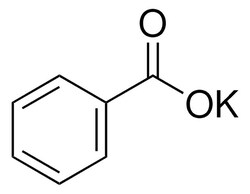
Sigma Aldrich Potassium Benzoate
MilliporeSigma Sigma Organics products encompass a wide range of quality reagents, solvents, catalysts, and building blocks for organic synthesis. From benchtop discovery to process development and scale-up, Sigma Organics solutions are built to meet the needs of synthetic chemists.

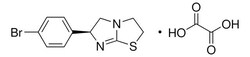
Sigma Aldrich (-)-P-Bromolevamisole Oxalate
MilliporeSigma Sigma Organics products encompass a wide range of quality reagents, solvents, catalysts, and building blocks for organic synthesis. From benchtop discovery to process development and scale-up, Sigma Organics solutions are built to meet the needs of synthetic chemists.
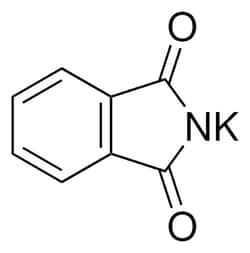
Sigma Aldrich Phthalimide potassium salt
MilliporeSigma Sigma Organics products encompass a wide range of quality reagents, solvents, catalysts, and building blocks for organic synthesis. From benchtop discovery to process development and scale-up, Sigma Organics solutions are built to meet the needs of synthetic chemists.
Sigma Aldrich Phthalimide potassium salt
MilliporeSigma Sigma Organics products encompass a wide range of quality reagents, solvents, catalysts, and building blocks for organic synthesis. From benchtop discovery to process development and scale-up, Sigma Organics solutions are built to meet the needs of synthetic chemists.
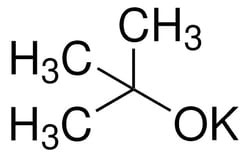
Sigma Aldrich Potassium tert-butoxide solution
MilliporeSigma Sigma Organics products encompass a wide range of quality reagents, solvents, catalysts, and building blocks for organic synthesis. From benchtop discovery to process development and scale-up, Sigma Organics solutions are built to meet the needs of synthetic chemists.

Medchemexpress LLC N,N'-Dinitrosopiperazine | 140-79-4 | 99.9% | 144.13 | 100 MG

N,N'-Dinitrosopiperazine (DNP) is identified as a carcinogen with specificity for nasopharyngeal epithelium, facilitating nasopharyngeal carcinoma (NPC) metastasis. It regulates multiple signaling pathways through protein phosphorylation, including LYRIC at serine 568.
- Specific carcinogen for nasopharyngeal epithelium
- Facilitates NPC metastasis
- Regulates multiple signaling pathways through protein phosphorylation
- Induces cell invasion and motility in a dose-dependent manner in vitro
- Increases expression of phospho-LYRIC s568 and LYRIC in CNE1 cells
- Promotes NPC metastasis in vivo by inhibiting cell motility and invasion
- Induces LYRIC phosphorylation at serine 568 in vivo

Medchemexpress LLC N,N'-Dinitrosopiperazine | 140-79-4 | 99.9% | 144.13 | 50 MG
N,N'-Dinitrosopiperazine (1,4-Dinitrosopiperazine; DNP) is identified as a carcinogen that specifically targets the nasopharyngeal epithelium and contributes to nasopharyngeal carcinoma (NPC) metastasis. It influences various signaling pathways through protein phosphorylation, including LYRIC at serine 568.
- Does not inhibit 6-10B cells at lower concentrations (0-8 μm)
- Exhibits cytotoxicity from 10 μm upwards
- Enhances 6-10B cell invasion and motility in a dose-dependent manner (2-8 μm)
- Increases cell invasion by 421.7% and motility by 328.2% at 6 μm
- Upregulates phospho-LYRIC s568 and LYRIC expression in CNE1 cells
- Inhibits cell motility and invasion in vivo at 40 mg/kg
- Facilitates NPC metastasis in vivo at 40 mg/kg
- Shows higher phospho-LYRIC expression in metastatic tumors in DNP-treated mice

Medchemexpress LLC Acesulfame potassium | 55589-62-3 | 99.38% | 5 G
Acesulfame potassium is a synthetic sweetener that can affect cognitive function and may be related to immune evasion in cancer cells by suppressing autophagic degradation of PD-L1. It is for research use only and suitable for studies on neurological diseases, metabolic disorders, cancer, and immune evasion.
- Upregulates PD-L1 protein levels in RIL-175 and SK-Hep1 cells.
- Increases granzyme B production in RIL-175 and SK-Hep1 cells co-cultured with T cells.
- Activates ERK1/2-mTORC1-ULK1 pathway to suppress autophagic degradation of PD-L1.
- Inhibits mitochondrial metabolism and ATP production in SH-SY5Y cells.
- Impairs energy metabolism and neuroprotective functions.
- Increases body weight in male CD-1 mice and alters gut microbiome.
- Affects neurometabolic functions in C57BL/6J mice with long-term intake.

Medchemexpress LLC Acesulfame (potassium) | 55589-62-3 | 99.4% | 10 G
Acesulfame potassium is a synthetic sweetener that can affect cognitive function by altering neurometabolic functions. It can also suppress autophagic degradation of PD-L1 in cancer cells, which may be related to immune evasion. This product is suitable for research on neurological diseases, metabolic disorders, cancer, and immune evasion.
- Research applications include neurological diseases, metabolic disorders, cancer, and immune evasion.
- Upregulates PD-L1 protein levels in RIL-175 and SK-Hep1 cells.
- Increases granzyme B production in co-cultured T cells.
- Activates ERK1/2-mTORC1-ULK1 pathway to suppress autophagic degradation of PD-L1.
- Inhibits mitochondrial metabolism and impairs neuroprotective functions in SH-SY5Y cells.
- Affects body weight and gut microbiome composition in male CD-1 mice.
- Alters neurometabolic functions in C57BL/6J mice.