
Organooxygen compounds


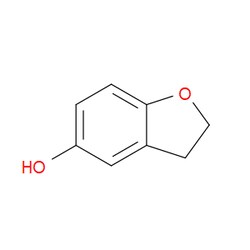
Aobchem 2 3-Dihydro-1-benzofuran-5-ol | ≥97% | CAS 40492-52-2 | C8H8O2 | 5g
2 3-Dihydro-1-benzofuran-5-ol | ≥97% | CAS 40492-52-2 | C8H8O2 | 5g

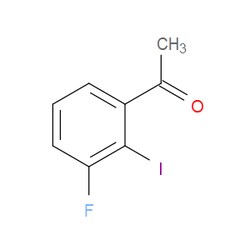
Aobchem 1-(3-Fluoro-2-iodophenyl)ethanone | ≥95% | CAS 2162528-71-2 | C8H6FIO | 5g
1-(3-Fluoro-2-iodophenyl)ethanone | ≥95% | CAS 2162528-71-2 | C8H6FIO | 5g
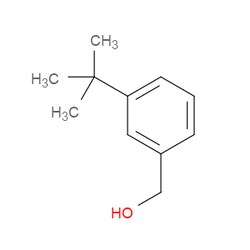
Aobchem (3-(Tert-butyl)phenyl)methanol | ≥95% | CAS 51503-09-4 | C11H16O | 250mg
(3-(Tert-butyl)phenyl)methanol | ≥95% | CAS 51503-09-4 | C11H16O | 250mg

Aobchem Ethyl benzofuran-3-carboxylate | ≥97% | CAS 194278-43-8 | C11H10O3 | 1g
Ethyl benzofuran-3-carboxylate | ≥97% | CAS 194278-43-8 | C11H10O3 | 1g
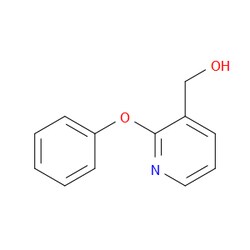
Aobchem 2-Phenoxy-3-pyridinemethanol | ≥95% | CAS 681460-30-0 | C12H11NO2 | 5g
2-Phenoxy-3-pyridinemethanol | ≥95% | CAS 681460-30-0 | C12H11NO2 | 5g
Aobchem Benzofuran-2-yl(cyclobutyl)methanone | 95% | CAS 1593353-80-0 | C13H12O2 | 1g
Benzofuran-2-yl(cyclobutyl)methanone | 95% | CAS 1593353-80-0 | C13H12O2 | 1g
Aobchem Benzofuran-2-yl(cyclobutyl)methanone | 95% | CAS 1593353-80-0 | C13H12O2 | 250mg
Benzofuran-2-yl(cyclobutyl)methanone | 95% | CAS 1593353-80-0 | C13H12O2 | 250mg
Aobchem 3-(1-Hydroxy-1-phenylethyl)benzonitrile | 95% | CAS 169266-92-6 | C15H13NO | 5g
3-(1-Hydroxy-1-phenylethyl)benzonitrile | 95% | CAS 169266-92-6 | C15H13NO | 5g
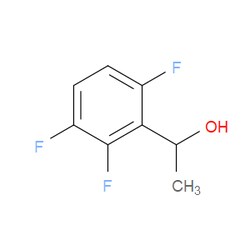
Aobchem 1-(2 3 6-Trifluorophenyl)ethanol | ≥95% | CAS 1146853-99-7 | C8H7F3O | 250mg
1-(2 3 6-Trifluorophenyl)ethanol | ≥95% | CAS 1146853-99-7 | C8H7F3O | 250mg
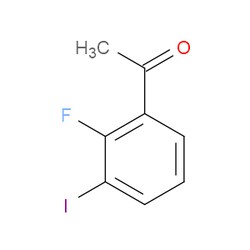
Aobchem 1-(2-Fluoro-3-iodophenyl)ethanone | ≥97% | CAS 1628003-72-4 | C8H6FIO | 250mg
1-(2-Fluoro-3-iodophenyl)ethanone | ≥97% | CAS 1628003-72-4 | C8H6FIO | 250mg
![Medchemexpress LLC Benzoic acid, 4-[4-[[(3R)-1-butyl-3-[(R)-cyclohexylhydroxymethyl]-2,5-dioxo-1,4,9-triazaspiro [5.5]undec-9-yl]methyl]phenoxy]-, hydrochloride (1:1) | 461023-63-2 | 99.9% | 614.17 | 25 MG](https://assets.fishersci.com/TFS-Assets/CCG/product-images/5000384286-logo.png-250.jpg)
Medchemexpress LLC Benzoic acid, 4-[4-[[(3R)-1-butyl-3-[(R)-cyclohexylhydroxymethyl]-2,5-dioxo-1,4,9-triazaspiro [5.5]undec-9-yl]methyl]phenoxy]-, hydrochloride (1:1) | 461023-63-2 | 99.9% | 614.17 | 25 MG

Aplaviroc hydrochloride is a CCR5 antagonist derived from SDP, with IC50s ranging from 0.1-0.4 nM for HIV-1Ba-L, HIV-1JRFL, and HIV-1MOKW. It is intended for research use only.
- Target: CCR5 antagonist
- Potency: Potent activity against wild-type R5 HIV-1 strains with IC50 values of 0.1 to 0.4 nM
- Mechanism: Suppresses infectivity and replication of HIV-1MDR variants at low concentrations (IC50 values of 0.4 to 0.6 nM)
- Binding Affinity: Binds to CCR5 with high affinity (Kd value of 2.9±1.0 nM)
- Inhibition: Potently blocks rgp120/sCD4 binding to CCR5 with an IC50 value of 2.7 nM
- In Vivo Efficacy: Suppresses R5 HIV-1 viremia in hu-PBMC-NOG mice at a dosage of 60 mg/kg
Medchemexpress LLC Clorgyline hydrochloride | 17780-75-5 | 99.9% | C13H16Cl3NO | 50 MG
Clorgyline hydrochloride is an irreversible and selective inhibitor of monoamine oxidase A (MAO-A) used in scientific research. It has minimal effect on conjugated dopamine (DA) amounts in superfusates of rat striatum slices. This compound contains an Alkyne group, enabling it to undergo copper-catalyzed azide-alkyne cycloaddition (CuAAc) with molecules containing Azide groups.
- Irreversible and selective inhibitor of monoamine oxidase A (MAO-A)
- Structurally related to Pargyline
- Contains an Alkyne group for copper-catalyzed azide-alkyne cycloaddition (CuAAc) with Azide groups
- Increases nicotine infusions and motivation to obtain nicotine in rats at 2 mg/kg daily for 28 days
- Pretreatment with 1 mg/kg intravenously for 1 hour has little effect on the efflux of conjugated dopamine (DA) and p-tyramine-evoked release of conjugated DA from slices of rat striatum
Medchemexpress LLC SB-277011 hydrochloride | 215804-67-4 | 99.59% | 475.02 | 50 MG
SB-277011 hydrochloride is a potent and selective dopamine D3 receptor (D3R) antagonist, demonstrating high oral bioavailability and brain penetrance. It exhibits significant selectivity over other dopamine receptors and possesses an excellent pharmacokinetic profile in rats. This compound has been shown to effectively reverse the effects of quinelorane and reduce cocaine self-administration in preclinical studies.
- Potent and selective D3 receptor antagonist
- High oral bioavailability and brain penetrance
- 80- to 100-fold selectivity over other dopamine receptors
- Excellent pharmacokinetic profile
- Reverses quinelorane effects in nucleus accumbens
- Reduces intravenous cocaine self-administration
- Inhibits basal and cocaine-enhanced locomotion
- Appearance: solid, off-white to light yellow
Medchemexpress LLC Octodrine hydrochloride | 5984-59-8 | 98.0% | 1 ML
Octodrine hydrochloride is a central nervous activator that functions by increasing the uptake of dopamine and noradrenaline. It has been observed to increase pain threshold, cardiac rate, and myocardial contractility.
- Increases dopamine and noradrenaline uptake
- Increases pain threshold
- Positive chronotropic effect on cardiac rate
- Positive inotropic effect on myocardial contractility
- For research use only
Medchemexpress LLC Sri-37330 hydrochloride | 2322245-49-6 | 99.7% | C16H20ClF3N4O2S | 250 MG
SRI-37330 hydrochloride is an orally bioavailable thioredoxin-interacting protein (TXNIP) inhibitor. It inhibits glucagon secretion and function, reduces hepatic glucose production, and reverses hepatic steatosis. It can be used for type 2 diabetes research.
- Inhibits activity of human TXNIP promoter in INS-1 cells.
- Inhibits mRNA and protein levels of TXNIP.
- Inhibits polymerase II (Pol II) binding to the E-box motif region of the TXNIP promoter.
- Lowers glucagon secretion in TC1-6 cells.
- Inhibits glucagon-induced glucose output from primary hepatocytes.
- Decreases glucagon secretion and blocks hepatic glucose output in mice.
- Reverses obesity- and STZ-induced diabetes and hepatic steatosis in mice.