
Microarray Kits


American Research Products Inc Mouse E3 ubiquitin protein lig
Mouse E3 ubiquitin-protein ligase SMURF1 (SMURF1) ELISA kit from CUSABIO Detection Range 31 25 pg/mL-2000 pg/mL Sensitivity 7 8 pg/mL Sample serum plasma tissue homogenates cell lysates Method Sandwich

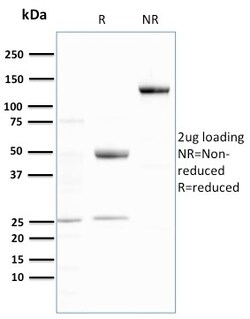
Biotium Ubiquitin (Autophagy Marker)(UBB/3143R), CF488A conjugate, 0.1mg/mL
Ubiquitin is a highly conserved and plays an essential role in the ubiquitin-proteasome pathway. In ubiquitination process, it is first activated by forming a thiol-ester complex with the activation component E1, which is then transferred to ubiquitin-carrier protein E2, followed by to ubiquitin ligase E3 for final delivery to epsilon-NH2 of the target protein lysine residue. IkB, p53, cdc25A, Bcl-2 etc. are shown as targets of ubiquitin-proteasome process as part of regulation of cell cycle progression, differentiation, cell stress response, and apoptosis. Moreover, ubiquitin have been reported to bind covalently with pathological inclusions which are resistant to degradation e. g. neurofibrillary tangles/paired helical filaments in Alzheimer's disease, Lewy bodies seen in Parkinson's disease, and Pick bodies found in Pick's disease etc. Primary antibodies are available purified, or with a selection of fluorescent CF Dyes and other labels. CF Dyes offer exceptional brightn

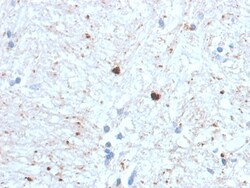
Biotium Ubiquitin (Autophagy Marker) (UBB/1748), CF488A conjugate, 0.1mg/mL
Ubiquitin is a highly conserved and plays an essential role in the ubiquitin-proteasome pathway. In ubiquitination process, it is first activated by forming a thiol-ester complex with the activation component E1, which is then transferred to ubiquitin-carrier protein E2, followed by to ubiquitin ligase E3 for final delivery to epsilon-NH2 of the target protein lysine residue. IkB, p53, cdc25A, Bcl-2 etc. are shown as targets of ubiquitin-proteasome process as part of regulation of cell cycle progression, differentiation, cell stress response, and apoptosis. Moreover, ubiquitin have been reported to bind covalently with pathological inclusions which are resistant to degradation e.g. neurofibrillary tangles/paired helical filaments in Alzheimer's disease, Lewy bodies seen in Parkinson's disease, and Pick bodies found in Pick's disease etc.Primary antibodies are available purified, or with a selection of fluorescent CF Dyes and other labels. CF Dyes offer exceptional brightnes
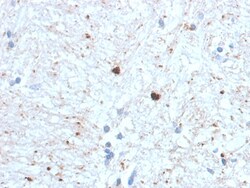
Biotium Ubiquitin (Autophagy Marker) (UBB/1748), CF568 conjugate, 0.1mg/mL
Ubiquitin is a highly conserved and plays an essential role in the ubiquitin-proteasome pathway. In ubiquitination process, it is first activated by forming a thiol-ester complex with the activation component E1, which is then transferred to ubiquitin-carrier protein E2, followed by to ubiquitin ligase E3 for final delivery to epsilon-NH2 of the target protein lysine residue. IkB, p53, cdc25A, Bcl-2 etc. are shown as targets of ubiquitin-proteasome process as part of regulation of cell cycle progression, differentiation, cell stress response, and apoptosis. Moreover, ubiquitin have been reported to bind covalently with pathological inclusions which are resistant to degradation e.g. neurofibrillary tangles/paired helical filaments in Alzheimer's disease, Lewy bodies seen in Parkinson's disease, and Pick bodies found in Pick's disease etc.Primary antibodies are available purified, or with a selection of fluorescent CF Dyes and other labels. CF Dyes offer exceptional brightnes
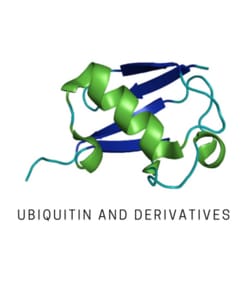
LifeSensors Ubiquitin-K11R 1mg
Ubiquitin-K11R is recombinant ubiquitin with a single substitution of arginine for lysine at position 11. Ubiquitin is a small polypeptide that can be conjugated via its C-terminus to amine groups of lysine residue on target proteins. This conjunction is referred to as monoubiquitylation. Additional ubiquitin moieties can subsequently be conjugated to this initial ubiquitin, utilizing any one (of seven) lysine residues on the surface of ubiquitin. The formation of these ubiquitin chains is referred to as polyubiquitylation. This modification will ensure chains will not form at mutated lysine to arginine peptide.
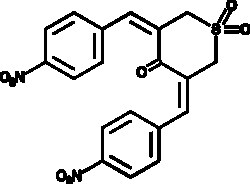
Cayman Chemical Ubiquitin Isopeptidase Inhibitor I, Purity: ≥98%, CAS: 108477-18-5, 25 mg
Induces caspase activation and apoptosis (IC50 = ~1.7 µM) through a Bcl-2-dependent and apoptosome-independent mitochondrial pathway that selectively inhibits ubiquitin isopeptidase activity (IC50 = ~ 30 µM)
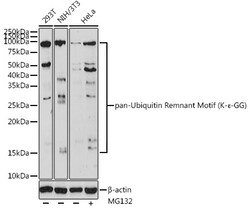
ABclonal Technology pan-Ubiquitin Remnant Motif (K-ε-GG) Rabbit pAb

Ubiquitination plays a key role in protein degradation and signal transduction. Characterization of ubiquitination sites is important for understanding the role of this modification in cellular processes and disease. Ubiquitination sites are usually identified by detection of Lys-?-Gly-Gly (K-?-GG)-remnant peptides, which are generated by tryptic digestion of proteomes. The di-glycine remnant left at sites of ubiquitination after trypsin digestion through cleavage of the C-terminal –RGG sequence on ubiquitin (K-ε-GG). This Ubiquitin K-ε-GG remnant motif antibody will recognize the di-glycine remnant independent of flanking amino acid sequence.
American Research Products Inc Mouse Ubiquitin like protein I
Mouse Ubiquitin-like protein ISG15 (ISG15) ELISA kit from CUSABIO Detection Range 0 312 ng/mL-20 ng/mL Sensitivity 0 078 ng/mL Sample serum plasma cell culture supernates tissue homogenates Method Sandwich
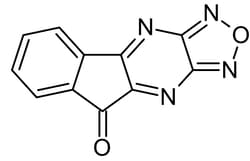
Abcam SMER3, SCFMet30 ubiquitin E3 ligase inhibitor, 50MG
MW 224.17 Da, Purity >98%. Cell permeable, selective SCFMet30 ubiquitin E3 ligase inhibitor. Enhances the action of rapamycin. Induces cell cycles arrest (IC50 = 10-30 μM). Active *in vivo.*.
The product is subject to the following: Abcam Restricted Use Statement

Bioss KD-Validated Ubiquitin specifi
Ubiquitin Specific Peptidase 13 Primary Antibody Unconjugated Public Immunogen Range 750-800/863 Host Species Rabbit Target Species Human Rat Clonality Monoclonal Applications WB FCM IC Concentration Lot dependent Size 50 ul Storage Buffer Supplied in PBS (pH 7 4) containing 50% glycerol and 0 02% sodium azide
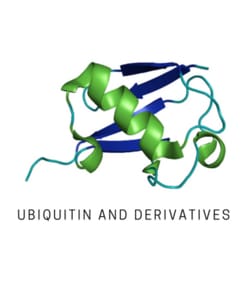
LifeSensors Ubiquitin-K48R K63R 1mg
Ubiquitin-K48R K63R is recombinant ubiquitin having arginine substituted for lysine at positions 48 and 63. Ubiquitin is a small polypeptide that can be conjugated via its C-terminus to amine groups of lysine residue on target proteins. This conjunction is referred to as monoubiquitylation. Additional ubiquitin moieties can subsequently be conjugated to this initial ubiquitin. Utilizing any one (of seven) lysine residues on the surface of ubiquitin. The formation of these ubiquitin chains is referred to as polyubiquitylation.

Bioss KD-Validated Ubiquitin Specifi
Ubiquitin Specific Peptidase 5 Primary Antibody Unconjugated Public Immunogen Range 50-100/704 Host Species Rabbit Target Species Human Mouse Rat Clonality Monoclonal Applications WB FCM IC Concentration Lot dependent Size 50 ul Storage Buffer Supplied in PBS (pH 7 4) containing 50% glycerol and 0 02% sodium azide
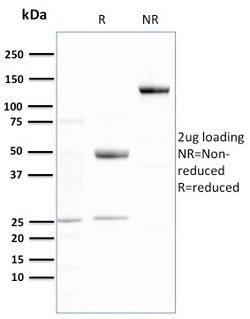
Biotium Ubiquitin (Autophagy Marker)(UBB/3143R), CF488A conjugate, 0.1mg/mL
Ubiquitin is a highly conserved and plays an essential role in the ubiquitin-proteasome pathway. In ubiquitination process, it is first activated by forming a thiol-ester complex with the activation component E1, which is then transferred to ubiquitin-carrier protein E2, followed by to ubiquitin ligase E3 for final delivery to epsilon-NH2 of the target protein lysine residue. IkB, p53, cdc25A, Bcl-2 etc. are shown as targets of ubiquitin-proteasome process as part of regulation of cell cycle progression, differentiation, cell stress response, and apoptosis. Moreover, ubiquitin have been reported to bind covalently with pathological inclusions which are resistant to degradation e. g. neurofibrillary tangles/paired helical filaments in Alzheimer's disease, Lewy bodies seen in Parkinson's disease, and Pick bodies found in Pick's disease etc. Primary antibodies are available purified, or with a selection of fluorescent CF Dyes and other labels. CF Dyes offer exceptional brightn
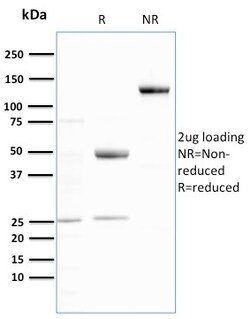
Biotium Ubiquitin (Autophagy Marker)(UBB/3143R), CF568 conjugate, 0.1mg/mL
Ubiquitin is a highly conserved and plays an essential role in the ubiquitin-proteasome pathway. In ubiquitination process, it is first activated by forming a thiol-ester complex with the activation component E1, which is then transferred to ubiquitin-carrier protein E2, followed by to ubiquitin ligase E3 for final delivery to epsilon-NH2 of the target protein lysine residue. IkB, p53, cdc25A, Bcl-2 etc. are shown as targets of ubiquitin-proteasome process as part of regulation of cell cycle progression, differentiation, cell stress response, and apoptosis. Moreover, ubiquitin have been reported to bind covalently with pathological inclusions which are resistant to degradation e. g. neurofibrillary tangles/paired helical filaments in Alzheimer's disease, Lewy bodies seen in Parkinson's disease, and Pick bodies found in Pick's disease etc. Primary antibodies are available purified, or with a selection of fluorescent CF Dyes and other labels. CF Dyes offer exceptional brightn
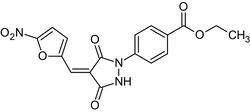
Abcam PYR-41, Ubiquitin-activating enzyme (E1) inhibitor, 5MG
MW 371.3 Da, Purity >98%. Ubiquitin-activating enzyme (E1) inhibitor (IC₅₀ = 5 μM). Inhibits ubiquitination and proteasomal degradation. Additionally increases sumoylation of proteins and induces p53-mediated apoptosis.
The product is subject to the following: Abcam Restricted Use Statement