
Protein Labeling Reagents


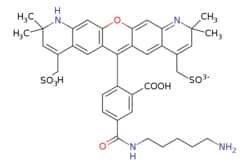
eMolecules BP Fluor 568 Cadaverine | Broadpharm |778.890 | C38H42N4O10S2 | 0.000 | CC1(C)Nc2cc3Oc4cc5=NC(C)(C)C=C(CS(O)(=O)=O)c5cc4=C(c4ccc(cc4C(O)=O)C(=O)NCCCCCN)c3cc2C(CS(O)(=O)=O)=C1 | 1mg | 599128672
BP Fluor 568 Cadaverine | Broadpharm |778.890 | C38H42N4O10S2 | 0.000 | CC1(C)Nc2cc3Oc4cc5=NC(C)(C)C=C(CS(O)(=O)=O)c5cc4=C(c4ccc(cc4C(O)=O)C(=O)NCCCCCN)c3cc2C(CS(O)(=O)=O)=C1 | 1mg | 599128672


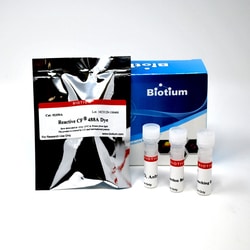
Biotium Mix-n-Stain™ CF594 Small Ligand Labeling Kit
Mix-n-Stain™ Small Ligand Labeling Kits are designed for rapid labeling of low molecular weight (MW 150 -5000) ligands without a purification step. Suitable ligands or substrates include SNAP-tag, CLIP-tag™ and HaloTag ligand derivatives that have an aliphatic amine. CF dyes are Biotium's line of next-generation fluorescent dyes with advantages in brightness, photostability, and conjugate specificity compared to other fluorescent dyes. Deep-red fluorescent CF594 dye has excitation/emission at 593/614 nm. It is suitable for labeling ligands for cell surface staining.
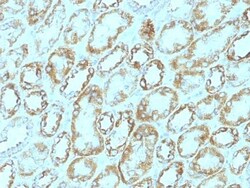
Biotium Laminin(A5), CF568 conjugate, 0.1mg/mL
Laminins are large hetero-trimeric, non-collagenous glycoproteins composed of α, β, and γ chains. This MAb reacts with laminin B2/1 chain of ~210 kDa and does not cross-react with other basement membrane components or fibronectin. Its specificity was established by immunoprecipitation and immunofluorescence of human skeletal muscle and kidney with laminin chain-specific MAbs. Epithelial sheets in vivo are separated from the mesenchymal elements of the stroma by a thin layer of a specialized type of extracellular matrix termed the basement membrane (BM). This structure consists of individual components, some of which are ubiquitous in BMs and some are not. The ubiquitous ones comprise laminin (LN), entactin/nidogen (EN), collagen type IV (CIV), and large heparan sulfate proteoglycan (HSPG), which interact specifically with each other to form a continuous and regular BM. Alterations of BM integrity, from local discontinuities up to complete loss, are describe
Biotium Cytokeratin, multi(C11), CF568 conjugate, 0.1mg/mL
This MAb recognizes cytokeratin 4, 5, 6, 8, 10, 13, and 18. This is a broad-spectrum antibody, which has been reported to differentiate epithelial tumors from non-epithelial tumors. Many studies have shown the usefulness of keratins as markers in cancer research and tumor diagnosis.Primary antibodies are available purified, or with a selection of fluorescent CF Dyes and other labels. CF Dyes offer exceptional brightness and photostability. Note: Conjugates of blue fluorescent dyes like CF405S and CF405M are not recommended for detecting low abundance targets, because blue dyes have lower fluorescence and can give higher non-specific background than other dye colors.
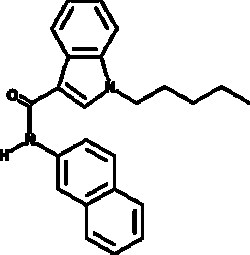
Cayman Chemical nI 2-naphthyl Isomer 1mg
Differs from NNEI by having the naphthalene group joined at the two position; intended for forensic and research purposes
Biotium Podocalyxin(3D3), CF568 conjugate, 0.1mg/mL
Podocalyxin is a member of the CD34 transmembrane sialomucin family. It is highly on kidney podocyte foot projections and plays essential roles in kidney development and homeostasis, blood filtration and urine formation. It is also expressed on vascular endothelia, hematopoietic progenitors and a subset of neurons. Overexpression of podocalyxin may be linked to more aggressive tumor behavior. Podocalyxin antibody can identify podocytes in the urine (podocyturia) that may indicate glomerular disease, pre-eclampsia, and other kidney pathology.Primary antibodies are available purified, or with a selection of fluorescent CF Dyes and other labels. CF Dyes offer exceptional brightness and photostability. Note: Conjugates of blue fluorescent dyes like CF405S and CF405M are not recommended for detecting low abundance targets, because blue dyes have lower fluorescence and can give higher non-specific background than other dye colors.
Biotium Human Lambda Light Chain(HP6054), CF568 conjugate, 0.1mg/mL
This MAb is specific to lambda light chain of immunoglobulin and shows no cross-reaction with lambda light chain or any of the five heavy chains. In mammals, the two light chains in an antibody are always identical, with only one type of light chain, kappa or lambda. The ratio of Kappa to Lambda is 70:30. However, with the occurrence of multiple myeloma or other B-cell malignancies this ratio is disturbed. Antibody to the lambda light chain is reportedly useful in the identification of leukemias, plasmacytomas, and certain non-Hodgkin's lymphomas. Demonstration of clonality in lymphoid infiltrates indicates that the infiltrate is malignant.Primary antibodies are available purified, or with a selection of fluorescent CF Dyes and other labels. CF Dyes offer exceptional brightness and photostability. Note: Conjugates of blue fluorescent dyes like CF405S and CF405M are not recommended for detecting low abundance targets, because blue dyes have lower fluorescence and can

Medchemexpress LLC IL-17A Rat CHO 50ug | 50ug

The IL-17A protein has important heterodimerization and homodimerization activities and is involved in a variety of processes including responses to glucocorticoid stimulation and the regulation of cell death and transcription IL-17A is present in the cytoplasm and extracellular space and has been implicated in diseases such as pancreatitis inflammatory bowel disease renal disease and periodontal disease and may serve as a biomarker IL-17A Protein Rat (CHO) is the recombinant rat-derived IL-17A protein expressed by CHO with tag free

Biotium CD11a(DF1524), CF488A conjugate, 0.1mg/mL
Recognizes a protein of 180 kDa, identified as CD11a (Leucocyte Workshop IV; Code 1524). CD11a complex with the 2 subunit of the integrin family, CD18, to form the cell surface heterodimer, LFA-1 or CD11a /C18 (aLbL). LFA-1 is expressed on all leukocytes including lymphocytes, monocytes, and granulocytes. It is involved in leukocyte adhesion to its ligands including intercellular adhesion molecule-1 (ICAM-1 or CD54), ICAM-2 (CD102), ICAM-3 (CD50) and Telencephalin (TLN) and play a role in most immune/inflammatory responses. This MAb potently blocks LFA-1 dependent homotypic cell aggregation.Primary antibodies are available purified, or with a selection of fluorescent CF Dyes and other labels. CF Dyes offer exceptional brightness and photostability. Note: Conjugates of blue fluorescent dyes like CF405S and CF405M are not recommended for detecting low abundance targets, because blue dyes have lower fluorescence and can give higher non-specific background than other dye co

Biotium CF647, Succinimidyl Ester
CF Dye Succinimidyl Esters (SE, also known as NHS esters) are amine-reactive fluorescent dyes. SE dyes are commonly used to label antibodies and other proteins on free amine groups, such as lysine residues. CF dyes are Biotium's line of next-generation fluorescent dyes with advantages in brightness, photostability, and conjugate specificity compared to other fluorescent dyes. Far-red fluorescent CF647 dye has excitation/emission at 650/665 nm.
![eMolecules Rhodamine Picolyl Azide | Broadpharm |816.820 | C36H32N8O11S2 | 0.000 | OC(=O)c1cc(ccc1C1=c2cc3CCCN=c3c(c2Oc2c1cc1CCCNc1c2S(O)(=O)=O)S(O)(=O)=O)C(=O)NCCC(=O)Nc1ccc(CN=[N+]=[N-])nc1 | 1mg | 713699874](https://assets.fishersci.com/TFS-Assets/CCG/product-images/502469368.JPG-250.jpg)
eMolecules Rhodamine Picolyl Azide | Broadpharm |816.820 | C36H32N8O11S2 | 0.000 | OC(=O)c1cc(ccc1C1=c2cc3CCCN=c3c(c2Oc2c1cc1CCCNc1c2S(O)(=O)=O)S(O)(=O)=O)C(=O)NCCC(=O)Nc1ccc(CN=[N+]=[N-])nc1 | 1mg | 713699874
Rhodamine Picolyl Azide | Broadpharm |816.820 | C36H32N8O11S2 | 0.000 | OC(=O)c1cc(ccc1C1=c2cc3CCCN=c3c(c2Oc2c1cc1CCCNc1c2S(O)(=O)=O)S(O)(=O)=O)C(=O)NCCC(=O)Nc1ccc(CN=[N+]=[N-])nc1 | 1mg | 713699874