
Protein Assays





Meso Scale Discovery KIT 2400 PHOS-(S473)/TOTAKT 5

MS2400 Phospho(Ser473)/Total Akt Whole Cell Lysate (5)


Apexbio Technology LLC Micro BCA Protein Assay Kit 2000T
Bicinchoninic Acid Assay (BCA) is a protein quantification method based on the biuret reaction Under alkaline conditions protein peptide bonds reduce Cu2 ions from copper sulfate to Cu subsequently forming a purple-colored complex by chelating Cu with BCA which strongly absorbs at a wavelength of 562 nm The color intensity of the chelate is correlated with protein concentration while the reduction of Cu2 to Cu is directly proportional to the amount of protein present in the solution Thus protein concentration can be determined by measuring the absorbance This kit is specifically designed to quantify low-concentration protein samples measuring total protein concentrations in the range of 0 5 20 g/mL The kit features ease of operation excellent stability high sensitivity and wide compatibility It exhibits good compatibility with many ionic and non-ionic detergents

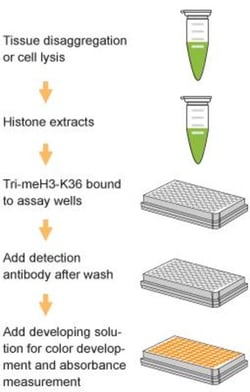
Epigentek Inc EpiQuik Global Tri-Methyl Histone H3K36 Quantification Kit (Colorimetric) (96 assays)
For ELISA-like measurement of total H3K36me3 amounts
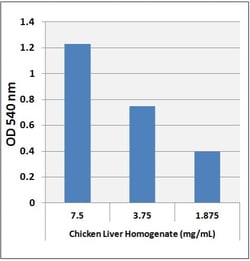
Abcam Soluble Collagen Assay Kit
Soluble Collagen Assay Kit
The product is subject to the following: Abcam Restricted Use Statement

Bioworld Glycoprotein Staining Kit, 1 Kit
Glycoprotein Staining KitIncorporates the proven Schiff's reagent and method.Specifications:One kit contains enough reagents to stain 25 mini gels Kit Contains: Oxidation Reagent Reduction Reagent Schiff's Reagent Glycoprotein Standard

ILEX LIFE SCIENCES LLC QuickZyme Soluble Collagen Assay, 2 x 96 Assays, 96-well plate format, colorimetric assay for collagen analysis (tissue culture supernatant, cellular extract, tissue homogenate samples)
The QuickZyme Soluble Collagen Assay Kit enables quantitative measurement of all types of fibrillary collagen (species independent) in a fast and simple 96-well plate format. The colorimetric assay is based on binding of the dye Sirius Red to collagen. The assay can be used to analyze soluble collagen or collagen that is solubilized by acetic acid alone or in combination with pepsin. The assay is intended for collagen analysis in tissue culture supernatants, cellular extracts, and tissue homogenates. The assay is not affected by serum up to at least 10%. Assay range: 0.5 to 10 µg/ml. Sensitivity: 0.69 ng/ml. Assay-time: < 3 hours. Store at 4*C. Collagen is one of the main components of extracellular matrix. Dysregulation in collagen production results in pathologies such as fibrosis (too much collagen), or osteoarthritis (too little collagen). Therefore measurement of collagen production is important in many disease related studies.
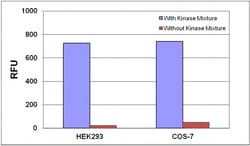
Abcam Diacylglycerol Assay Kit (ab242293) 100 Tests
Diacylglycerol Assay Kit (ab242293) 100 Tests
The product is subject to the following: Abcam Restricted Use Statement
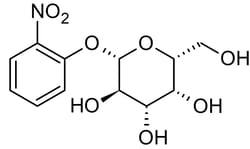
Abcam oNPG, beta-galactosidase substrate, 1G
MW 301.25 g/mol. β-galactosidase substrate for colorimetric and EIA applications. Hydrolysed by β-galactosidase to yield galactose and ortho-Nitrophenol, which is yellow in color.
The product is subject to the following: Abcam Restricted Use Statement
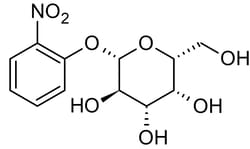
Abcam oNPG, beta-galactosidase substrate, 5G
MW 301.25 g/mol. β-galactosidase substrate for colorimetric and EIA applications. Hydrolysed by β-galactosidase to yield galactose and ortho-Nitrophenol, which is yellow in color.
The product is subject to the following: Abcam Restricted Use Statement
Apexbio Technology LLC BCA Protein Assay Kit 200T
BCA fully named Bicinchoninic Acid Assay is a protein quantification method based on the biuret reaction principle Under alkaline conditions protein peptide bonds reduce Cu2 (from copper sulfate) to Cu Subsequently BCA chelates Cu to form a purple-colored complex which strongly absorbs light at a wavelength of 562 nm The intensity of the colored complex is proportional to protein concentration as the reduction of Cu2 or the amount of Cu formed directly reflects the amount of protein present in the solution Thus protein concentration in an unknown sample can be determined by measuring absorbance This assay kit features easy operation high stability high sensitivity and excellent compatibility It can detect protein concentrations as low as 25 g/mL with a minimum detection limit as low as 0 5 g protein It requires a sample volume of only 1 20 L The assay shows good linearity in the concentration range of 50 2000 g/mL
Cell Biologics Luciferase-Expressing Canine Primary Tracheal Fibroblasts
Luciferase-Expressing Canine Primary Tracheal Fibroblasts