
Carbohydrates



Medchemexpress LLC D-Galactosamine pent 25g | 76375-60-5 | C16H23NO10 | 25 G

D-Galactosamine pentaacetate is an acetyl-protected derivative of D-galactosamine (CAS 76375-60-5) used as a biochemical reagent and synthetic intermediate in life-science research. The solid compound has formula C16H23NO10 and molecular weight 389.35 g·mol-1.
- Used as a biochemical reagent and synthetic intermediate.
- Acetyl-protected amino sugar for selective transformations.
- Molecular weight 389.35 g·mol-1, formula C16H23NO10.
- Provided as a 25 G pack for laboratory use.
- Intended for research use only and not for human or diagnostic use.


Medchemexpress LLC D(+)-Galactosamine hydrochloride | 1772-03-8 | 99.9% | 215.63 | 25 MG
D(+)-Galactosamine hydrochloride is an established experimental toxin that primarily causes liver injury through the generation of free radicals and depletion of UTP nucleotides. Intoxication with D(+)-Galactosamine hydrochloride also induces renal dysfunction, with renal failure often associated with the end-stage of liver damage. The combination of Lipopolysaccharide/D(+)-Galactosamine is a known animal model for inducing acute liver injury, leading to fulminant hepatic failure.
- Causes liver injury through generation of free radicals.
- Leads to depletion of UTP nucleotides.
- Induces renal dysfunction.
- Useful in animal models for acute liver injury.
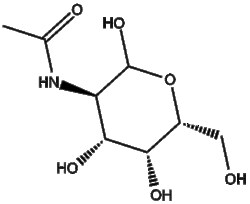
Apexbio Technology LLC N-acetyl D-galactosamine 1811-31-0 100mg
N-acetyl D-galactosamine (CAS 1811-31-0) is an endogenous amino sugar that serves as a structural component in glycoproteins and glycolipids It functions as a fundamental building block in the biosynthesis of O-linked glycoproteins participating in post-translational modification and influencing cell signaling adhesion and molecular recognition processes Due to its role in the formation of brain heteropolysaccharides N-acetyl D-galactosamine is frequently utilized in studies investigating glycosylation neural development and carbohydrate-mediated cellular interactions within biomedical research

Medchemexpress LLC β-D-Galactosamine pentaacetate | 3006-60-8 | 389.35 | 1 G
β-D-Galactosamine pentaacetate is an intermediate in the synthesis of triantennary N-Acetylgalactosamine ligands. It can be studied in liver-targeted delivery of siRNA research.
- Intermediate in the synthesis of triantennary N-acetylgalactosamine ligands
- Can be studied in liver-targeted delivery of siRNA research

Medchemexpress LLC O-Linked GlcNAc transferase substrate | 954381-93-2 | 98.25% | 1783.08 | 10 MG
O-Linked GlcNAc transferase substrate is a biologically active peptide that functions as a substrate for O-linked GlcNAc transferase (OGT), a eukaryotic glycosyltransferase that utilizes UDP-GlcNAc as a glycosyl donor.
- Biological active peptide
- Substrate of O-linked GlcNAc transferase (OGT)
- White to off-white solid appearance
- High purity of 98.25%
- Soluble in DMSO and H2O at 100 mg/mL
- Sequence: Lys-Lys-Lys-Tyr-Pro-Gly-Gly-Ser-Thr-Pro-Val-Ser-Ser-Ala-Asn-Met-Met
BIOHIPPO O-GlcNAc Rabbit mAb
U-Blot Pan-O-GlcNAc Rabbit mAb (Monoclonal) is a Rabbit-derived monoclonal antibody that specifically recognizes O-GlcNAc a o-glcnacylation modification at Ser(S)/Thr(T) O-GlcNAc (short for O-linked -N-acetylglucosamine) is a reversible enzymatic post-translational modification found on serine and threonine residues of nucleocytoplasmic proteins The modification is characterized by a -glycosidic bond between the hydroxyl group of serine or threonine side chains and N-acetylglucosamine (GlcNAc) It is widely involved in the regulation of diverse cellular processes including transcription cell cycle signal transduction and stress response Dysregulation of O-GlcNAcylation has been closely linked to cancer neurodegeneration diabetes and inflammatory diseases Notably elevated O-GlcNAc levels in many cancers have been reported to suppress apoptosis by inhibiting caspase activation Supplied as 100 uL


Medchemexpress LLC D(+)-Galactosamine hydrochloride | 1772-03-8 | 99.9% | 215.63 | 1 G
D(+)-Galactosamine hydrochloride is an established experimental toxin known to primarily cause liver injury by generating free radicals and depleting UTP nucleotides. It also induces renal dysfunction, often leading to renal failure associated with end-stage liver damage. This compound can be used to induce hepatitis models, mimicking viral hepatitis by causing lipid peroxidation and cell membrane deterioration.
- Induces apoptosis and necrosis in primary cultures of rat hepatocytes.
- Causes caspase-3 activation and DNA fragmentation.
- Used as an animal model for fulminant hepatic failure.
- Induces acute liver failure in mice when co-administered with Lipopolysaccharide.

Medchemexpress LLC D(+)-Galactosamine (hydrochloride) | 1772-03-8 | 99.9% | 215.63 | 200 MG
D(+)-Galactosamine hydrochloride is an established experimental toxin that primarily causes liver injury by generating free radicals and depleting UTP nucleotides. It also induces renal dysfunction, with renal failure often associated with the end-stage of liver damage. Lipopolysaccharide/D(+)-Galactosamine-induced acute liver injury is a known animal model of fulminant hepatic failure.
- Induces apoptosis and necrosis in primary cultures of rat hepatocytes.
- Induces caspase-3 activation and DNA fragmentation.
- Used to induce hepatitis models similar to viral hepatitis.
- Induces lipid peroxidation and deterioration of cell membranes.
- Can be used in rat models (Wistar) to study liver damage.
- Can be used in mouse models (C57BL/6J) for acute liver failure induction.