Solvents


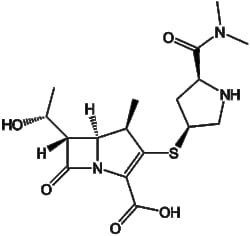
Apexbio Technology LLC Meropenem 96036-03-2 10mM (in 1mL DMSO)

Meropenem is a broad-spectrum -lactam antibiotic within the carbapenem subclass characterized by bactericidal activity against both gram-positive and gram-negative organisms It primarily acts by binding to penicillin-binding proteins (PBPs) mainly PBP2 of Escherichia coli and Pseudomonas aeruginosa and PBP1 of Staphylococcus aureus thus disrupting cell wall synthesis and bacterial growth In vitro studies indicate Meropenem inhibition is effective at MIC 4 mg/L (susceptible strains) intermediate at 8 mg/L and resistant at 16 mg/L Meropenem demonstrates greater potency against gram-negative bacteria compared to Imipenem with typical IC50 values around 0 25 mg/L for anaerobic strains It is typically used in microbiological research to investigate antibiotic susceptibility bacterial resistance mechanisms and interactions with drug metabolism

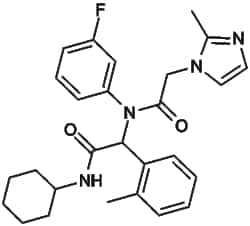
Apexbio Technology LLC AGI-5198 1355326-35-0 10mM (in 1mL DMSO)
AGI-5198 (CAS 1355326-35-0) is a selective inhibitor of mutant isocitrate dehydrogenase 1 (IDH1) harboring the R132H substitution Identified via high-throughput screening AGI-5198 blocks mutant IDH1-mediated formation of the oncometabolite R-2-hydroxyglutarate (R-2-HG) in a dose-dependent manner Mechanistically inhibition of mutant IDH1 by AGI-5198 induces expression of differentiation-associated zinc finger and BTB domain-containing protein 16 (ZBTB16 also termed PLZF) decreasing histone H3 lysine 9 trimethylation (H3K9me3) and promoting glioma cell differentiation In experimental glioma models AGI-5198 reduces tumor cell proliferation underscoring its utility for investigating differentiation therapy strategies targeting IDH1-mutant cancers
Apexbio Technology LLC Pirarubicin 72496-41-4 10mM (in 1mL DMSO)
Pirarubicin is a DNA intercalating anthracycline antibiotic structurally related to doxorubicin that targets the DNA topoisomerase II enzyme By stabilizing the cleavable DNA-enzyme complex pirarubicin induces DNA strand breaks and inhibits DNA replication and cellular proliferation Its primary mode of action involves disruptive interactions with topoisomerase II-mediated DNA cleavage and repair mechanisms Pirarubicin is utilized as an antineoplastic agent in oncology research particularly in evaluating its activity against diverse cancer cell lines In vitro studies reported IC50 values typically ranging from approximately 0 1 to several micromolar concentrations varying according to cell type and experimental conditions Therefore pirarubicin serves as a tool compound in pharmacological studies investigating DNA-topoisomerase inhibitors and therapeutic resistance mechanisms
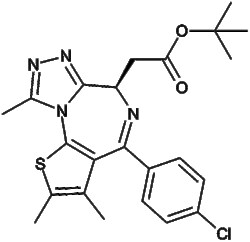
Apexbio Technology LLC (-)-JQ1 1268524-71-5 10mM (in 1mL DMSO)
(-)-JQ1 (CAS 1268524-71-5) is a stereoisomer of ( )-JQ1 designed as a negative control in bromodomain inhibition studies Unlike ( )-JQ1 a competitive BET bromodomain inhibitor known to displace BRD4 fusion oncoproteins from chromatin the (-)-enantiomer shows negligible interaction with tested bromodomains It exhibits minimal inhibitory activity against BRD4(1) with an IC50 of 10 000 nM Due to the lack of significant bromodomain binding (-)-JQ1 serves widely as an appropriate negative control compound in experiments investigating BET protein functions and related signaling
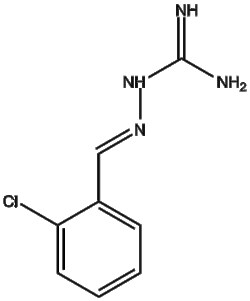
Apexbio Technology LLC Sephin1 13098-73-2 10mM (in 1mL DMSO)
Sephin1 (CAS 13098-73-2) is a selective inhibitor of PPP1R15A a regulatory subunit of protein phosphatase 1 involved in the regulation of stress-induced eIF2 dephosphorylation Under endoplasmic reticulum (ER) stress phosphorylated eIF2 attenuates protein synthesis preventing accumulation of misfolded proteins By inhibiting PPP1R15A Sephin1 sustains eIF2 phosphorylation extending translational attenuation during ER stress In cell assays Sephin1 selectively disrupts PPP1R15A-PP1c complexes without affecting PPP1R15B-mediated complexes In mouse models harboring misfolded protein mutations (e g MPZ or SOD1) Sephin1 administration mitigates molecular cellular and functional deficits thus relevant for proteostasis-related disease studies
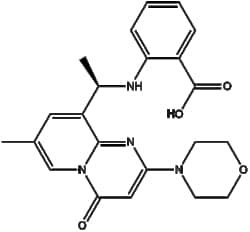
Apexbio Technology LLC AZD6482 1173900-33-8 10mM (in 1mL DMSO)
AZD6482 (CAS 1173900-33-8) is a selective ATP-competitive inhibitor of phosphoinositide 3-kinase beta (PI3K ) It exhibits inhibitory potency with IC50 values of 0 69 nM for PI3K compared to 13 6 nM for PI3K 47 8 nM for PI3K and 136 nM for PI3K In vitro AZD6482 reduces insulin-induced glucose uptake in human adipocytes (IC50 of 4 4 M) Preclinical studies in dogs indicate anti-thrombotic activity without elevating bleeding risks Clinical evaluation showed good tolerability in human volunteers with modest effects on insulin sensitivity parameters AZD6482 serves as a valuable tool to investigate PI3K function in platelet biology and metabolic regulation
Cayman Chemical ProstaglndIn D2-d4 50ug
An internal standard for the quantification of PGD2 by GC- or LC-MS
Cayman Chemical MefenamIc AcId-d4 1mg
An internal standard for the quantification of mefenamic acid by GC- or LC-MS
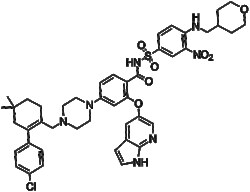
Apexbio Technology LLC ABT-199 1257044-40-8 10mM (in 1mL DMSO)
ABT-199 (CAS 1257044-40-8) is a selective small-molecule inhibitor targeting BCL-2 developed through structure-guided drug design By specifically interfering with the mitochondrial apoptotic pathway regulated by BCL-2 ABT-199 induces apoptosis predominately in cells dependent on BCL-2 signaling rather than BCL-XL In preclinical assessments ABT-199 exhibited antitumor activity against hematologic malignancies including BCL-2-dependent non-Hodgkin lymphoma (NHL) and acute myeloid leukemia (AML) cell lines and xenograft models while demonstrating minimal platelet toxicity
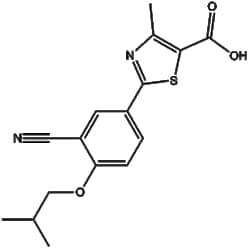
Apexbio Technology LLC Febuxostat 144060-53-7 10mM (in 1mL DMSO)
Febuxostat (CAS 144060-53-7) is a non-purine selective inhibitor of xanthine oxidase (XO) an enzyme involved in purine metabolism responsible for producing uric acid and reactive oxygen species (ROS) It exerts its inhibitory action by noncompetitive binding at the molybdenum-pterin active center of XO effectively inhibiting both its oxidized and reduced forms Compared to allopurinol febuxostat demonstrates notably higher potency with a reported IC50 of 1 8 nM versus 2 9 M Febuxostat is utilized in clinical and preclinical research exploring hyperuricemia gout and associated metabolic disorders
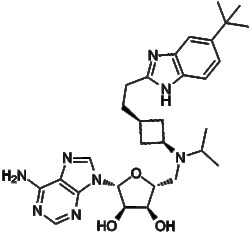
Apexbio Technology LLC EPZ5676 1380288-87-8 10mM (in 1mL DMSO)
EPZ5676 (CAS 1380288-87-8) is a selective inhibitor targeting DOT1L a histone methyltransferase responsible for H3K79 methylation Structural studies indicate EPZ5676 occupies the enzyme s S-adenosylmethionine (SAM) binding pocket inducing conformational changes and partial opening beyond the SAM hydrophobic pocket EPZ5676 displays potent inhibitory activity against DOT1L (IC50 0 8 nM) with markedly lower affinity for other methyltransferases In MLL-rearranged leukemia models EPZ5676 reduces H3K79 methylation inhibits MLL fusion target gene expression and induces cytotoxicity in leukemia cell lines harboring MLL translocations

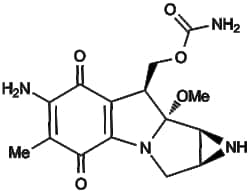
Apexbio Technology LLC Mitomycin C 10mM (in 1mL DMSO)
Mitomycin C (CAS 50-07-7) is an antibiotic compound derived from Streptomyces caespitosus or Streptomyces lavendulae exhibiting anti-cancer properties by interfering with DNA synthesis Its mode of action involves direct formation of covalent adducts with DNA impeding DNA replication In PC3 cells mitomycin C presents an EC50 of approximately 0 14 M Moreover it can potentiate apoptosis induced by TRAIL (TNF-related apoptosis-inducing ligand) through mechanisms independent of p53 modulating apoptosis-related protein expression and caspase activation Due to its cytotoxic mechanism mitomycin C continues to serve as a useful compound in cancer research particularly in apoptosis signaling studies
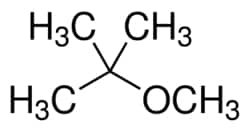
Sigma Aldrich Fine Chemicals Biosciences tert-Butyl methyl ether | 1634-04-4 | MFCD00008812 | 2L
tert-Butyl methyl ether | Purity: 99.8% | Mol Wt: 88.15 | 1634-04-4 | MFCD00008812 | 2L
