
Carbonyl compounds


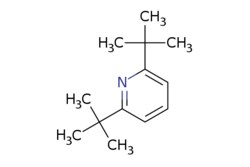
eMolecules 585-48-8 | 2,6-Di-tert-butylpyridine | Ambeed | MFCD00006306 | 191.318 | C13H21N | 98.000 | CC(C)(C)c1cccc(n1)C(C)(C)C | 25g | 490549911
2,6-Di-tert-butylpyridine | Ambeed | 585-48-8 | MFCD00006306 | 191.318 | C13H21N | 98.000 | CC(C)(C)c1cccc(n1)C(C)(C)C | 25g | 490549911

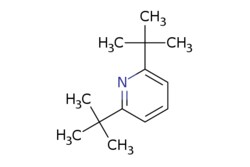
eMolecules 585-48-8 | 2,6-Di-tert-butylpyridine | Ambeed | MFCD00006306 | 191.318 | C13H21N | 98.000 | CC(C)(C)c1cccc(n1)C(C)(C)C | 100g | 525172578
2,6-Di-tert-butylpyridine | Ambeed | 585-48-8 | MFCD00006306 | 191.318 | C13H21N | 98.000 | CC(C)(C)c1cccc(n1)C(C)(C)C | 100g | 525172578
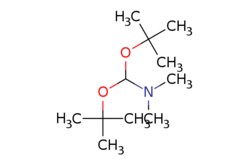
eMolecules 36805-97-7 | 1,1-DI-TERT-BUTOXYTRIMETHYLAMINE | AstaTech | MFCD00015002 | 203.326 | C11H25NO2 | 90.000 | CN(C)C(OC(C)(C)C)OC(C)(C)C | 5g | 385237794
1,1-DI-TERT-BUTOXYTRIMETHYLAMINE | AstaTech | 36805-97-7 | MFCD00015002 | 203.326 | C11H25NO2 | 90.000 | CN(C)C(OC(C)(C)C)OC(C)(C)C | 5g | 385237794

eMolecules 585-48-8 | 2,6-Di-tert-butylpyridine | Oakwood Chemicals | MFCD00006306 | 191.318 | C13H21N | 97.000 | CC(C)(C)c1cccc(n1)C(C)(C)C | 10g | 480163150
2,6-Di-tert-butylpyridine | Oakwood Chemicals | 585-48-8 | MFCD00006306 | 191.318 | C13H21N | 97.000 | CC(C)(C)c1cccc(n1)C(C)(C)C | 10g | 480163150
Medchemexpress LLC (R)-Propranolol hydrochloride | 13071-11-9 | 99.3% | C16H22ClNO2 | 50 MG

(R)-Propranolol hydrochloride is the less active enantiomer of propranolol, a nonselective β-adrenergic receptor (βAR) antagonist. Propranolol exhibits high affinity for both β1AR and β2AR. The (R)-enantiomer can prevent adrenaline-induced cardiac arrhythmias in animals, though it requires a significantly higher dose compared to its (-)-enantiomer. It is suitable for research use.
- Less active enantiomer of a β-adrenoceptor antagonist.
- Nonselective antagonist with affinity for β1AR and β2AR.
- Demonstrates ability to prevent adrenaline-induced cardiac arrhythmias.
- Can reverse ouabain-induced ventricular tachycardia.
Medchemexpress LLC Sulfalene-13C6 | 99.0% | C513C6H12N4O3S | 1 MG
Sulfalene-13C6 is the 13C6 labeled version of Sulfalene, an antimalarial agent and long-acting sulfonamide antibacterial. Stable heavy isotopes, such as carbon-13, are incorporated into drug molecules for quantitation during drug development, potentially influencing pharmacokinetic and metabolic profiles.
- Used as a tracer
- Internal standard for quantitative analysis
- Applicable in metabolic flux analysis
- Useful for therapeutic drug monitoring

Medchemexpress LLC Angiotensin I-13C6,15N (human, mouse, rat) TFA | 484-42-4 | 99.8% | 1303.42 (free base) | 1 MG
Angiotensin I-13C6,15N (human, mouse, rat) TFA is a 13C and 15N labeled compound. It is a precursor of angiotensin II and is cleaved into angiotensin II by angiotensin converting enzyme (ACE). This product is for research use only.
- Can be used as a tracer
- Can be used as an internal standard for quantitative analysis by NMR, GC-MS, or LC-MS
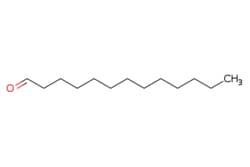
eMolecules 10486-19-8 | Tridecanal | MFCD00007018 | 25g
Ambeed | [4-(Trifluoromethyl)phenyl]methanethiol | 250mg | 572823269 | A1064872 | 108499-24-7 | MFCD06798015 | 192.200 | C8H7F3S
If you are unable to find the chemical you are looking for, make sure you are logged into your fishersci.com account and click on the following link:
eMolecules Building Block Tool

Medchemexpress LLC Rhodamine 123 | 62669-70-9 | 99.5% | 1 ML
Rhodamine dyes are membrane-permeable cationic fluorescent probes that specifically recognize mitochondrial membrane potentials. These probes attach to mitochondria and produce bright fluorescence. At certain concentrations, rhodamine dyes have low toxicity to cells, making them commonly used to detect mitochondria in animal cells, plant cells, and microorganisms.
- Membrane-permeable cationic fluorescent probe
- Recognizes mitochondrial membrane potentials
- Used for cell staining analysis
- Suitable for detecting mitochondria in various cell types
- Low toxicity at specific concentrations
Sigma Aldrich Fine Chemicals Biosciences myo Inositol BioReagent su1KG
myo Inositol BioReagent su1KG


Sigma Aldrich Fine Chemicals Biosciences Glutaraldehyde solution Grade I, 25% in H2O, specially purified for use as an electron microscopy fixative | 111-30-8 | MFCD00007025 | 80ML
Glutaraldehyde solution Grade I, 25% in H2O, specially purified for use as an electron microscopy fixative | Mol Wt: 100.12 | 111-30-8 | MFCD00007025 | 80ML

Medchemexpress LLC Avidin, chicken egg white | 1405-69-2 | 99.9% | 1 MG
Avidin, chicken egg white is a glycoprotein derived from egg protein. It has excellent affinity with biotin and is often used in combination with biotin for immunoassays to detect the location of antigens in tissues.
- Derived from egg protein
- Exhibits excellent affinity with biotin
- Suitable for immunoassays
- Detects the location of antigens in tissues

Medchemexpress LLC (2R)-2-hydroxy-2-methyl-4-(2,4,5-trimethyl-3,6-dioxocyclohexa-1,4-dien-1-yl)butanamide | 1147883-03-1 | MFCD00824427 | 99.3% | 265.30 g/mol | C14H19NO4 | 50MG
EPI-589 is a redox-active quinone derivative investigated as a neuroprotective small molecule. It acts as an oxidoreductase inhibitor and free radical scavenger, and has demonstrated blood-brain barrier permeability and oral bioavailability in preclinical and early clinical studies. It is used in research on neurodegenerative diseases to study oxidative stress and mitochondrial dysfunction.
- Redox-active oxidoreductase inhibitor and free radical scavenger.
- Blood-brain barrier permeable and orally bioavailable.
- Demonstrated neuroprotective activity in preclinical models.
- High purity suitable for research applications.
- Soluble in DMSO; hygroscopic-use freshly opened solvent.
- Stable as a powder when stored at -20°C or refrigerated per supplier guidance.
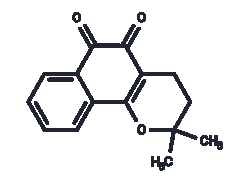
TARGETMOL CHEMICALS INC BETA-LAPACHONE 50MG
Also available in 5 mg 10 mg 25 mg 100 mg 200 mg 500 mg 1 mL 10 mM (in DMSO) and bulk. Please contact Fisher for quotes. (beta)-Lapachone (ARQ-501) is a specific DNA topoisomerase I inhibitor and no inhibitory activities against DNA topoisomerase II or ligase. purity: 99%
Sigma Aldrich Fine Chemicals Biosciences Glutaraldehyde solution Gr1L
Glutaraldehyde SOLUTIONon Gr1L