
Carbonyl compounds


Cambridge Isotope Laboratories DIETHYL MALONATE (1,3-13C2, 99%), 0.5 G, 77386-82-4
DIETHYL MALONATE (1,3-13C2, 99%), 0.5 G, 77386-82-4



Medchemexpress LLC D-glucose, 4-O-α-D-glucopyranosyl-, hydrate (1:1) | 6363-53-7 | 360.31 | 10 G

Maltose monohydrate is a degradative product of starch and a substrate of α-Glucosidase. This compound plays a role in protecting proteins, membranes, and the photosynthetic electron transport chain under conditions of heat and freezing stress.
- Degradative product of starch
- Substrate of α-glucosidase
- Protects proteins, membranes, and photosynthetic electron transport chain under heat and freezing stress

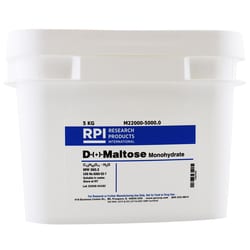
Research Products International Corp D-(+)-Maltose Monohydrate, 5 Kilograms
CAS Number: 6363-53-7
Molecular Formula: C12H22O11H2O
Molecular Weight: 360.3
Sigma Aldrich Fine Chemicals Biosciences Dextran from Leuconostoc s25G
DEXTRAN8 Dextran from Leuconostoc s25G

Medchemexpress LLC D-melibiose | 585-99-9 | 342.30 | C12H22O11 | 25 MG
D-Melibiose (Standard) is an analytical reference standard of the disaccharide D-melibiose, composed of one galactose and one glucose linked α(1→6). It is intended for use as a reference in biochemical assays, metabolomics, and analytical method development. The material is supplied in small quantities for analytical applications and should be stored sealed at -20°C, protected from light and moisture.
- Composed of one galactose and one glucose linked α(1→6).
- Intended for analytical and research use in metabolomics and method development.
- Molecular formula C12H22O11 and molecular weight 342.30 g/mol.
- Supplied as a small quantity suitable for reference standards and calibration.
- Store sealed at -20°C, protect from light and moisture.

Alkali Scientific D (+) Maltose Monohydrate, 20 Kilograms
D (+) Maltose Monohydrate is a high-purity disaccharide carbohydrate used extensively in laboratory research. Supplied in a 20 Kg bulk size, this maltose form is ideal for use in biochemistry, microbiology, and pharmaceutical studies. As a reducing sugar, maltose is widely used in enzyme assays and fermentation studies, particularly in microbial growth media. Its purity ensures minimal interference in sensitive experiments. Laboratories often use it in formulations where controlled sugar concentrations are essential, and its monohydrate form offers stability in storage and handling, making it suitable for long-term use in scientific investigations.