
Primary Antibody Matched Pairs

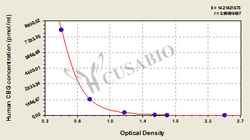
Cusabio Technology LLC HUMAN SERPINA6 ELISA KIT

The Human Corticosteroid Binding Globulin (CBG) ELISA Kit is designed to quantitatively measure SERPINA6 (Corticosteroid Binding Globulin) levels in serum plasma and tissue homogenates using a competitive assay format This kit detects SERPINA6 with a sensitivity of 20 pmol/mL and offers a broad detection range from 20 pmol/mL to 8000 pmol/mL making it suitable for both low and high concentration samples The assay requires a sample volume of 50-100 L and can be completed within 1-5 hours with absorbance measurements taken at 450 nm Its reliable performance and quantitative accuracy support applications in clinical research and biomarker studies related to steroid hormone transport and regulation

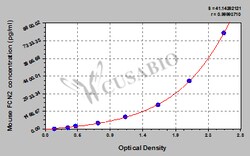
Cusabio Technology LLC Mouse Ficolin-2 FCN2 ELISA kit
The Mouse Ficolin-2 (FCN2) ELISA Kit is designed for the quantitative detection of FCN2 in serum plasma and tissue homogenates using a sandwich assay format With a detection range of 125 pg/mL to 8000 pg/mL and a sensitivity of 31 25 pg/mL this kit provides precise measurement of FCN2 concentrations in biological samples The assay requires a sample volume of 50-100 L and employs a 450 nm wavelength for absorbance readings The protocol involves an incubation period of 1-5 hours balancing efficiency with accuracy This kit is suitable for researchers studying immune-related pathways as FCN2 plays a role in innate immunity through its lectin-based complement activation The standardized components ensure reproducibility across experimental setups

Cusabio Technology LLC HUMAN SPINK1 ELISA KIT
This ELISA kit is designed for the quantitative detection of Human Pancreatic Secretory Trypsin Inhibitor (SPINK1) in serum plasma and tissue homogenates using a sandwich assay format It offers a broad detection range from 78 pg/ml to 5000 pg/ml with a sensitivity limit of 19 5 pg/ml ensuring precise measurement across various sample concentrations The assay requires a short incubation period of 1-5 hours and utilizes a sample volume of 50-100 l per test Optical density is measured at 450 nm for result interpretation providing reliable and reproducible data for research applications requiring SPINK1 level analysis in biological samples
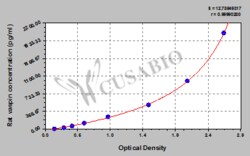
Cusabio Technology LLC RAT SERPINA12 ELISA KIT
This kit detects SERPINA12 (vaspin) in rat samples including serum plasma and tissue homogenates using a quantitative sandwich ELISA method It offers a detection range of 31 25 pg/mL to 2000 pg/mL with a sensitivity limit of 7 8 pg/mL providing precise measurement of visceral adipose-specific serine protease inhibitor levels The assay requires 50-100 L of sample per test and can be completed within 1-5 hours with absorbance readings taken at 450 nm Designed for research applications this reliable kit enables the study of metabolic regulation and adipose tissue function supporting investigations in obesity insulin resistance and related metabolic disorders through accurate quantification of SERPINA12 protein concentrations
Genscript Corporation Nectin-1/PVRL1/CD111Biotin
Nectins are a small family of Ca -independent immunoglobulin (Ig)-like cell adhesion molecules (CAMs) that organize intercellular junctions They are highly homologous to the human receptor for poliovirus and as such have been alternately named poliovirus receptor-related proteins Nectin-1 promotes cell-cell contacts by forming homophilic or heterophilic trans-dimers Heterophilic interactions have been detected between Nectin-1 and Nectin-3 and between Nectin-1 and Nectin-4 Has some neurite outgrowth-promoting activity

Genscript Corporation CD27 Ligand/CD70 His Cynomol
CD70 also named CD27 ligand (CD27L) is a type II transmembrane glycoprotein belonging to the TNF superfamily (TNFSF) and has been designated TNFSF7 CD70 is a cytokine that binds to CD27 Plays a role in T-cell activation Induces the proliferation of costimulated T-cells and enhances the generation of cytolytic T-cells
Genscript Corporation Mesothelin hFc Human
Mesothelin also known as MSLN is a 40 kDa protein that is expressed in mesothelial cells It has been reported that this protein is over expressed in several human tumors including mesothelioma ovarian cancer pancreatic adenocarcinoma lung adenocarcinoma and cholangiocarcinoma Mesothelin can bind MUC16 (also known as CA125) indicating that the interaction of mesothelin and MUC16 may contribute to the implantation and peritoneal spread of tumors by cell adhesion Since mesothelin is overexpressed in several cancers and is immunogenic the protein could be exploited as tumor marker or as the antigenic target of a therapeutic cancer vaccine
Genscript Corporation CD55 His Human
Decay Accelerating Factor (or CD55) is a major regulator of the alternative and classical pathways of complement activation and is expressed on all serum-exposed cells It is commonly hijacked by invading pathogens including many enteroviruses and uropathogenic Escherichia coli to promote cellular attachment prior to infection
Genscript Corporation RBP4 His Human
The properties of retinol binding protein is the transport carrier of vitamin A in the plasma Human-retinol binding protein is a single-chain polypeptide with a molecular weight of approximately 21000 and one binding site for retinol and other forms of vitamin A In addition compounds related to retinol such as retinal retinoic acid retinyl esters and geometric isomers of retinol and of retinal were evaluated for their ability to bind to this protein In plasma RBP4-retinol forms a complex with transthyretin (TTR) also known as thyroxine-binding protein and prealbumin Defects in RBP4 cause retinol-binding protein deficiency which affects night vision
American Research Products Inc Anti MME Antibody
Anti-MME Rabbit Polyclonal Antibody Catalytic Domain
American Research Products Inc Anti LGMN Antibody
Anti-LGMN Rabbit Polyclonal Antibody Amino end mature legumain
American Research Products Inc Anti MMP13 Antibody
Anti-MMP13 Rabbit Polyclonal Antibody Aminoterminal end of active enzyme
Genscript Corporation CD96/TACTILE His Mouse
The receptors CD96 and TIGIT are expressed on the surface of T and natural killer (NK) cells and recent studies suggest both play important inhibitory roles in immune function CD96 has been shown to modulate immune cell activity in mice with Cd96-/- mice displaying hypersensitive NK-cell responses to immune challenge and significant tumor resistance The counterbalance between the putative inhibitory CD96 and TIGIT receptors and the activating receptor CD226 offers unique strategies for immuno-oncology drug development
Genscript Corporation Mesothelin His Human
Mesothelin also known as MSLN is a 40 kDa protein that is expressed in mesothelial cells It has been reported that this protein is over expressed in several human tumors including mesothelioma ovarian cancer pancreatic adenocarcinoma lung adenocarcinoma and cholangiocarcinoma Mesothelin can bind MUC16 (also known as CA125) indicating that the interaction of mesothelin and MUC16 may contribute to the implantation and peritoneal spread of tumors by cell adhesion Since mesothelin is overexpressed in several cancers and is immunogenic the protein could be exploited as tumor marker or as the antigenic target of a therapeutic cancer vaccine
Genscript Corporation CD79B His Mouse
CD79B (also known as B29 Ig beta and B cell antigen receptor complex-associated protein beta-chain) is a 36-40 kDa member of the Ig-Superfamily It is required in cooperation with CD79A for initiation of the signal transduction cascade activated by the B-cell antigen receptor complex (BCR) which leads to internalization of the complex trafficking to late endosomes and antigen presentation Enhances phosphorylation of CD79A possibly by recruiting kinases which phosphorylate CD79A or by recruiting proteins which bind to CD79A and protect it from dephosphorylation